

Oil Prices Move in Different Directions as OPEC Basket Records Strongest Gains.

Global crude oil prices displayed mixed movements early Wednesday, as US West Texas Intermediate (WTI) futures recorded gains, while Brent and Abu Dhabi’s Murban crude experienced declines, according to market data recorded at 7:31 a.m. Tokyo time.
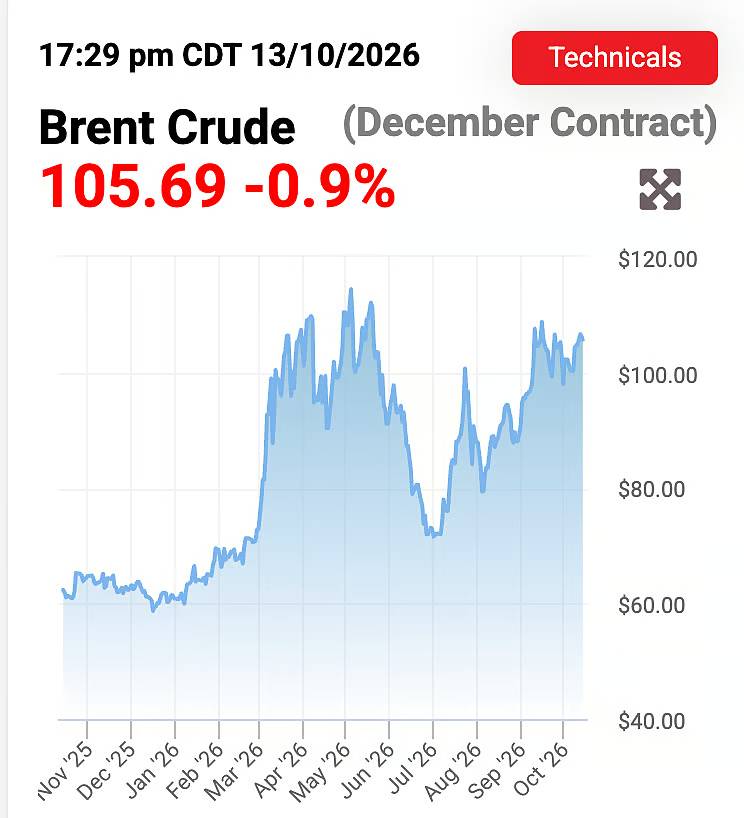
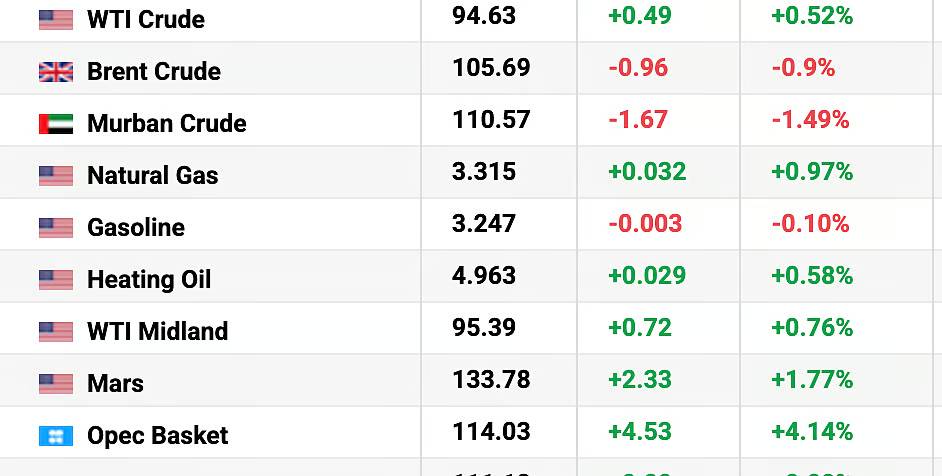
WTI crude futures increased by 63 cents, or 0.67%, reaching $94.77 per barrel. Meanwhile, Brent crude, the global oil benchmark, dropped by 96 cents, or 0.9%, settling at $105.69 per barrel.
Murban crude, a major benchmark for Abu Dhabi’s oil market, declined by $1.67, or 1.49%, bringing its price down to $110.57 per barrel.
Meanwhile, the OPEC Basket registered the largest percentage increase among the reported oil benchmarks, climbing $4.53, or 4.14%, to reach $114.03 per barrel.
The contrasting price movements reflect mixed trading conditions across global crude oil markets rather than a consistent upward or downward trend. These figures provide a snapshot of market prices at a specific time, while variations in pricing periods and update schedules across different benchmarks may influence direct comparisons.
What Factors Are Influencing the Oil Market?
Global oil markets are being shaped by several competing factors, including persistent concerns over Middle Eastern supply routes, the potential arrival of additional Russian diesel supplies and uncertainty surrounding worldwide energy demand.
According to a Reuters report published on October 13, Brent crude settled 0.9% lower at $105.69 per barrel, while WTI climbed to $94.14 per barrel. Traders continued to assess regional geopolitical tensions alongside expectations of increased fuel availability from Russia.
Rising transportation expenses are also placing additional pressure on energy markets. On October 12, OPEC and non-OPEC oil producers highlighted a sharp increase in shipping and insurance costs, which reportedly exceeded one-third of the commodity’s value in certain cases, contributing to broader inflation concerns.
Meanwhile, OPEC’s October report indicated that total OPEC+ crude oil production rose by approximately 900,000 barrels per day in September, reaching 39.07 million barrels per day.
However, increased oil output alone may not be sufficient to ease supply challenges, particularly as uncertainties surrounding shipping routes, insurance premiums and transportation expenses continue to affect global energy distribution.

