

October fuel prices reflect global oil shock, while UAE petrol remains cheaper than in many major markets.
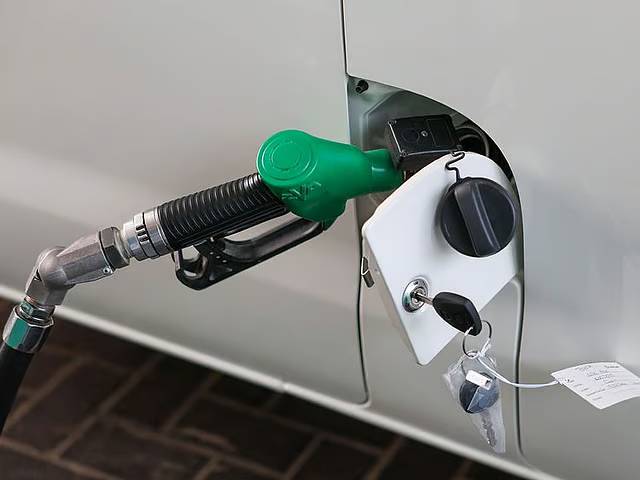
Dubai: UAE motorists filling a typical 60-litre fuel tank could pay up to Dh124.80 more than they did in February, after October fuel prices climbed sharply amid higher global energy costs and the country’s market-linked pricing system.
From October 1, Super 98 is priced at Dh4.40 per litre, Special 95 at Dh4.28 and E-Plus 91 at Dh4.21, while diesel has risen to Dh4.80 per litre.
Compared with September, Super 98 is up 15.8 per cent, Special 95 has increased 16 per cent and E-Plus 91 is 16.6 per cent higher. Diesel prices have risen 11.6 per cent.
The UAE Fuel Price Committee said the new rates were approved under the country’s monthly pricing mechanism, which tracks movements in global energy prices while also taking local market requirements into account.
The increase comes after an exceptional period for international energy markets. Brent crude remained elevated for much of September as disruptions to regional energy flows continued to put pressure on global oil markets.
For motorists, the extent of the increase becomes more apparent when October’s prices are compared with February, before the latest Middle East conflict began.
What does this mean for your fuel bill?
In February, Super 98 was priced at Dh2.59 per litre, Special 95 at Dh2.48 and E-Plus 91 at Dh2.40, while diesel cost Dh2.72.
Compared with those rates, Super 98 has increased by Dh1.81 per litre, or nearly 70 per cent. Special 95 is up Dh1.80, or about 73 per cent, while E-Plus 91 has risen by Dh1.81, or roughly 75 per cent. Diesel has recorded the biggest increase, climbing Dh2.08 per litre, or around 76 per cent.
For motorists filling a 60-litre tank, the difference is significant:
- Super 98: Dh155.40 in February to Dh264 in October — an increase of Dh108.60
- Special 95: Dh148.80 to Dh256.80 — an increase of Dh108
- E-Plus 91: Dh144 to Dh252.60 — an increase of Dh108.60
- Diesel: Dh163.20 to Dh288 — an increase of Dh124.80
For an 80-litre tank, the additional cost rises to around Dh144 for petrol and Dh166.40 for diesel.
A motorist using 240 litres of Special 95 each month would spend Dh1,027.20 at October’s price, compared with Dh595.20 at February’s rate. That works out to an additional Dh432 a month, assuming fuel consumption remains unchanged.
Actual costs will vary depending on the distance driven, a vehicle’s fuel efficiency and the amount of fuel purchased.
How do UAE fuel prices compare globally?
Despite the sharp increase in October, petrol in the UAE remains below the latest available global average.
At Dh4.28 per litre, Special 95 works out to approximately $1.17 per litre based on the dirham’s fixed exchange rate against the US dollar.
The latest comparable international data puts the global average price of 95-octane petrol at $1.59 per litre. Based on that benchmark, the UAE’s October price for Special 95 is about 26 per cent lower.
However, the comparison is indicative rather than directly like-for-like, as the international dataset predates the UAE’s October price adjustment and fuel prices in other markets continue to fluctuate.
Individual markets, however, highlight how widely petrol prices can vary. As of September 21, comparable petrol was priced at $1.27 per litre in the US and $2.44 per litre in Singapore. The latest available UK figure, dated September 14, stood at $2.27 per litre.
According to the international data provider, differences in fuel prices between countries are influenced by factors such as taxes and subsidies. As a result, motorists can face significantly different prices at the pump even though countries are exposed to the same underlying global petroleum market.
The data also indicates that the UAE is not alone in experiencing higher fuel costs. The consumption-weighted global benchmark for gasoline rose from $1.36 per litre in late June to $1.49 by September 21. Diesel increased from $1.40 to $1.65 per litre over the same period.
Why higher oil prices matter
Higher fuel prices can have an impact beyond what motorists pay at the petrol station.
A 2026 working paper published by the Central Bank of the UAE (CBUAE) examined the relationship between oil prices and domestic inflation, finding a direct link, particularly through transport costs.
The paper said “oil prices act as a direct driver of inflation, primarily through the transportation component.” It also found that the relationship had become more pronounced since the UAE deregulated fuel prices in August 2015.
However, a 70 per cent increase in petrol prices does not mean overall consumer inflation will rise by a similar amount. Transport accounts for only part of household expenditure, while price movements in other categories can either offset or add to the impact of higher fuel costs.
The research is a CBUAE staff working paper rather than an official inflation forecast. The central bank also notes that views expressed in its working papers are those of the authors and do not necessarily represent its official position.
Jet fuel also feels the impact
The same rise in international oil prices is affecting the aviation industry, where jet fuel represents one of the biggest operating costs for airlines.
Higher crude prices generally push up the cost of producing jet fuel, although the relationship is not always direct, as refining margins and supply conditions also influence the final price.
IATA estimates that airlines worldwide will spend $350 billion on fuel in 2026, nearly 40 per cent more than the $252 billion spent in 2025. Fuel is expected to account for 31.4 per cent of total airline operating expenses.
That does not necessarily mean airfares will increase at the same rate. Airlines can hedge their fuel purchases, adjust capacity and absorb some of the additional costs.
Emirates Deputy President and Chief Commercial Officer Adnan Kazim told Reuters earlier this month that the airline’s fuel-hedging strategy was helping limit the impact on fares.
“Today we are holding back the prices as much as we can under the current high cost of operation,” Kazim said.
Petrol still below 2022 record
October’s fuel prices also need to be viewed in a broader historical context.
UAE petrol prices reached record highs in July 2022, when Super 98 was priced at Dh4.63 per litre, Special 95 at Dh4.52 and E-Plus 91 at Dh4.44.
October’s Super 98 price of Dh4.40 remains 23 fils, or about 5 per cent, below its July 2022 peak. Special 95 is 24 fils, or around 5.3 per cent, lower, while E-Plus 91 remains 23 fils, or approximately 5.2 per cent, below its previous record.
Diesel, however, has moved above its July 2022 level. October’s price of Dh4.80 per litre exceeds the Dh4.76 recorded at the time.
This means that while October has brought the highest petrol prices of 2026, all three petrol grades remain below the record levels reached in July 2022.
Why are fuel prices rising now?
October’s adjustment follows a sharp rise in international energy prices during September.
Brent crude was trading at around $94.07 a barrel on August 31 before rising to $98.57 on September 7. It then climbed to $108.06 on September 14 before easing back to $98.10 by September 21.
The volatility reflects continued uncertainty surrounding regional energy supplies and key shipping routes.
For UAE residents, October’s fuel price increase is likely to be particularly noticeable for households with long daily commutes, multiple vehicles or high monthly fuel consumption.
However, the broader figures provide some perspective. UAE petrol prices have climbed by roughly 70 to 75 per cent since February and are now at their highest levels of 2026. Even so, they remain around 5 per cent below the record highs reached in July 2022 and, based on the latest available international comparison, below the global average for 95-octane petrol.
What happens after October will depend largely on movements in international energy markets. Any sustained improvement in regional oil flows, combined with lower crude and refined-product prices, could be reflected in subsequent monthly UAE fuel price reviews.

