

Online, Calisthenics Is Often Promoted Through Short Bodyweight Programmes Promising Dramatic Transformations, but Athletes Warn Against Such Claims.
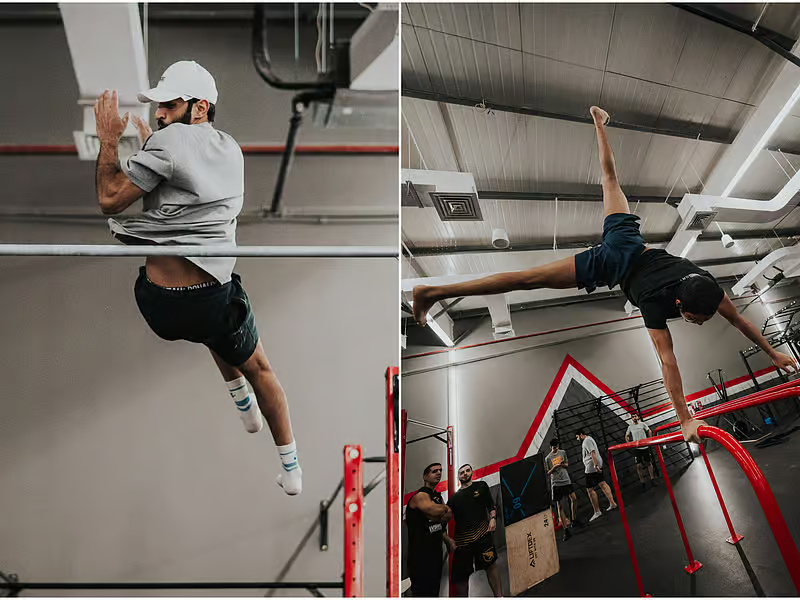
The promise sounds tempting: just 15 minutes a day, a handful of simple exercises and the prospect of building a six-pack physique. But real calisthenics can be far more demanding. Inside an Abu Dhabi gym, athletes propel themselves over bars, hold their bodies horizontally above the ground and execute weighted muscle-ups — advanced movements that can require months or even years of progressive training to master.
For competitive athletes, calisthenics goes well beyond a casual routine of push-ups and squats. While the discipline is rooted in bodyweight training and street workouts, its advanced techniques require significant strength, body control, flexibility, coordination and patience.
Calisthenics starts with fundamental movements before gradually conditioning the body for more advanced and demanding skills, according to Georgi Petkov, an Abu Dhabi-based calisthenics world champion and trainer. Petkov has practised the discipline for around 13 years and has nearly a decade of coaching experience.
He explained that consistently practising and repeating fundamental movements helps condition the body, making it better prepared to progress to more advanced skills.
At the advanced level, athletes progress towards challenging movements such as the planche and front lever, which require them to hold their bodies horizontally using considerable upper-body strength and core stability.
International champion and coach Charbel Khoury said developing the strength required to perform some advanced calisthenics skills can take anywhere from six months to a year, depending on the individual.
The planche, for instance, demands significant shoulder and core strength to keep the body suspended horizontally, while the front lever places considerable strain on the core and lat muscles.
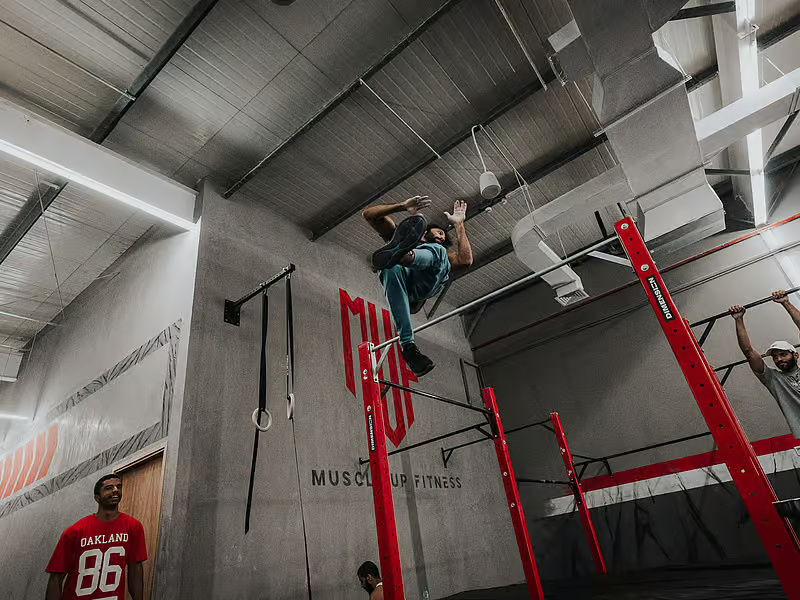
A muscle-up introduces an explosive component, requiring athletes to pull themselves high above the bar before smoothly transitioning from a pulling movement into a pushing position.
Khoury began training in Lebanon in 2013 at the age of 13, when he could manage only two or three pull-ups. He later progressed to national and international competitions, saying he won the Lebanese national championship every year from 2014 through the 2024-25 season.
His journey highlights the significant difference between basic bodyweight workouts and calisthenics at a competitive level.
Khoury said the sport extends far beyond simply performing push-ups, emphasising the technical skills, gradual progression and strong sense of community that develop through training.
From a few athletes to a growing community
That sense of community is becoming increasingly evident in Abu Dhabi, where the calisthenics scene includes everyone from beginners working towards their first skills to experienced athletes preparing for competitive championships.
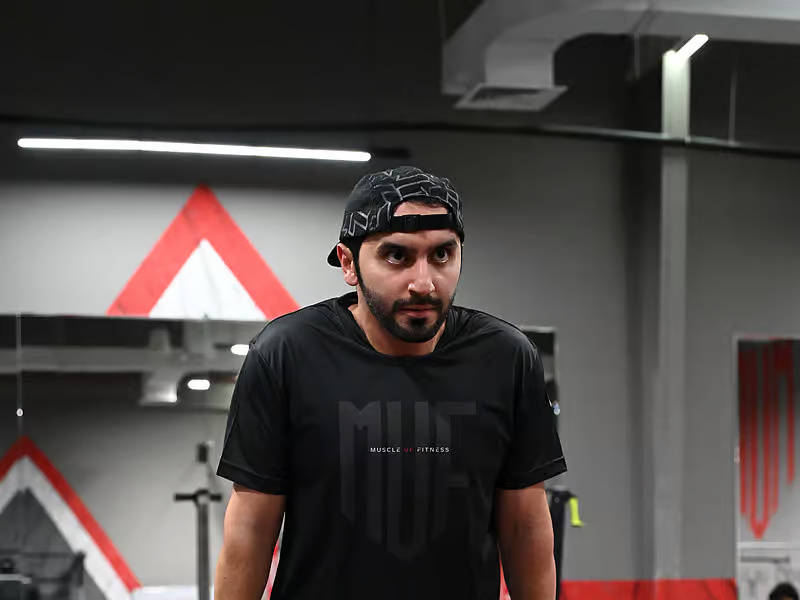
Khaled Al Jaberi, founder of Muscle Up Fitness, said that when he first became interested in calisthenics around 2018, there were few dedicated facilities in Abu Dhabi where he could train specifically in the discipline.
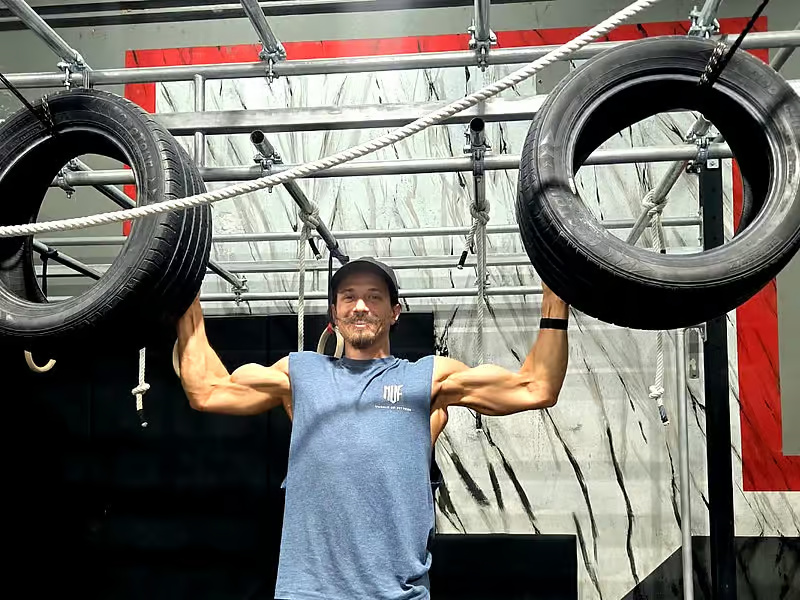
He later set out to establish a dedicated calisthenics facility, which officially opened its doors in October 2022.
At the time, Jaberi said Abu Dhabi’s calisthenics community was so small that its members could almost be counted on one hand.
The gym later began organising competitions, fitness challenges, free gatherings in Abu Dhabi parks and workshops to introduce more people to the sport and help expand the local community.
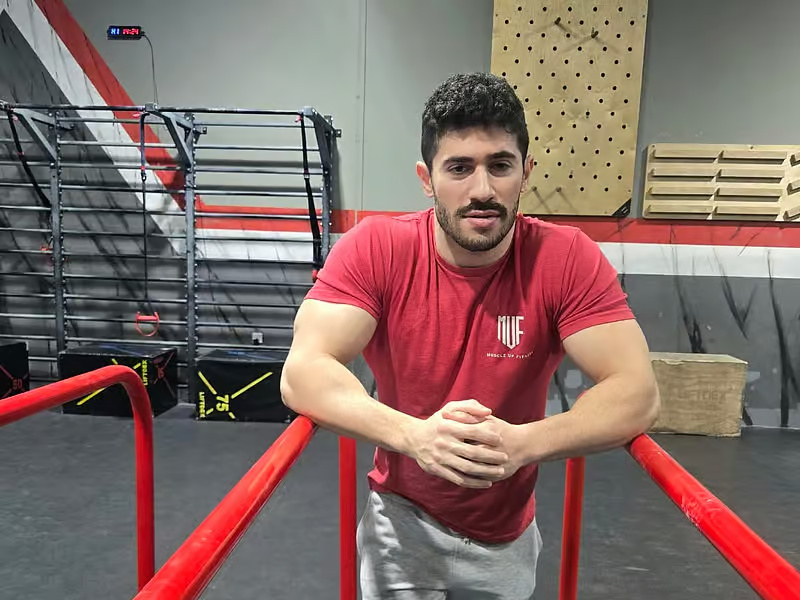
The goal was not only to develop advanced athletes, but also to provide beginners with an accessible pathway into a discipline that can initially appear challenging.
Jaberi said the gym introduced classes for different ability levels, allowing participants to progress from basic movement variations to intermediate techniques and, eventually, advanced skills.
That gradual development is also reflected in the experiences of athletes within the community.
Abdulla Al Hosani, a member of the local calisthenics community, transitioned to the sport after previously focusing on running. He said recurring running-related injuries, including shoulder and lower-back problems, encouraged him to find a way to strengthen his upper body.
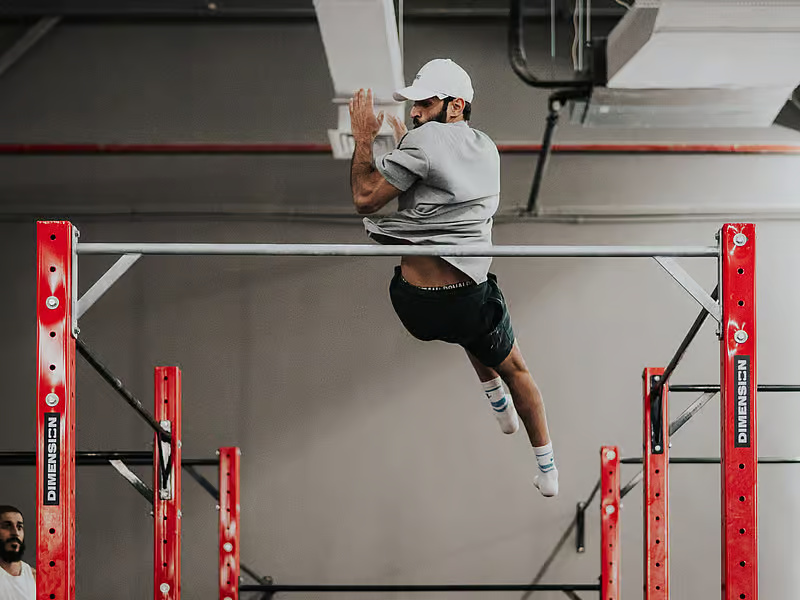
After taking up calisthenics, Al Hosani said the discomfort in his shoulder and lower back eased as he built greater upper-body and core strength. He now combines calisthenics with running, training several times a week while also taking part in competitions.
In his first appearance at a Muscle Up Battle competition, Al Hosani said he finished fourth.
For younger athletes, calisthenics can provide a pathway to increasingly advanced skills that extends well beyond traditional gym-based exercises.
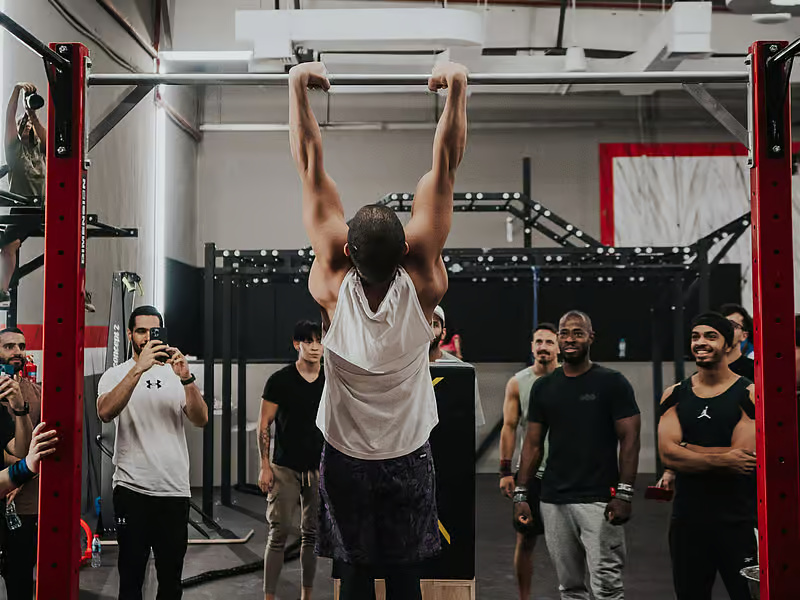
Zayed Al Salami, one of the newer members of the calisthenics community, is already training towards advanced movements such as the front lever. The gym also has younger athletes who, while still in school, are progressing to skills including handstands and other challenging techniques.
The mix of ages and skill levels helps create a strong sense of community, with athletes pursuing different goals while training together on the same equipment.
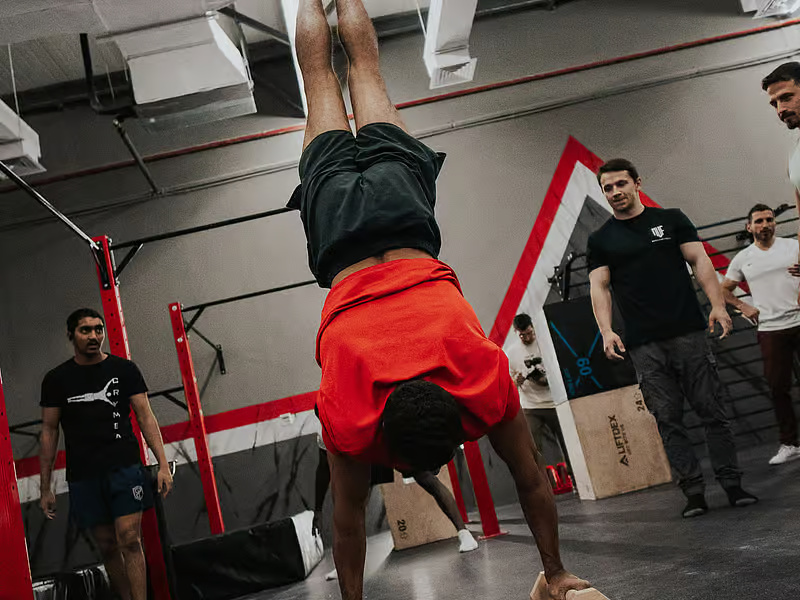
For Petkov, one of calisthenics’ biggest attractions is its accessibility. He began training outdoors with whatever surroundings were available, using park equipment and even walls to practise movements such as dips.
He explained that the sport does not necessarily require a dedicated training space or specialised equipment, but instead relies on creativity, imagination and an understanding of how to train effectively.
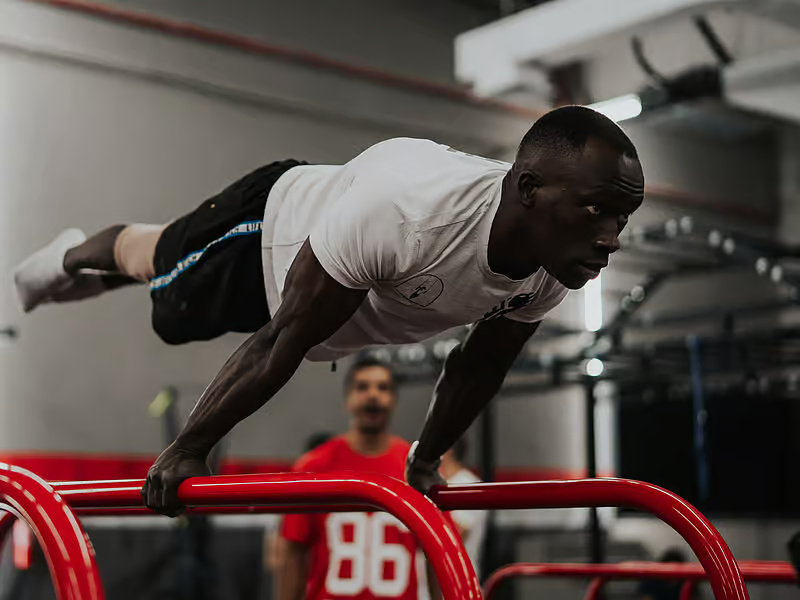
International champion and trainer Anastasiia Starovoitova, who started calisthenics from scratch after discovering the sport during a trip to Ibiza, said one of its main attractions is the freedom to train almost anywhere using only bodyweight.
She later progressed to competitions in France and at European and international level, eventually securing a world championship title in Bulgaria in 2025.
While calisthenics can be practised in almost any setting, mastering its most advanced movements requires significant time, strength and dedication.
Khoury described the muscle-up as an explosive pulling movement followed by a push that lifts the body above the bar. Among the skills he has trained for, he considers the full planche one of the most challenging.
Starovoitova said another appeal of calisthenics is its seemingly endless scope for progression. Once athletes master a certain number of pull-ups, they may move on to muscle-ups, followed by weighted variations, heavier loads and higher repetitions — creating a continuous cycle of new goals and challenges.
Starovoitova said that constant progression is one of the sport’s biggest attractions, as there is always another skill, variation or challenge for athletes to pursue.
What about those ‘15-day’ transformations?
Online, however, the meaning of calisthenics can become less clear.
Social media advertisements increasingly use the term to promote short bodyweight workout programmes, often featuring dramatic before-and-after images and claims of major physical transformations within just a few days.
Petkov urged people to be cautious about such promises, saying extreme changes in body composition cannot realistically be achieved within a 15-day period.
He stressed, however, that this does not mean the exercises themselves lack value. Even when programmes are promoted under labels such as “military calisthenics”, people who begin exercising regularly can still improve their overall fitness.
‘Military calisthenics’ vs competitive calisthenics
The term “military calisthenics” does not necessarily refer to the same type of training practised by competitive calisthenics athletes.
Petkov said bodyweight movements such as pull-ups, push-ups, dips, monkey bars and even muscle-ups have long been incorporated into military and physical training, particularly to develop strength, agility and speed.

Competitive calisthenics, however, takes these fundamentals to a more specialised level. Athletes train for specific skills, controlled static holds, explosive movements and weighted exercises, while some disciplines also involve freestyle combinations.
The difference can also be seen in the growth of Abu Dhabi’s calisthenics community. What begins with basic push-ups, dips or pull-ups can gradually develop into structured training for advanced movements that may take years to master.
The progression becomes clear when an athlete advances from a standard pull-up to a controlled muscle-up, or from a conventional plank to holding the entire body horizontally above the ground.
Behind the impressive movements often seen on social media, however, are months or years of consistent and repetitive training.
Petkov said the discipline teaches athletes to value gradual improvement, as mastering difficult skills requires time, consistency and patience.
That same patience often motivates athletes to continue training and setting new goals even after mastering their first advanced movement.
Starovoitova said one of the sport’s attractions is the ability to continually set new goals, while Khoury has spent more than a decade progressing through freestyle, static skills, weighted calisthenics and endurance training.
For beginners, the athletes’ advice is more straightforward than the dramatic transformations often promoted on social media: master the fundamentals, focus on proper technique and progress gradually.
Advanced movements such as muscle-ups and planches come only after building the necessary strength, control and experience.
For athletes training in Abu Dhabi, that gradual progression has become a central part of calisthenics. Rather than focusing solely on physical appearance, the sport offers an ongoing challenge to discover what the body can learn and ultimately achieve.

