

Oman, Saudi Arabia and UAE Lead Growing Gulf Tourism as Kerala Rebuilds Visitor Arrivals.
Dubai: Gulf countries are becoming an increasingly significant source of international tourists for Kerala, with Oman, Saudi Arabia and the UAE emerging among the state’s leading overseas markets as it works to restore foreign visitor numbers that remain below pre-Covid levels, Kerala’s Tourism Minister told.
The GCC collectively contributed around 136,000 foreign tourist visits to Kerala in 2025, compared with approximately 108,000 in 2024, marking an increase of about 26 per cent, according to state tourism data.
Oman recorded the strongest growth among the Gulf markets, with arrivals surging nearly 70 per cent to 65,132 in 2025, up from 38,387 the previous year. Saudi Arabia was another major source market, accounting for 31,593 visitors, while the UAE contributed 26,255 arrivals.
Collectively, the six GCC markets — Oman, Saudi Arabia, the UAE, Kuwait, Bahrain and Qatar — brought more tourists to Kerala in 2025 than France and Germany combined.
The trend marks a notable shift for Kerala’s tourism sector, which has traditionally depended heavily on European markets for international visitors.
Gulf markets gain ground
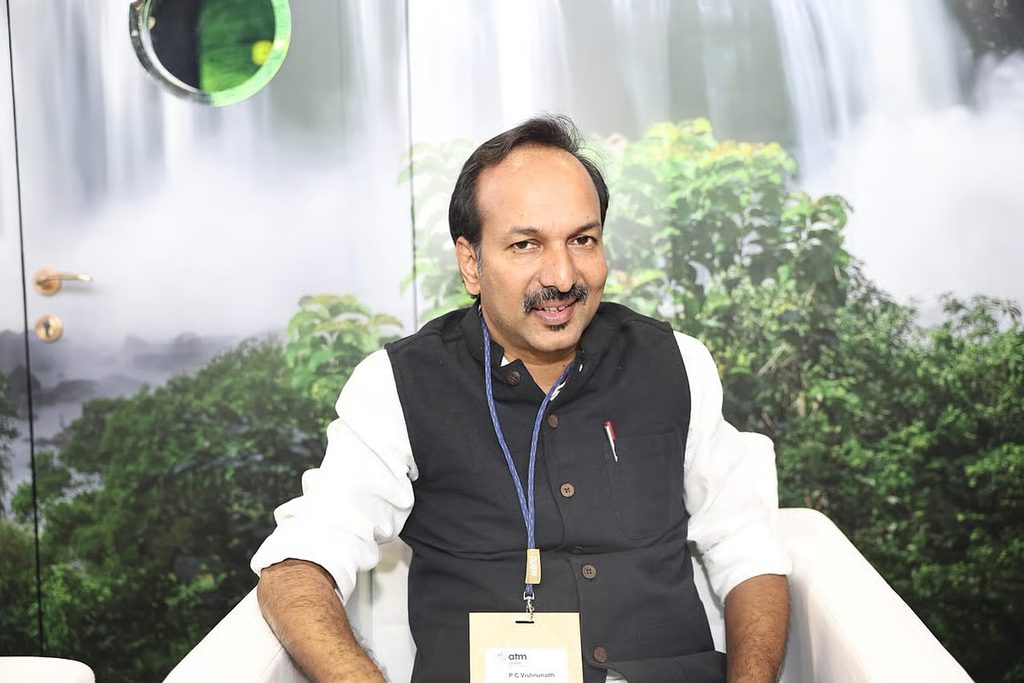
“Oman has emerged as a surprise,” said PC Vishnunadh, highlighting the country’s rapid rise in Kerala’s foreign tourist source-market rankings.
The minister noted that the US had historically been Kerala’s leading overseas market, followed by the UK and Germany. However, the latest figures indicate a changing trend, with Oman moving ahead of Germany and France, while Saudi Arabia and the UAE are also gaining importance as key sources of international visitors.
In 2025, Oman ranked as Kerala’s third-largest foreign tourist market, behind the UK and the US, while Germany placed fourth and France fifth.
Saudi Arabia and the UAE also secured places among Kerala’s top 10 international source markets in 2025, ranking ninth and 10th respectively.
State tourism figures show that Oman’s 65,132 visitors accounted for 7.92 per cent of Kerala’s total foreign tourist arrivals in 2025. By comparison, Germany contributed 5.98 per cent and France 5.72 per cent, while Saudi Arabia represented 3.84 per cent and the UAE 3.19 per cent.
Kerala’s proximity to the Gulf is another advantage for travellers from the region. State tourism material puts the flight time between the UAE and Kerala at around four hours, making the destination convenient for family holidays and short getaways.
Monsoon tourism gains appeal
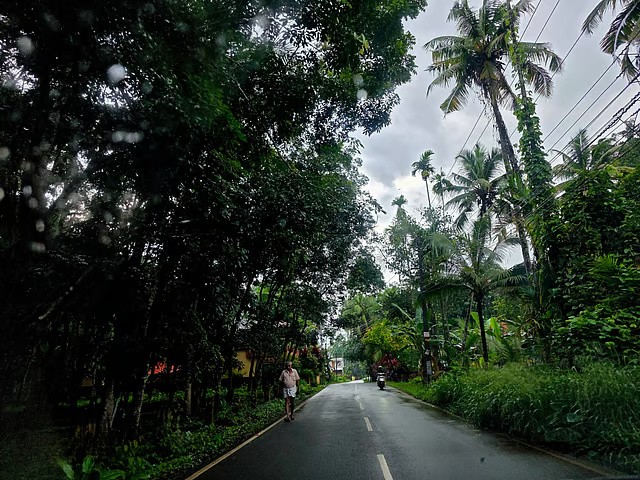
The minister attributed part of the rise in Gulf visitors to Kerala’s evolving strategy towards its monsoon season, which is increasingly being promoted as a tourism experience rather than viewed as an off-season period.
“What was earlier considered an off-season, the monsoon has now become a tourism product,” said the minister, who recently took charge of the portfolio. He added that the shift is particularly relevant to the Gulf market, as many Arab travellers visit Kerala during the monsoon months.
Kerala is increasingly promoting its lush greenery, cooler climate, natural landscapes and wellness offerings as an appealing alternative to the Gulf’s intense summer heat.
State tourism material identifies the Gulf summer holiday season as a key opportunity to market Kerala’s monsoon as a “green, cool and refreshing escape”. Family holidays, Ayurveda and wellness experiences are among the attractions being highlighted to travellers from GCC countries.
The minister also identified Ayurveda as one of Kerala’s key tourism strengths, helping distinguish the state from competing destinations.
“Wellness experiences such as spas and massages are available in many destinations, but for authentic Ayurveda, Kerala is the place to experience it,” the minister said.
He added that the state is working to integrate traditional Ayurveda practitioners more closely into the tourism sector by offering support and training focused on tourism standards, visitor expectations and infrastructure.
International arrivals still recovering
Despite strong growth from Gulf markets, Kerala’s overall international tourism sector has yet to fully recover to pre-pandemic levels.
The state welcomed 821,999 foreign tourist visits in 2025, an increase of 11.33 per cent from 738,374 in 2024. However, international arrivals remained 30.91 per cent below the 1.19 million visits recorded in 2019, highlighting the recovery gap that continues to face the sector.
The minister said Kerala aims to significantly increase international tourist arrivals over the next five years. Describing 2019 as the state’s strongest year for tourism, he noted that foreign visitor numbers fell sharply during the Covid-19 pandemic but have since been steadily recovering.
“We have to increase that also another 15 to 16 lakh a year,” he said, outlining Kerala’s longer-term ambition for annual foreign tourist visits.
Boosting tourism revenue is another priority. Kerala recorded estimated total tourism receipts of ₹50,702.34 crore in 2025 from domestic and international visitors, an increase of 12.54 per cent from 2024. Foreign tourist receipts alone were estimated at ₹7,382.02 crore.
Gulf market in focus
While Kerala has not set a specific tourist-arrival target for the GCC, the minister said the state sees substantial scope to attract more travellers from the region.
“We are not setting any particular number, but this is a market with strong potential for us,” the minister said. He added that Kerala Tourism has already organised an Indo-Arab Connect event and plans to hold more roadshows across Gulf and other Middle Eastern markets to strengthen its presence in the region.
The minister was speaking at Arabian Travel Market in Dubai, an event Kerala views as strategically important because it brings together key players from the Middle East’s travel industry, including tour operators, travel agencies, airlines, hotels and destination specialists.
For Malayalees living in the UAE, Kerala already has the advantage of being a familiar and easily accessible short-haul destination. The state is now looking to broaden its appeal beyond traditional diaspora travel by highlighting family holidays, wellness experiences and nature-based tourism.
Air connectivity remains key
The minister identified air connectivity as one of the main challenges limiting Kerala’s ability to attract more international tourists. He said discussions had been held with Emirates and other aviation partners to explore ways of improving flight connections to the state.
“If we have only one issue, it is air connectivity,” he said.
According to the minister, Kerala is continuing to push for stronger international connections through its MPs and official delegations, with the issue also being raised in discussions with the Prime Minister, External Affairs Minister and Civil Aviation Minister.
He said improved air connectivity could provide a significant boost to Kerala’s tourism sector and support the state’s efforts to increase international visitor numbers.
Kerala’s tourism figures also highlight the continued concentration of its international visitor market. The UK and US together accounted for nearly 28 per cent of foreign tourist visits in 2025, while the six GCC countries collectively contributed around 16.5 per cent.
Focus on emerging destinations
Kerala is also seeking to expand tourism beyond its traditionally popular destinations by identifying and developing new locations across the state.
The minister said several established tourist spots were approaching their carrying capacity, making it increasingly important to create alternative destinations that can accommodate future growth while distributing visitor traffic more widely.
“Any place has the potential to become a tourism destination,” he said, underscoring the state’s plans to explore and promote lesser-known locations.
The Kerala government is also working towards granting tourism industry status, alongside plans to streamline the approval process for investors. Under the proposed system, the minister said investors should be able to secure the necessary permissions within two months.
He added that international hotel groups are showing growing interest in Kerala as the state looks to attract greater investment and strengthen its tourism infrastructure.
Culture adds to Kerala’s appeal
The minister, whose portfolio also covers culture and cinema, sees both sectors as important elements of Kerala’s broader tourism strategy, helping the state showcase its cultural identity and strengthen its appeal to visitors.
“One good thing after a long time is that these two portfolios are under one minister,” he said.
A key priority, he added, is to integrate Kerala’s cultural calendar more closely with its tourism offerings, using festivals, traditional arts and local events to encourage travellers to visit at different times of the year.
“If a traveller is coming to Kerala in November, we can tell him that this is the season for Theyyam,” he said. Similarly, visitors could plan their trips around major festivals, traditional performances or Kerala’s popular boat races.
The aim is to create a more immersive travel experience by providing visitors with clear information about when and where cultural events and traditional experiences are taking place across the state.
Such an approach could also encourage Gulf travellers to explore beyond Kerala’s well-known beaches, backwaters and hill destinations. By combining culture with its wider tourism offering, the state hopes to develop a more diverse year-round tourism calendar while continuing to rebuild its international visitor base.

