

Warren Buffett Steps Down as Berkshire Chairman, Assumes Emeritus Role.
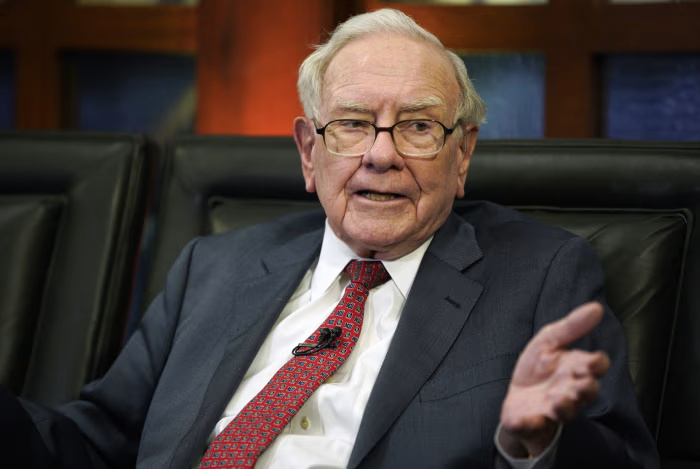
Berkshire Hathaway announced on Friday that Warren Buffett has stepped down as chairman of the conglomerate and transitioned to the role of chairman emeritus with immediate effect.
The move follows an earlier leadership change this year, when Buffett relinquished his position as chief executive and handed responsibility for running the company to his longtime deputy, Greg Abel.
In a letter to shareholders, the 96-year-old Buffett reflected on ageing and the passage of time, saying he felt fortunate for the longevity he had enjoyed throughout his life and career.
Berkshire Hathaway appointed Howard Buffett, Warren Buffett’s son and a member of the company’s board since 1993, as its new chairman.
The company said Warren Buffett would remain on Berkshire’s board in his new capacity as chairman emeritus, continuing to provide the company with his experience, perspective and guidance.
Over several decades, Buffett transformed Berkshire into a conglomerate valued at about $1.03 trillion, with a wide-ranging portfolio of businesses that includes Geico, BNSF Railway, Berkshire Hathaway Energy, Dairy Queen, Fruit of the Loom and the Squishmallows brand.
Greg Abel said the principles and corporate culture established by Buffett would continue to guide Berkshire, with Howard Buffett playing an important role in preserving that legacy.
Buffett’s impact has also reached well beyond Berkshire Hathaway. His focus on long-term investment, disciplined use of capital and clear management principles has influenced generations of investors and business executives.
Corporate leaders have frequently turned to Buffett for perspective on major issues ranging from acquisitions and succession planning to managing periods of financial uncertainty. Berkshire’s annual shareholder meetings also grew into major events, attracting investors seeking his views on companies, markets and the wider economy.
Buffett initially revealed plans to step back from the conglomerate in May 2025, a decision that caught many shareholders and analysts by surprise despite his advanced age. Having led Berkshire for decades and become closely identified with the company, the question of who would succeed him had long attracted significant attention across corporate America.
In August, Berkshire reported that it had started deploying some of its substantial cash reserves during the second quarter. The company invested billions of dollars in stocks, including Alphabet, while also spending billions to repurchase its own shares.
Berkshire’s quarterly operating profit increased 16% to $12.98 billion, exceeding analysts’ expectations. Net income more than doubled to $25.67 billion, a figure that included unrealised gains and losses from stocks still held by the Omaha, Nebraska-based conglomerate.

