

Study Traces Al Khuzam’s Journey From Desert Life to a Symbol of Emirati Identity.
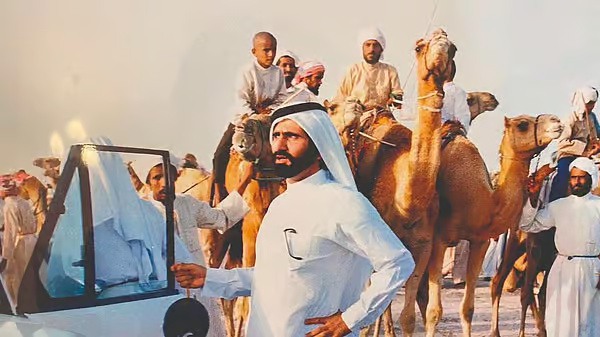
Dubai: His Highness Sheikh Mohammed bin Rashid Al Maktoum, Vice President and Prime Minister of the UAE and Ruler of Dubai, reviewed a research project documenting the history of Al Khuzam, from its early origins to its significance in Emirati society today.
The research goes beyond examining Al Khuzam simply as an object, exploring how its role and meaning have changed over generations. Once a practical element of daily life, it gradually developed into a social and cultural symbol closely connected to the UAE’s landscape, its people and their traditional way of life.
The research examines Al Khuzam’s traditional uses, craftsmanship, cultural symbolism and place in shared memory, showing how it has evolved over time while preserving its strong connection to Emirati heritage and identity.
The presentation took place in the presence of Sheikh Hamdan bin Mohammed bin Rashid Al Maktoum, Crown Prince of Dubai, Deputy Prime Minister, Minister of Defence and Chairman of The Executive Council of Dubai; Sheikh Ahmed bin Mohammed bin Rashid Al Maktoum, Second Deputy Ruler of Dubai; and Mohammad Abdullah Al Gergawi, Chairman of The Executive Office of Sheikh Mohammed bin Rashid Al Maktoum.
Sheikh Mohammed was briefed on the project’s main pillars, including research documenting Al Khuzam’s development across generations, the traditional methods used in its creation and the artisans who continue to preserve and pass on the craft.
The project also examines how Al Khuzam’s distinctive features, forms and design language could influence a new generation of contemporary products. The aim is to broaden its relevance in modern life while retaining the unique characteristics and cultural identity associated with its heritage.
A multidisciplinary team of researchers, specialists, artisans and creative professionals contributed to the initiative under the supervision of The Development Office, bringing together expertise from a range of fields.
By combining historical research with traditional craftsmanship that continues to be practised today, the project provides a framework for safeguarding knowledge, reinterpreting heritage and keeping it relevant for future generations. It also seeks to create opportunities for entrepreneurs through an integrated approach combining research, craftsmanship, design and enterprise.
From Functionality to Symbolism
Sheikh Mohammed reviewed the project’s key areas, including its documentation findings, Al Khuzam’s historical development, traditional production techniques and the role of artisans in safeguarding these skills and transferring their knowledge from one generation to the next.
The research also highlights the role of Emirati entrepreneurs and designers in bringing Al Khuzam into contemporary design and product development. Their work has helped give the traditional craft renewed visibility while introducing its cultural significance to audiences beyond the UAE.
The project traces Al Khuzam’s evolution through three key phases. It began as a practical tool associated with guiding camels and navigating the desert, before becoming part of the region’s social customs, traditional attire and lifestyle. Over time, it developed into a cultural symbol closely associated with Emirati identity.
The research also draws on historical evidence from different parts of the Arab world to demonstrate the wider use of Al Khuzam over time. In addition, it documents references in Arabic poetry and examines the various meanings associated with it within Emirati culture.
An Inherited Craft
The project explores the traditional process of making Al Khuzam, beginning with the collection of wool and the spinning of fibres into fine threads. These threads are then braided to form a durable rope before being finished with knots, rings and silver chains, combining practical purpose with decorative craftsmanship.
The project also underscores the important role played by Emirati artisans in preserving the traditional craft of Al Khuzam. By maintaining its distinctive techniques and details and passing these skills on to younger generations, artisans are helping ensure that the knowledge surrounding the craft continues to survive.
Rather than viewing Al Khuzam simply as a handcrafted object, the research presents it as a wider cultural ecosystem encompassing traditional knowledge, specialist skills, materials, production methods and the personal stories of those involved in the craft. Documenting these elements and transferring them to future generations are therefore considered essential to preserving its legacy.
Al Khuzam in Arabic Poetry
The research also explores Al Khuzam’s presence in Arabic poetry, where it appeared as a familiar element of traditional Arab life and the desert environment. Early poetic references connected it with camels, journeys and leadership, while its meaning later broadened to represent qualities such as determination, strength and resilience.
Its recurring presence in poetry reflects Al Khuzam’s significance in Arab cultural memory and demonstrates how poetry has helped preserve aspects of traditional life, heritage and identity across generations.
A Contemporary Visual Language
The project also features innovative works that reinterpret Al Khuzam for a contemporary setting. Its distinctive rings, threads and intricate details have been transformed into visual motifs that can be incorporated into modern designs and products.
Sheikh Mohammed reviewed examples showing how Al Khuzam’s symbolism and recognisable design elements could inspire products that combine traditional character with contemporary aesthetics. The approach aims to bring Al Khuzam into everyday life while retaining the distinctive identity rooted in its heritage.
The initiative also highlights the contribution of Emirati entrepreneurs and designers in revitalising Al Khuzam through heritage-inspired products. Their work seeks to strengthen its position as an authentic Emirati cultural product while introducing an important element of UAE heritage to audiences around the world.
Under the supervision of the Development Office, researchers, specialists and creative professionals collaborated on an extensive study examining Al Khuzam’s historical origins, the changing ways it has been used, its traditional production techniques and its reinterpretation through contemporary products.
Drawing on Al Khuzam’s distinctive heritage, designers developed bespoke collections that reflect its historical and cultural significance. The initiative demonstrates how contemporary design can help reconnect younger generations with Emirati traditions while ensuring Al Khuzam remains a living cultural symbol with a continuing place in society and everyday life.
The research ultimately seeks to broaden understanding of Al Khuzam, preserve and transfer its craftsmanship to future generations, and support artisans, designers and entrepreneurs in finding new ways to revive the tradition and expand its use across modern Emirati society.

