

Dubai-Abu Dhabi rail link could allow commuters, students and travellers to continue their journeys by Metro.
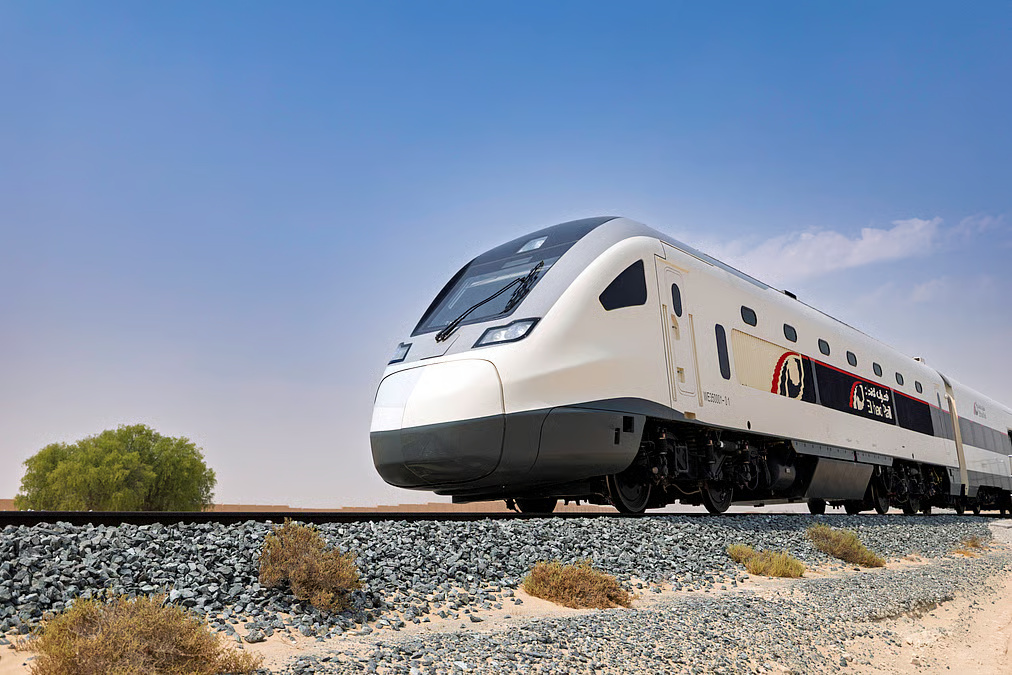
A resident of Abu Dhabi could begin the day by boarding a train to Dubai, transfer directly to the Metro and continue towards their final destination elsewhere in the emirate. The journey could then be reversed in the evening, reducing the need to spend hours driving between Dubai and Abu Dhabi.
This could become a typical daily commute once Etihad Rail, the planned Abu Dhabi-Dubai high-speed railway and Dubai’s expanding Metro network are integrated, creating a more connected public transport system between the two emirates.
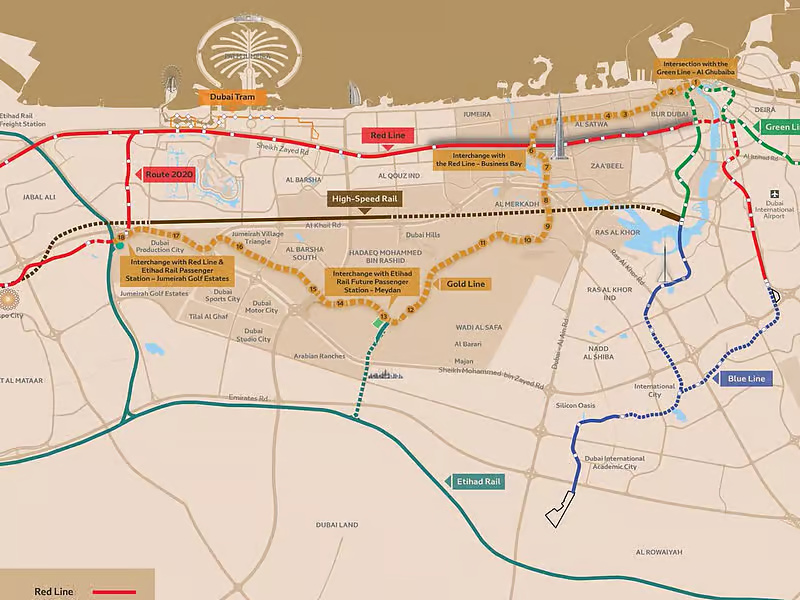
The Dubai Rail Network Plan 2032, unveiled by the Dubai Media Office in April, provides a clearer picture of how the UAE’s major rail networks could eventually connect.
The plan brings together Etihad Rail, the planned high-speed railway and Dubai Metro’s Red, Green and Blue lines, along with the future Gold Line, outlining a more integrated rail system designed to improve connectivity within Dubai and between the emirates.
Mattar Al Tayer, Director General and Chairman of the Board of Executive Directors of Dubai’s Roads and Transport Authority (RTA), said the various rail projects are being planned in coordination to create a more integrated transport network.
“We are working with them on these projects, and our plans complement theirs,” Al Tayer said during a press conference announcing the RailX Dubai Conference and Exhibition.
Changing from Etihad Rail to Dubai Metro
The Etihad Rail passenger network is expected to include two stations in Dubai. One is planned at Al Yalayis, near Jumeirah Golf Estates, while the Dubai Rail Network Plan 2032 identifies Meydan as another future passenger station.
At Jumeirah Golf Estates, passengers could transfer to the Dubai Metro Red Line, providing onward connections to key areas such as Dubai Marina, Internet City, Business Bay, Downtown Dubai and Dubai International Airport.
The planned Meydan station is shown as an interchange with the future Gold Line. According to the network map, the Gold Line is also expected to connect with the Red Line at Business Bay and Jumeirah Golf Estates, as well as with the Green Line at Al Ghubaiba.
For commuters, this could make cross-emirate journeys considerably more practical. Someone living in Abu Dhabi and working in Business Bay, for example, could take Etihad Rail into Dubai before transferring to the Metro for the final part of the journey. Similarly, a Dubai resident commuting to Abu Dhabi could make the same trip in the opposite direction.
Dubai-Abu Dhabi in about 30 minutes
A separate high-speed railway connecting Dubai and Abu Dhabi is also planned, with trains expected to reach speeds of up to 350kmph. The rail journey between the two cities is projected to take around 30 minutes.
Six stations have been announced along the route: Reem Island, Saadiyat Island, Yas Island, Zayed International Airport, the Al Maktoum International Airport area and Al Jaddaf.
The high-speed service could provide another option for thousands of people who currently rely on cars to travel between the two emirates. It could allow professionals to live in one emirate while working in the other, while students could travel to universities without facing lengthy daily journeys by road.
Doctors, nurses and other shift workers could also benefit from the service, particularly when travelling during early-morning or late-night hours. However, while the train journey itself is expected to take about 30 minutes, the total door-to-door travel time would be longer once journeys to and from stations, waiting times and transfers are taken into account.
The high-speed railway could also provide Dubai residents with another rail option for reaching Zayed International Airport. Passengers could board the service at Al Jaddaf or near Al Maktoum International Airport and travel directly by rail to the airport in Abu Dhabi.
Several key details about the planned service, however, are still to be announced. These include ticket fares, operating hours, train frequency and the final design of interchange stations. An official opening date for the Dubai-Abu Dhabi high-speed railway has also yet to be confirmed.
Meanwhile, Dubai’s rail network will continue to expand. The Dubai Metro Blue Line is scheduled to open in 2029, while the future Gold Line is expected to be completed by 2032.
Once these rail networks are fully operational and connected, the transformation could extend beyond simply reducing travel time between Dubai and Abu Dhabi. Passengers could potentially step off an inter-emirate train and continue their journey through Dubai’s broader public transport network to reach offices, universities, airports or residential areas, making cross-emirate travel more convenient and integrated.

