

Kasavu sarees, mundus and children’s outfits remain in high demand.
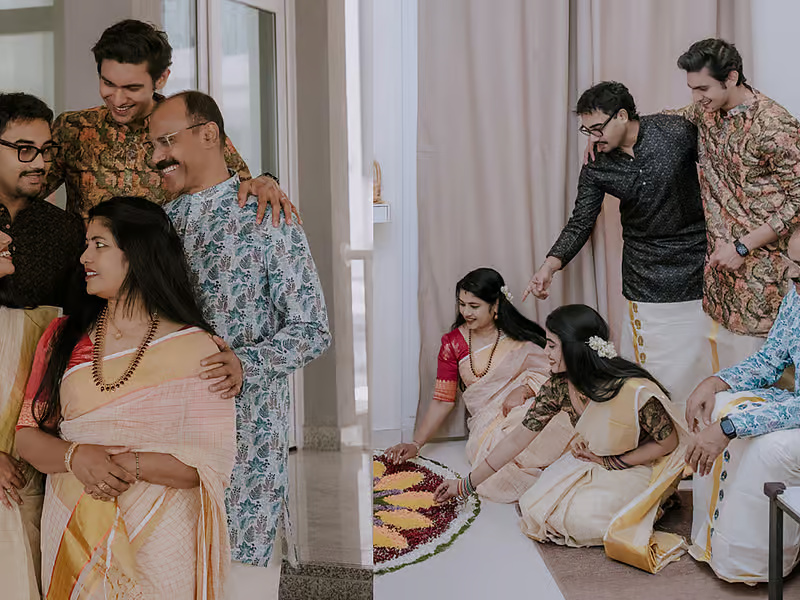
Days after Onam was celebrated by Keralites across the UAE, tailoring shops continue to see a steady flow of customers collecting last-minute orders or bringing in new fabrics for upcoming celebrations. For many, the harvest festival is not limited to a single day but is celebrated as a season, with traditional dressing continuing well beyond the main festivities.
At Al Jismi Tailoring Shop in Bur Dubai, the festive season has brought a steady stream of customers looking to have traditional Kerala outfits stitched.
“We have seen a strong number of customers coming in to have traditional Kerala outfits stitched for Onam,” said Jaber, a staff member at the shop. “Even now, after Onam, customers continue to visit. Some are collecting orders placed weeks ago, while others are already preparing for next year’s celebrations.”
Jaber said the demand extends beyond adults, with children also getting dressed in traditional Onam attire. “We are stitching traditional Onam clothes for children too. The little outfits are very cute,” he said.
For some customers, the fabric is purchased in Dubai, while others bring it from Kerala in their luggage before taking it to a local tailor. Blouses and other garments are then stitched to complete the festive outfits, adding another step to the preparations.
Boutiques see sustained demand
For Anu Viju, founder of Jiwa Couture in Dubai, Onam is one of the boutique’s busiest and most important seasons, with preparations starting months in advance. However, demand continues even after Thiruvonam.
“Onam is one of our most important seasons, so we start preparing months ahead, from fabrics and colour combinations to developing the complete collection,” she said. “This year, we have created our own custom prints and designs while working with Kerala handloom, kasavu and tissue fabrics.”
While ivory, off-white and gold remain popular festive choices, Viju said customers are increasingly open to experimenting with contemporary styles.
“Tissue fabrics, handloom textures, statement blouses, subtle handwork and Kerala-inspired prints are seeing a lot of interest,” she said, adding that customised outfits and coordinated looks for couples and families are also gaining popularity.
However, she believes the shift towards new styles has not reduced the appeal of traditional attire. “The love for Kerala handloom and kasavu is definitely still there. What has changed is that customers don’t necessarily want the same conventional look every year. They still want the tradition, but they also want something that feels individual.”
A family tradition
For Dubai-based couple Rahul Krishna and Pratheeksha Pratheep, their Onam outfits are part of another tradition — their families often choose what they wear for the celebrations.
“Every Onam, our parents buy something for both of us, and that has become a special part of the celebration. It is less about choosing the perfect outfit ourselves and more about wearing something our families have selected for us with love,” Pratheeksha said.
Born and raised in Dubai, where she has lived for 28 years, Pratheeksha said celebrating Onam has always been an important part of her life in the UAE. She added that finding traditional outfits locally is no longer a challenge.
“There are always new collections coming into Dubai, so we have plenty of options here,” she said.
Traditions grow stronger with distance
For UAE resident Lakshmi Sadasivan, moving away from Kerala has unexpectedly deepened her connection to Onam traditions.
“When I was living in Kerala, I was never particularly obsessed with wearing a Kerala saree for Onam. But over the years, after moving to the UAE, I found myself looking forward to the festival much more,” she said.
She now makes an effort to follow traditions such as preparing a sadya and making a pookalam, saying these practices “make me feel closer to my roots.”
This year, Lakshmi plans to wear a Kerala saree she brought from home while purchasing outfits for her family in the UAE. She said the range of choices available locally has expanded significantly, with traditional textile stores, small businesses and online retailers offering styles similar to those found in Kerala.
When tradition meets changing tastes
For Malayalis living away from Kerala, dressing up for Onam remains an important part of the celebrations. The traditional border may be reimagined, while classic weaves can be paired with statement blouses and younger generations may put their own spin on kasavu.
However, Viju believes the emotion behind the tradition remains unchanged.
“Onam fashion is very emotional. Trends may change, but the feeling associated with wearing a kasavu saree, mundu or something that reminds you of Kerala doesn’t really change,” she said.
“When you live away from Kerala, dressing traditionally for Onam makes you feel connected to home, family and your roots.”
While styles may evolve from year to year, the tradition and sense of belonging they represent continue to remain strong among Malayalis in the UAE.

