

Brent crude falls below $90 — could UAE petrol prices ease in September?
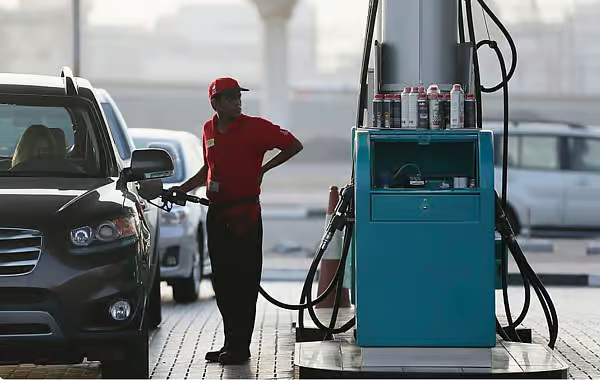
Dubai: With the UAE set to announce September fuel prices in the coming days, motorists can already estimate how a modest pump-price cut could affect their monthly fuel bills as global oil prices retreat from recent highs. Brent crude fell to around $86.77 a barrel on Thursday, extending its recent decline amid hopes that diplomatic efforts could ease disruptions around the Strait of Hormuz.
However, the final UAE rates will depend on how global oil prices move through the rest of August. The current August rates are Dh3.60 per litre for Super 98, Dh3.49 for Special 95 and Dh3.41 for E-Plus 91, with diesel at Dh3.80.
Brent crude extended its decline on Thursday, falling for a fourth straight session as hopes of diplomatic progress raised expectations that oil flows through the Strait of Hormuz could eventually improve. The benchmark was trading around $87 a barrel, with Reuters reporting that it had fallen for four consecutive days.
If the recent decline is sustained through the end of August, stable to moderately lower UAE fuel prices could be a reasonable scenario for September. However, global oil prices alone are not enough to predict the UAE Fuel Price Committee’s final rates, which will depend on the broader pricing environment and movements through the rest of the month.
What a September cut could save you
UAE motorists currently pay Dh3.60 per litre for Super 98, Dh3.49 for Special 95, Dh3.41 for E-Plus 91 and Dh3.80 for diesel in August.
For a typical car with a 60-litre tank using Special 95, filling an empty tank at the current rate costs about Dh209.40.
If September’s rate were to fall by 10 fils per litre, the same fill-up would cost Dh203.40 — a saving of Dh6. A 20-fils reduction would bring the cost down to Dh197.40, saving Dh12 per tank.
The actual September rates, however, will depend on global oil-price movements through the end of August and the UAE Fuel Price Committee’s monthly review.
If September’s price were 10 fils lower at Dh3.39 per litre, the same 60-litre tank would cost Dh203.40, saving Dh6 per fill. A 20-fils reduction to Dh3.29 would bring the cost down to Dh197.40, a saving of Dh12 per tank.
The savings would be greater for larger vehicles. An 80-litre tank of Special 95 currently costs Dh279.20. A 10-fils reduction would save Dh8 per fill, while a 20-fils cut would reduce the cost by Dh16.
These figures are illustrative scenarios, not forecasts of the UAE’s official September fuel prices. The final rates will depend on international crude and refined-product prices over the remainder of August and the Fuel Price Committee’s monthly review.
$87 oil doesn’t mean cheaper fuel
It may seem straightforward: if Brent crude falls, UAE petrol prices should fall by a similar percentage. But the relationship is not that direct.
The UAE reviews retail fuel prices monthly, based on prevailing trends in global energy markets. That means a sharp move in Brent on a single day does not automatically translate into an equivalent change at the pump. The committee considers the broader pricing trend over the month when determining the next rates.
Refining costs, product prices and other market factors can also influence what motorists ultimately pay. As a result, a fall in crude prices can support lower petrol rates without guaranteeing a matching drop in UAE pump prices.
Since the UAE deregulated fuel prices in August 2015, petrol and diesel rates have been reviewed monthly based on average international prices, with operating costs also factored into the pricing mechanism. The system is designed to reflect broader global market trends rather than respond to a single day’s movement in crude prices.
Importantly, UAE petrol prices are not determined by Brent crude alone. International refined-product benchmarks, transportation expenses and other operating costs also influence the final retail price.
As a result, a 10% decline in Brent does not automatically translate into a 10% reduction in UAE petrol prices the following month.
September outlook improves
The recent decline in oil prices nevertheless provides a more favourable backdrop for September fuel rates than earlier this month. Brent had posted gains in 13 of the previous 14 sessions before reversing course, falling 2.7% to $88.10 on Tuesday and subsequently sliding to around $86.8 a barrel.
If the decline is sustained through the end of August, it could increase the likelihood of stable or moderately lower fuel prices in September. However, the final rates will depend on the broader international pricing trend considered by the UAE Fuel Price Committee.
The scale of recent volatility is significant. Brent crude moved between roughly $72 and $102 a barrel during July, reflecting sharp shifts in market expectations over the Middle East conflict and the possibility of restoring tanker traffic through the Strait of Hormuz. Brent had been near $72 at the start of July before rising above $90 later in the month.
There are now signs of renewed diplomatic activity. Iran and Oman are working on a framework for reopening commercial navigation through Hormuz, while Qatar’s prime minister is due to visit Tehran as part of efforts to revive wider US-Iran negotiations. However, oil flows through the strait remain far below pre-conflict levels, meaning supply risks have not disappeared.
OPEC+ supply is another factor to watch. The group agreed to increase production targets by 188,000 barrels per day, adding potential supply to the market if producers deliver the planned volumes. However, the impact could be limited while export routes remain disrupted.
When could UAE petrol return to Dh3 levels?
Historical UAE fuel prices show that petrol can fall to around the Dh3 mark when global market conditions are significantly softer. In September 2025, Super 98 was Dh2.70 per litre, Special 95 was Dh2.58 and E-Plus 91 was Dh2.51.
By comparison, August 2026 rates are Dh3.60, Dh3.49 and Dh3.41, respectively. Special 95 would therefore need to fall by 49 fils, or about 14%, to reach Dh3 per litre. Super 98 would require a 60-fils reduction, or roughly 17%, from its current Dh3.60 rate.
That does not mean Brent crude would need to fall by 14% or 17%. There is no reliable one-to-one relationship between a particular Brent price and the UAE’s retail petrol rates, as refined-product benchmarks, operating costs and other elements of the pricing mechanism also influence the final price.
What motorists should expect now
The more important signal ahead of September is therefore the direction and persistence of international oil prices, rather than any single day’s Brent quotation. Brent has recently fallen for four consecutive sessions, reaching around $86.77 a barrel on Thursday, as hopes of diplomatic progress around the Strait of Hormuz weighed on prices.
If that decline continues through the end of August, it could create room for stable or moderately lower UAE fuel prices in September. But motorists should not assume that a sharp fall in Brent will translate into an equivalent drop at the pump. The UAE Fuel Price Committee’s monthly calculation remains the decisive factor.
With Brent now below $90 a barrel and retreating from its earlier rally, the backdrop for UAE motorists has become more supportive of stable or moderately lower fuel prices in September. Further progress towards restoring oil flows through the Strait of Hormuz, along with the planned OPEC+ production increase, could add further downward pressure on global crude prices.
For motorists trying to gauge the potential impact at the pump, the calculation is straightforward: every 10-fils change per litre would alter the cost of a 60-litre fill by Dh6 and an 80-litre fill by Dh8.
Whether motorists actually see those savings — and how large any reduction may be — will ultimately depend on the average international crude and refined-product prices used by the UAE Fuel Price Committee when it determines September’s rates.

