

Qatar’s leader heads to Tehran to revive diplomacy.
Qatar’s Prime Minister and Foreign Minister Sheikh Mohammed bin Abdulrahman Al Thani is travelling to Tehran on Thursday as part of efforts to revive US-Iran dialogue and ease regional tensions. Qatar has been acting as a back-channel mediator between Washington and Tehran.
His talks with Iranian officials are expected to focus on de-escalation, restarting negotiations and restoring freedom of navigation through the Strait of Hormuz. Qatar is seeking a return to the pre-war status quo for the strategic waterway.
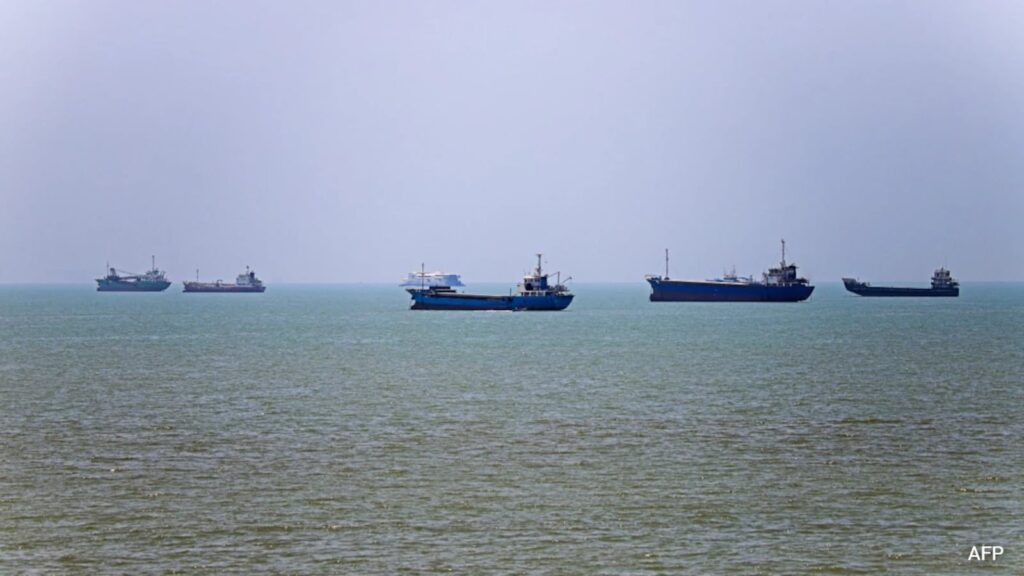
The visit comes as the dispute over Hormuz remains unresolved. Oil flows through the strait have fallen sharply from about 20 million barrels per day before the conflict to around 5 million barrels per day, according to recent reporting.
For UAE residents, any progress in the talks could have implications for regional security, shipping, fuel prices and airline operations, although there is no guarantee of an immediate breakthrough.
The visit comes after weeks of stalled diplomacy and mounting economic pressure from Washington. Qatar, which previously helped broker a June ceasefire, is now seeking to bridge differences between Tehran and Washington and revive negotiations.
Trump ‘not in a hurry’ for a deal
US President Donald Trump has said he is “not in a hurry” to reach an agreement with Iran, while Tehran continues to seek concessions, including an end to US sanctions and the blockade.
Hormuz remains the biggest concern
The Strait of Hormuz remains at the centre of the crisis, with disruptions to shipping continuing to affect global energy markets.
Reuters reported on Thursday that oil flows through the waterway had fallen to around one-quarter of pre-war levels. Hopes that diplomatic efforts could lead to a reopening of the strait have helped push crude prices lower, with Brent falling further on Thursday.
The latest talks between Iran and Oman on a temporary maritime arrangement, alongside Qatar’s efforts to revive US-Iran diplomacy, have raised cautious hopes of restoring shipping through the strategic waterway. However, major disagreements remain unresolved and a broader deal is far from guaranteed.
Oil prices are falling — for now
Brent crude fell to around $87.43 a barrel on Thursday, while US West Texas Intermediate dropped to about $81.86, as markets responded to renewed diplomatic efforts and growing hopes that the Strait of Hormuz could eventually reopen.
The decline is welcome news for oil-importing economies and consumers, but the relief could prove temporary. Any renewed attacks on shipping, a breakdown in negotiations or further escalation involving Gulf states could quickly push energy prices higher again.
UAE suspends financial and economic dealings with Iran
The UAE has adopted a significantly tougher stance towards Tehran, announcing that all trade, commercial exchanges and financial transactions with Iran have been suspended until further notice. The Ministry of Foreign Affairs said the decision was taken amid regional escalation and concerns over threats to UAE security.
The move marks a major shift given the UAE’s historically important commercial ties with Iran and could have implications for businesses involved in cross-border trade and financial transactions.
Reuters reported that Washington has welcomed the UAE’s cooperation as the US intensifies economic pressure on Iran and targets countries and companies that continue doing business with Tehran.
What this means for residents
Businesses and individuals involved in Iran-related transactions should be prepared for:
- tighter scrutiny from banks;
- more stringent sanctions-compliance checks;
- possible delays in Iran-linked payments;
- increased scrutiny of trade and shipping transactions;
- potential restrictions involving Iranian counterparties.
Given the UAE’s role as a major regional financial and trading hub, businesses dealing with Iran may need to pay particular attention to sanctions and compliance requirements.
UAE shipping has already been targeted
The maritime threat has already affected UAE-linked shipping. The UAE accused Iran of attacking vessels affiliated with ADNOC while they were transiting the Strait of Hormuz, describing the incidents as hostile attacks and piracy. Iran had not immediately accepted responsibility for the attacks.
The incidents have added to concerns over the safety of commercial shipping through Hormuz and contributed to the UAE’s decision to suspend trade, commercial exchanges and financial transactions with Iran until further notice.
The incidents have heightened concerns over the safety of UAE-linked commercial shipping and could also push up maritime insurance costs as insurers reassess risks across the Gulf.
Flights: UAE aviation is operating, but don’t assume normality
UAE airports remain operational, but passengers should continue checking their individual flight status before travelling. The conflict has disrupted regional aviation through airspace restrictions, flight cancellations, rerouting and longer flight paths.
Dubai International Airport handled 31.5 million passengers in the first half of 2026, down 31.3 per cent year on year, with regional airspace restrictions and the Iran war significantly affecting traffic.
There are signs of recovery, with airlines gradually restoring capacity and passenger volumes at DXB rising through the second quarter. However, several international carriers remain cautious and continue to suspend or adjust selected Middle East routes.
Don’t:
- Assume that a flight operating yesterday will operate today.
- Rely solely on third-party flight trackers.
- Travel to the airport without confirming your flight.
The security situation remains volatile
The UAE continues to maintain heightened security measures following earlier Iranian missile and drone attacks during the conflict.
The US State Department continues to advise Americans to reconsider travel to the UAE, citing the threat of armed conflict and terrorism.
Australia’s Smartraveller also continues to advise travellers to reconsider their need to travel to the UAE because of the unpredictable security situation in the country and the wider region. Its latest guidance warns that military strikes, airspace closures, flight cancellations and other disruptions could occur with little notice.
These advisories do not mean normal life in Dubai or Abu Dhabi has stopped. Rather, they highlight the possibility that security conditions could change rapidly.
Residents should follow instructions from UAE authorities, monitor official alerts and avoid relying on unverified information circulating on social media.
The big diplomatic question: Can Hormuz reopen?
The Strait of Hormuz remains the most closely watched issue as diplomatic efforts intensify. Iran and Oman are discussing a framework for a temporary navigation corridor, including mine-clearing measures, while technical talks are continuing on a longer-term arrangement for managing maritime traffic.
Qatar is also stepping up efforts to revive broader US-Iran diplomacy, with its prime minister travelling to Tehran as part of attempts to push negotiations and de-escalation forward.
A successful arrangement could have significant consequences for the region, potentially:
- restoring commercial shipping through Hormuz;
- reducing maritime insurance and freight costs;
- easing pressure on oil prices and energy supplies;
- reducing disruption to regional aviation; and
- improving investor confidence across the Gulf.
However, the negotiations remain fragile. Iran’s nuclear programme, US sanctions and the blockade, control and management of the Strait of Hormuz, and the terms of any ceasefire or wider settlement remain major points of disagreement. Recent reports indicate that Iran still links a broader reopening of the waterway to the lifting of the US blockade, while Washington has resisted arrangements that would give Tehran control over the strait.
For UAE residents and businesses, the key takeaway is that diplomatic progress could bring meaningful relief, but Hormuz should not yet be considered fully reopened or the regional crisis resolved.
Cautious optimism amid continuing risks
For UAE residents, August 27 brings a mix of uncertainty and cautious optimism. Security risks remain, shipping through the Strait of Hormuz is still severely disrupted, and economic pressure on Iran continues. However, Qatar’s renewed mediation efforts and ongoing Iran-Oman discussions on maritime navigation offer a potential diplomatic opening after weeks of stalled efforts.
For now, the message for residents is straightforward:
- Stay informed through reliable and official sources.
- Check flight status before travelling.
- Follow instructions from UAE authorities.
- Avoid relying on unverified reports circulating on social media.
The direction of the conflict could increasingly depend on what happens around the Strait of Hormuz, where Iran and Oman are working towards arrangements for commercial navigation while Qatar seeks to revive wider US-Iran diplomacy.
For the UAE and the wider Gulf, any sustained reopening of the waterway could ease pressure on shipping, energy markets and regional travel. But for now, the situation remains fluid and any diplomatic breakthrough is far from guaranteed.

