

UAE authorities move swiftly on Interpol arrest warrants and Red Notices to track down and detain high-profile fugitives.
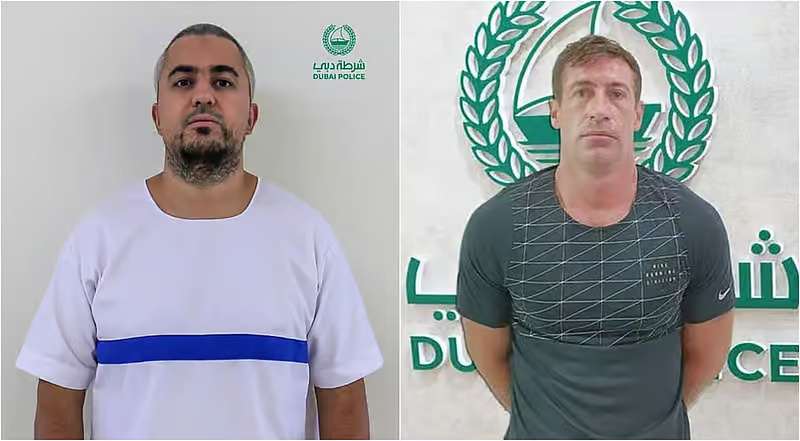
The UAE has not only built a reputation as a safe country where residents and visitors can walk the streets at night and go about their daily lives with confidence, but it has also played a growing role in helping apprehend some of the world’s most wanted criminals.
From drug lords to high-profile international fugitives, the UAE has in recent years strengthened cooperation with countries around the world to track down and extradite wanted individuals.
According to data released in 2022, Dubai Police arrested 432 international fugitives wanted for offences including leading or joining criminal syndicates, premeditated murder, money laundering and armed robbery between 2020 and 2022.
During the same period, the authority extradited 379 wanted individuals to authorities in 30 countries and helped repatriate 65 wanted fugitives from abroad.
Here are some of the high-profile fugitives wanted internationally who were extradited from the UAE.
Daniel Kinahan
The UAE extradited Irish fugitive Daniel Kinahan, described as one of the masterminds behind Ireland’s Kinahan Transnational Criminal Organisation (KTCO), and handed him over to Irish authorities, officials announced on Sunday, August 9.
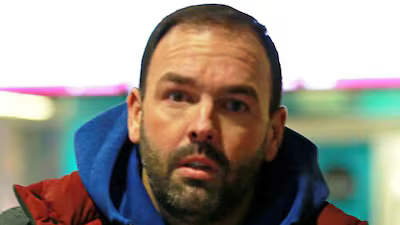
Kinahan is expected to face prosecution in connection with transnational organised crime, including allegations of leading a criminal organisation, murder and illegal drug trafficking.
Kinahan, who was previously arrested in Dubai, was identified by US authorities in 2022 as one of three leaders of the Kinahan Organised Crime Group, with the US government offering a $5 million reward for information leading to their arrest. He fled to Dubai in 2016 after a shooting at a Dublin hotel involving a rival gang left him fearing for his safety.
The Kinahan Transnational Criminal Organisation initially built its operations around distributing South American cocaine and heroin in Ireland before expanding into the UK and mainland Europe. In addition to drug trafficking, the group has been linked to money laundering, firearms trafficking and murder.
Sean McGovern
Sean McGovern, one of the most high-profile members of the Kinahan cartel, is now being held at a maximum-security prison in central Ireland.
Before his arrest by Dubai Police in 2024, McGovern was wanted on allegations of organising a criminal group and the 2016 murder of a member of a rival gang. He fled to the UAE shortly afterwards.
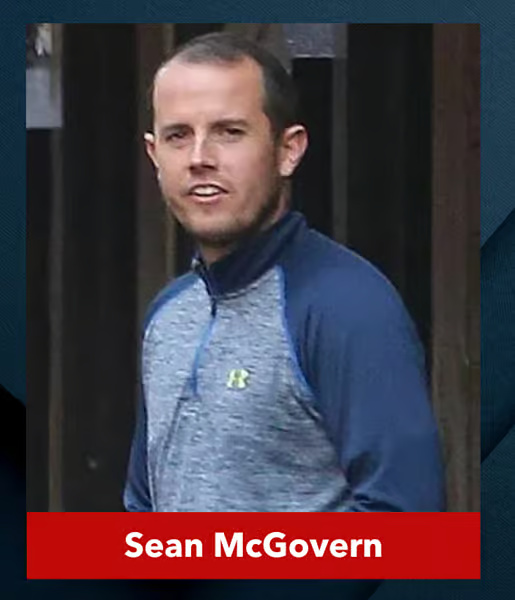
Interpol had issued a Red Notice for McGovern before his arrest, helping Dubai Police locate and detain him.
For several years, McGovern had been the subject of a Blue Notice, an Interpol request to gather additional information about a person’s identity, location or activities.
According to Interpol, officers from the organisation, Dubai Police and the Irish police held numerous informal meetings over the years as part of what became known as “Operation Harvest”.
While McGovern was in Dubai, police remained in close contact with Interpol and arrested him within an hour of the Red Notice being published on October 10, 2024, according to the international police organisation.
Othman El Ballouti
Othman El Ballouti, one of Belgium’s most-wanted international drug traffickers, was arrested in Dubai following an international manhunt, Dubai Police confirmed on December 9.
The arrest followed a formal request from Belgian authorities, who had issued an international Red Notice over his alleged involvement in transnational organised crime and drug trafficking.
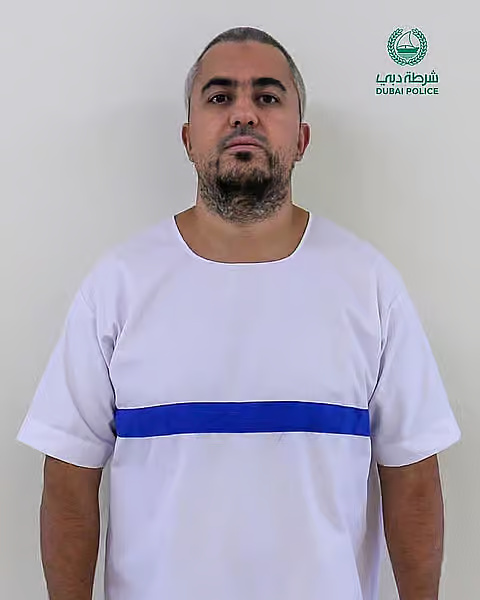
El Ballouti, who was listed on Interpol and Europol wanted lists, was accused of running a major drug-smuggling network through the Belgian port of Antwerp, one of Europe’s key drug gateways. He was also the subject of US sanctions.
El Ballouti was arrested in a targeted operation carried out by law enforcement teams in coordination with the UAE Ministry of Justice’s International Cooperation Department, which handles extradition requests.
On December 9, Dubai Police confirmed that El Ballouti had been referred to the Dubai Public Prosecution for legal proceedings related to his extradition. The UAE and Belgium signed an extradition agreement in 2021.
A Belgian-Moroccan national, El Ballouti became known as the “Cocaine King” and was extradited alongside two other high-profile criminals, Matthias Akyazili and Georgi Faes.
Raffaele Imperiale
In August 2021, Dubai Police arrested Italy’s most-wanted criminal, Raffaele Imperiale, along with his right-hand man, Raffaele Mauriello.
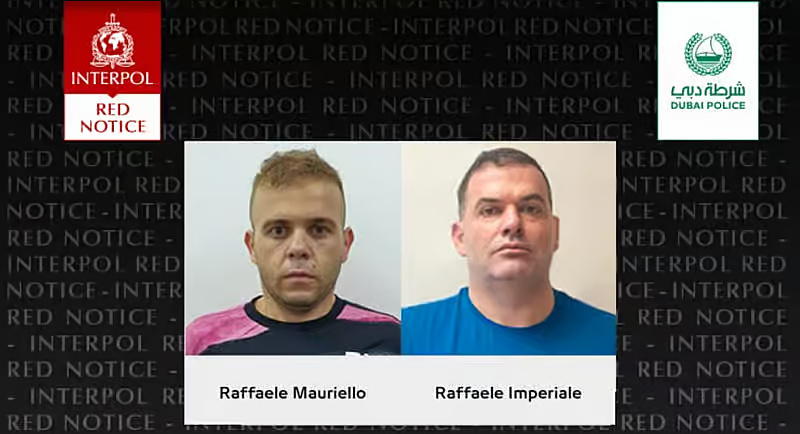
Imperiale was a member of the notorious Camorra organised crime group and had been the subject of an Interpol Red Notice since 2016 over drug trafficking and organised crime charges.
According to Interpol, Dubai Police arrested Imperiale on July 30, 2021, followed by the arrest of Mauriello on August 14. Mauriello was also the subject of two Red Notices relating to separate cases.
Imperiale had been living in Dubai under a false identity, using the name “Antonio Rocco”. He reportedly switched between different vehicles to avoid detection and lived in a secluded apartment that allowed him to monitor people approaching the property. He also deliberately avoided registering an official address in an effort to stay off the radar of authorities.
Dubai authorities said at the time that police used the Oyoon project, powered by a network of smart cameras, to monitor and track Imperiale’s movements for a week.
Brigadier Jamal Salem Al Jallaf, director of the Criminal Investigation Department (CID), said: “Backed by the latest artificial intelligence technology, our officers kept track of Imperiale’s movements and revealed his deceptive methods in evading detection. At the zero hour, a team raided the house and arrested Imperiale. The team also seized large sums of cash, luxury watches and valuable possessions, including paintings.”
Michael Paul Moogan
Michael Paul Moogan, described as one of the UK’s cocaine kingpins, was arrested by Dubai Police in 2021 after eight years on the run as part of Operation Captura.
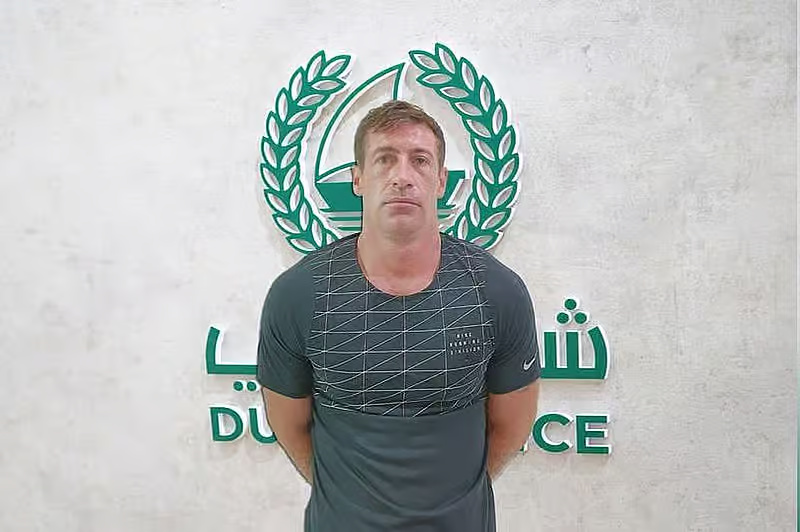
His arrest came shortly after Interpol issued a Red Notice over his alleged involvement in a large-scale international drug-trafficking operation in the UK.
Moogan had been wanted since authorities raided a cafe in Rotterdam suspected of serving as a meeting point for drug traffickers and cartels. The investigation centred on an alleged plot to smuggle hundreds of kilograms of cocaine into the UK each week.
At the time, a senior official confirmed that investigators were able to identify Moogan despite his using a different name and nationality to enter the UAE.
How does the UAE catch criminals?
1. Interpol Red Notices: Local authorities, including Dubai Police and Sharjah Police, act on international arrest warrants and Red Notices issued by Interpol to locate and detain high-profile fugitives.
2. Global law enforcement partnerships: UAE authorities work with international agencies on cross-border operations, including multi-country drug investigations, financial crime cases and operations involving the FBI and European law enforcement agencies, to dismantle international criminal networks.
3. Surveillance and smart tracking: Advanced databases, border-monitoring systems and GDRFA surveillance tools help authorities track suspicious movements and identify potential links to shell companies, illegal immigration and money-laundering networks.
4. Local prosecution and extradition: Following an arrest, cases proceed through the UAE’s legal system, with extradition requests formally processed through the relevant judicial authorities before suspects are transferred to their home countries.
When can UAE authorities publicly identify offenders?
Although the UAE has taken part in major international operations targeting organised crime, authorities also exercise caution when publicly identifying suspects and disclosing details of alleged offences.
In a previous report, legal experts said the Attorney General has the authority to determine how and when information about criminal cases can be made public.
Under the UAE Cybercrime Law, online insults or slander can carry prison sentences and fines ranging from Dh250,000 to Dh500,000. Publishing photographs, comments or other information online that violates another person’s privacy can also result in imprisonment of at least six months and fines of up to Dh500,000.
Experts have also warned that publicly exposing or shaming others online can itself constitute a criminal offence, with legal consequences potentially applying even when the information being shared is accurate.
While the UAE places emphasis on transparency and justice, its laws also provide additional protections for vulnerable groups. Under specific legal provisions, the identities or images of juvenile offenders, victims of sexual crimes and individuals granted suspended sentences cannot be publicly disclosed.

