

Gulf residents watch Strait of Hormuz tensions and growing Red Sea security threats.
The US-Iran conflict entered a new and more dangerous phase on Thursday (July 30), as the US Central Command launched a major wave of retaliatory strikes against Iran, while Tehran continued missile attacks targeting US forces in the region.
The latest escalation carries wider implications, with the conflict increasingly disrupting air travel, shipping routes, energy markets and regional security.
The situation remained fast-moving on Thursday, with reports of further attacks near Iran’s Qeshm Island and the city of Abadan. Uncertainty also continued to surround the Strait of Hormuz, alongside growing concerns over security risks in the Red Sea.
What happened overnight?
The latest wave of US strikes was triggered by an Iranian missile attack on a US base in Jordan.
In response, US Central Command (CentCom) carried out a broad series of strikes against Iranian military targets, including IRGC command centres, missile and drone facilities, and coastal defence systems. The strikes marked a significant escalation in the ongoing conflict, raising concerns about further retaliation and the potential impact on regional security.
The US also joined Saudi Arabia in carrying out strikes against Iran-backed militias in Iraq, adding another layer to the widening regional conflict.
Jordan said its air defence systems intercepted five Iranian missiles launched early Wednesday. Iran’s Revolutionary Guard said the strikes targeted Muwaffaq Salti Air Base and the US Central Command headquarters in Jordan.
The latest escalation comes after weeks of repeated attacks and unsuccessful attempts to maintain a ceasefire.
Strait of Hormuz remains the biggest concern
The key regional flashpoint continues to be the Strait of Hormuz, the narrow waterway between Iran and Oman. A significant portion of the world’s oil and gas shipments typically passes through this strategic route, making any disruption a major concern for global energy markets and regional stability.
The conflict has significantly reduced traffic through the Strait of Hormuz, with growing concerns over possible attacks on commercial vessels. The US has continued military operations aimed at protecting maritime routes and limiting Iran’s ability to threaten shipping in the region.
The impact is being felt well beyond the Gulf. Oil prices remain highly sensitive to each new development, although prices eased on Thursday as some tankers continued to operate in regional waters.
A prolonged disruption could push up costs across several sectors, including fuel, shipping, aviation and imported goods, even if domestic supplies remain stable.
Flights: expect disruption and check before travelling
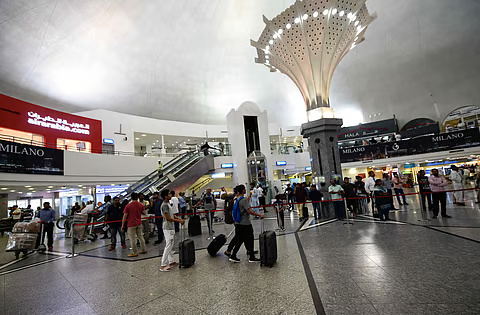
UAE airlines continue to monitor the evolving security situation, with airspace restrictions and regional risks being assessed closely. Passengers are advised to check the latest updates with their airlines before travelling.
Some flights have been cancelled, rescheduled or rerouted, with passengers advised to check directly with their airlines before heading to the airport.
While Gulf carriers have previously managed to maintain many operations during periods of regional tension, the situation can shift quickly following fresh military developments.
For UAE residents travelling today:
- Check your flight status shortly before leaving home.
- Use the airline’s official website or app for the latest updates rather than relying only on airport departure boards.
- Arrive at the airport earlier than usual to allow for possible delays.
- Be prepared for rerouting, schedule changes or longer travel times.
- Avoid travel to affected regional destinations unless it is necessary.
Residents should also differentiate between regional military developments and official UAE security announcements, relying on updates from authorised sources for guidance.
The most reliable updates remain those issued by UAE authorities and official channels.
One of the key concerns is the conflict’s expanding geographic reach, with incidents being reported beyond the immediate Gulf region.
A drone was reportedly used to strike a US-owned gas storage tanker at Egypt’s Damietta port on Wednesday, sparking a fire that later spread to another vessel.
Egypt’s Petroleum Ministry confirmed that a fire had occurred but did not confirm that it was caused by a drone attack. However, maritime security firms and other sources said a drone strike was the likely cause.
There were no reported casualties from the incident.
The development is significant because it highlights how the conflict’s impact is spreading beyond the immediate battlefield, reaching the Mediterranean and raising concerns over the security of critical energy infrastructure in the wider region.
Red Sea risks are also increasing
Adding to the uncertainty is the role of the Iran-linked Houthi movement in Yemen. The group has announced a naval blockade targeting Saudi Arabia and is reportedly considering charging commercial vessels transit fees to pass through the Bab el-Mandeb Strait in the southern Red Sea. On Thursday, Reuters reported that the proposed fees could potentially generate up to $180 million a month.
The move could create another pressure point for global shipping. A prolonged disruption in both the Strait of Hormuz and Bab el-Mandeb could further increase shipping costs and push more vessels to take longer routes around Africa to avoid high-risk areas.
China is also becoming part of the equation
China is emerging as another factor in the widening conflict. US President Donald Trump has warned that he would be “quite disappointed” if China supplies arms to Iran, according to the news roundup shown in the screenshot.
The warning highlights another dimension of the crisis: the confrontation is no longer limited to Washington and Tehran, but is increasingly linked to major global powers, international arms flows and energy markets.
China’s close economic ties with Iran, including its role as a major buyer of Iranian oil, make Beijing’s position an important factor in the wider economic impact of the conflict.
What does this mean for UAE residents?
For most UAE residents, the immediate effects are expected to be felt mainly through travel disruptions, fuel prices, shipping costs and general uncertainty, rather than direct changes to daily life.
However, with the situation evolving quickly, residents are advised to follow updates from official UAE authorities and remain aware of developments that could affect travel and regional services.
However, several developments remain important to monitor closely:
1. The Strait of Hormuz
Any prolonged disruption to shipping through the strategic waterway could affect global oil prices and have wider economic implications for the UAE and the region.
2. Airspace restrictions
A further escalation could lead to additional flight cancellations, delays or rerouting as airlines continue to assess security risks.
3. Energy infrastructure attacks
The reported incident at Egypt’s Damietta port highlights growing concerns over the vulnerability of oil and gas facilities as the conflict’s reach expands.
4. Red Sea escalation
Further Houthi activity, including attacks or proposed transit fees, could add another layer of pressure on global trade routes and increase shipping costs.
5. Gulf security risks
For Gulf countries, any major attack targeting territory or critical infrastructure would represent a significant escalation, with potential regional and economic consequences.
What residents should do today
Residents should keep their phones charged, enable official emergency alerts, and rely on guidance issued by UAE authorities.
Travellers should check their flight status before leaving for the airport and avoid sharing unverified claims about missile strikes, airport closures or alleged attacks. Relying on confirmed information from official sources remains essential as the situation continues to evolve.
The UAE remains a key economic and aviation hub even as conflict continues to unfold in the surrounding region.
The latest US strikes indicate that the confrontation is far from contained, with the next developments likely to depend on Iran’s response, the situation in the Strait of Hormuz, and whether attacks expand to additional Gulf and regional targets.
These factors will determine whether Thursday’s escalation remains a limited exchange or marks the beginning of a broader and more prolonged phase of the conflict.

