

Al Wugeisha, a massive tunnel boring machine (TBM), is carving out the underground passages that will form part of the new network.
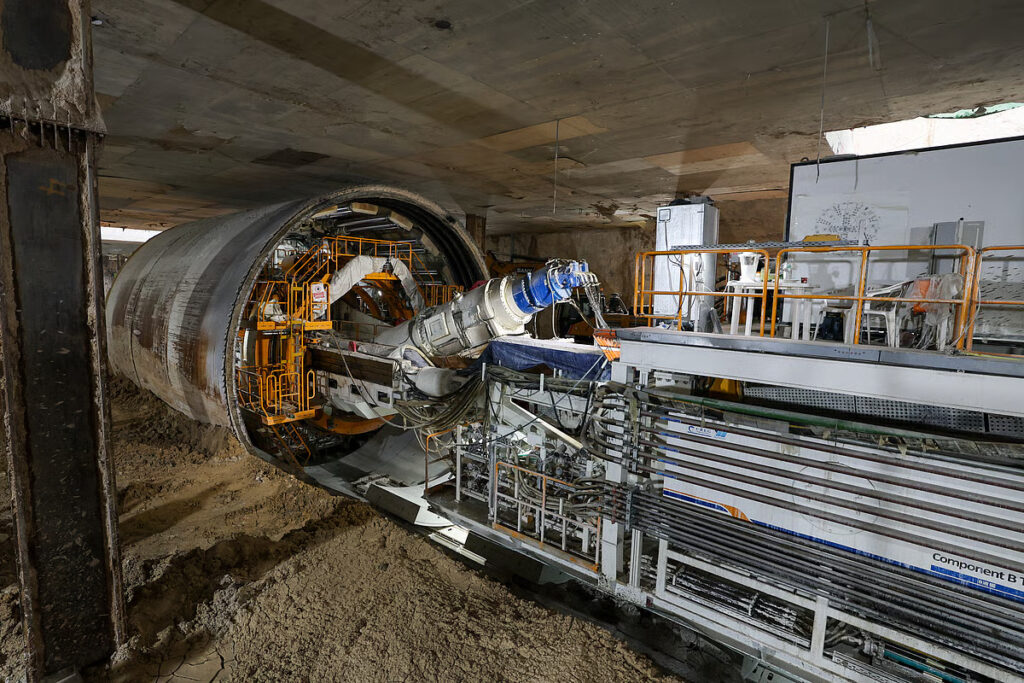
Dubai: Almost 35 metres beneath the streets of International City, a 2,000-tonne machine is quietly shaping the future of Dubai’s public transport network.
Known as Al Wugeisha, the tunnel boring machine (TBM) is at the centre of excavation works for the ambitious Dubai Metro Blue Line project. While construction progress on the new metro route has attracted attention above ground, only a few get a glimpse of the complex engineering taking place deep below the city.
Operating beneath International City, Al Wugeisha is steadily excavating the tunnels that will eventually connect five underground stations along the Blue Line, creating a vital new link in Dubai’s expanding metro network.
Al Wugeisha: A bigger, faster and more powerful return
For this project, the RTA has brought back Al Wugeisha, the tunnel boring machine (TBM) named after a small desert rodent that previously played a role in constructing Dubai’s Red, Green and Expo 2020 Metro lines.
This time, however, the machine has returned with major upgrades. It is larger, taller, faster and more powerful than its earlier version, stretching 163 metres in length and weighing approximately 2,000 tonnes.
According to RTA engineers at the site, who spoke to Gulf News during a visit to the underground construction works, tunnelling operations began in May. Since then, Al Wugeisha has completed around 1,200 metres of excavation.
The TBM typically advances between 13 and 17 metres per day, though under optimal conditions it can carve through as much as 30 metres in a single day.
At the front of Al Wugeisha is a massive rotating cutterhead measuring 9.6 metres in diameter. Designed to withstand the challenges of underground excavation, the cutterhead breaks through layers of soil and rock as the machine steadily advances beneath the city.
An underground ‘moving factory’ on the move
Far more than just a giant drill, Al Wugeisha functions as a self-contained underground factory, carrying out multiple stages of tunnel construction as it moves beneath the city.
The engineering team explained that the machine is operated from a dedicated control room, where specialists continuously monitor its alignment, progress and performance. An operator tracks the TBM’s exact position in real time, ensuring it remains on the planned tunnel path with exceptional precision.
As it advances, Al Wugeisha simultaneously excavates, removes spoil and prepares the tunnel structure, making it a vital component of the Dubai Metro Blue Line’s underground construction works.
As the cutterhead breaks through the ground ahead, Al Wugeisha carries out several operations at once. The machine removes excavated material while simultaneously installing sections of the tunnel structure behind it, allowing excavation and tunnel construction to progress together in a continuous process.
Digging beneath International City
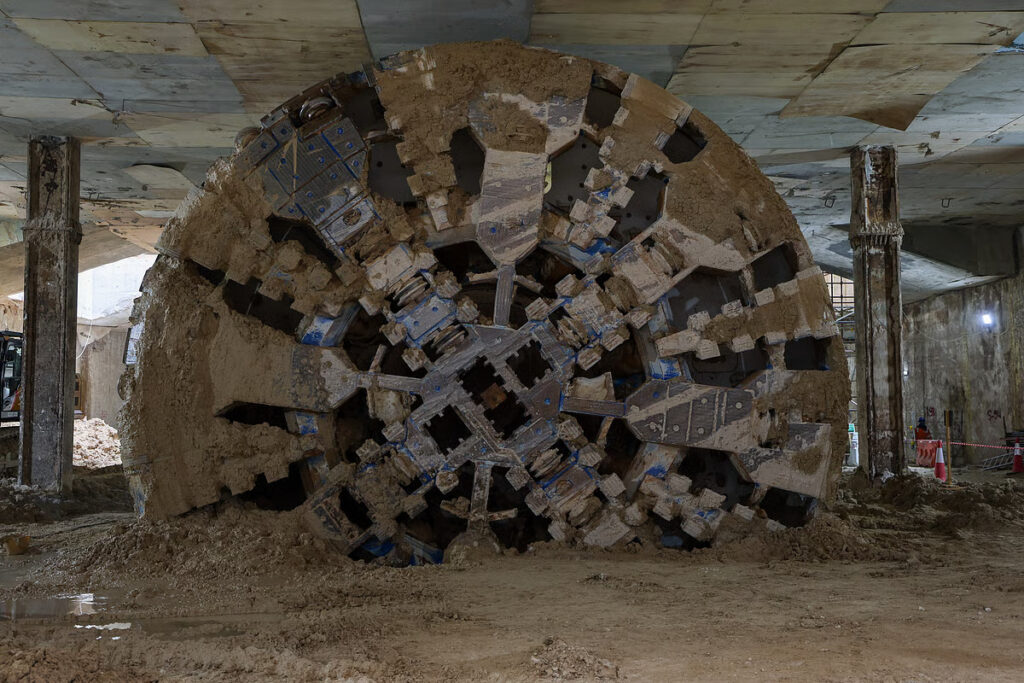
Al Wugeisha is currently excavating tunnels from the site of the planned Dragon Mart Station in International City, one of the key stations along the Dubai Metro Blue Line route.
The future station will span 8,118 square metres, while the wider construction area at the site covers 39,480 square metres. During the visit to the site, around 580 workers were engaged in construction activities at the Dragon Mart Station location.
As the TBM continues its underground journey, it is creating the infrastructure that will eventually connect passengers to one of the Blue Line’s important transport hubs.
Across the wider International City section of the project, construction efforts involve a significant workforce. The planned International City interchange station has around 900 workers on site, while another station in the area has approximately 600 personnel. In total, about 2,080 workers are supporting construction activities across these locations, operating around the clock through rotating shifts.
The tunnelling works in this section are taking place at depths of approximately 30 to 35 metres below ground level, highlighting the scale and complexity of the underground engineering involved in the Dubai Metro Blue Line project.
Building a metro tunnel beneath the city with minimal disruption
One of the biggest advantages of using a tunnel boring machine is that much of the construction activity takes place underground, reducing disruption to the city above.
While Al Wugeisha continues its excavation work deep beneath International City, surface activity remains limited compared with traditional open-cut construction methods. The technology allows major infrastructure works to progress while minimising impacts on traffic, businesses and daily life at street level.
According to the engineering team, TBMs produce very little vibration, meaning nearby residents are unlikely to notice the excavation activity taking place underground. The technology also helps minimise disruption at street level, reducing impacts on roads, buildings and everyday activities while major construction continues below the city.
In simple terms, a TBM works like a giant underground drill. Instead of excavating from the surface, it advances through the ground, cutting through soil and rock while simultaneously installing the tunnel lining behind it. This makes it a safer, faster and more efficient method for delivering large-scale transport infrastructure with minimal disturbance.
A hidden network taking shape beneath Dubai
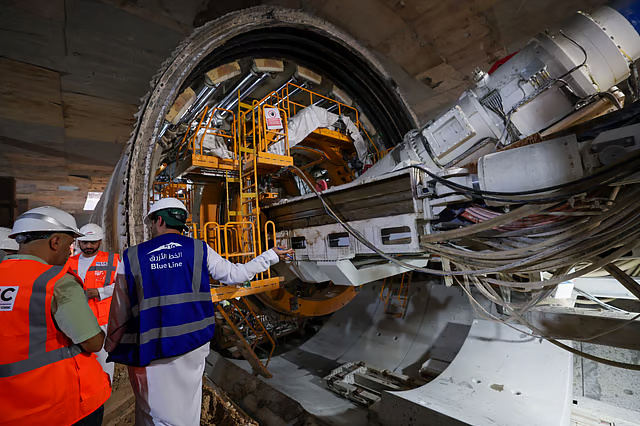
Although the underground tunnels may currently resemble a large construction zone, they will eventually become part of one of Dubai’s most significant transport expansions.
Scheduled for completion in 2029, the Dubai Metro Blue Line will span 30 kilometres and include 14 stations, five of which will be underground and connected by the tunnels currently being excavated.
Once operational, the Dubai Metro Blue Line is expected to serve more than one million residents, further expanding the city’s metro network and improving connectivity across some of Dubai’s fastest-growing communities.
The new route will provide a major transport link for residential areas currently experiencing rapid development, making daily travel more efficient while supporting Dubai’s long-term urban growth plans.

