

After visiting a doctor for ongoing heavy menstrual bleeding, Shruthy said she felt like the future she had imagined had been taken away from her.
For many newlyweds, the first year of marriage is a time filled with hopes and plans for building a future together, including starting a family. But for 24-year-old Dubai resident Shruthy, those dreams were suddenly shaken when a routine medical investigation led to a diagnosis of early-stage uterine cancer.
Shruthy had undergone a check-up after experiencing persistent heavy bleeding during her periods. She said the diagnosis left her feeling as though the future she had imagined had disappeared.
“My biggest fear was not only the diagnosis itself but the possibility that I might never be able to have children,” she recalled.
The diagnosis, confirmed in August 2024, came as a rare and devastating shock. Uterine cancer is more commonly diagnosed among older women, particularly those who are post-menopausal, with cases most frequently occurring between the ages of 60 and 69.
For Shruthy, being diagnosed at just 24 meant facing a difficult decision. Doctors advised a hysterectomy — the standard treatment that would provide the best chance of eliminating the cancer. However, the procedure would also mean losing the ability to have children in the future.
Panicked and searching for answers, Shruthy and her family sought medical opinions from specialists around the world, including consultations in India. However, the advice remained the same.
“Everyone advised me to undergo a hysterectomy as the only solution,” she said. “It was not something I could accept.”
Searching for a fertility-preserving option
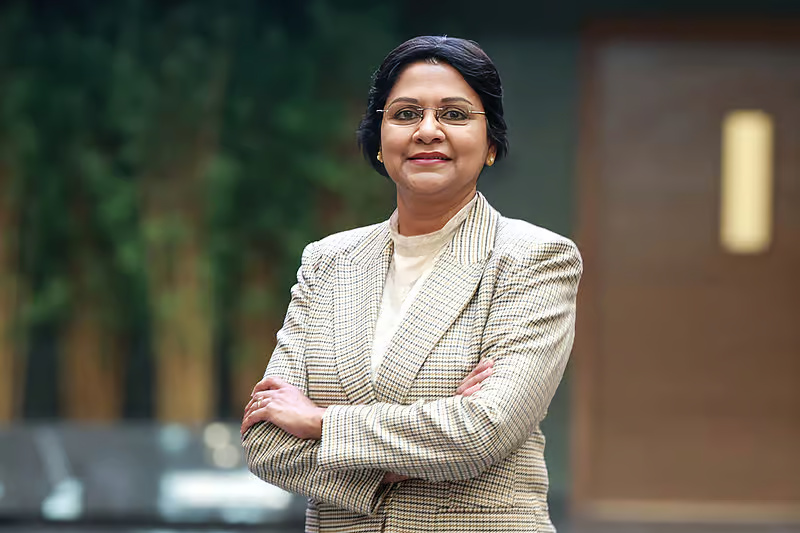
Determined to explore alternatives, Shruthy eventually reached Medcare Royal Speciality Hospital in Al Qusais, where a multidisciplinary team of specialists led by Dr Rajalakshmi Srinivasan, Specialist in Obstetrics and Gynaecology, considered a different approach.
“Because the cancer was detected early, we were able to consider a conservative, fertility-preserving hormonal therapy,” Dr Rajalakshmi explained. “This is not always possible, but in carefully selected cases, it can completely change a patient’s future.”
The treatment journey was challenging. Shruthy underwent a combination of hormone therapy and the placement of a Mirena hormonal intrauterine device. Over the following six months, she underwent regular monitoring through MRI scans, PET scans and hysteroscopic evaluations to track her response to treatment, while also managing temporary side effects.
In April 2025, she received the news she had been hoping for. A final hysteroscopy and biopsy confirmed that the cancer had gone into complete remission. The disease that had once threatened her dreams of motherhood was no longer detectable.
A new beginning
Just two months after receiving the all-clear, Shruthy experienced another life-changing moment. After waiting for her natural menstrual cycles to return, she discovered she was pregnant.
“I came to know that I was pregnant on September 28,” she said. “It was a natural pregnancy, within one year of the diagnosis.”
For Dr Rajalakshmi, Shruthy’s journey highlights the role of personalised treatment and the importance of considering individual circumstances.
“While hysterectomy remains the standard treatment, advances in diagnosis and hormonal therapy are creating new possibilities for younger patients,” Dr Rajalakshmi said.
“In carefully selected patients with early-stage disease, this approach is both safe and effective.”
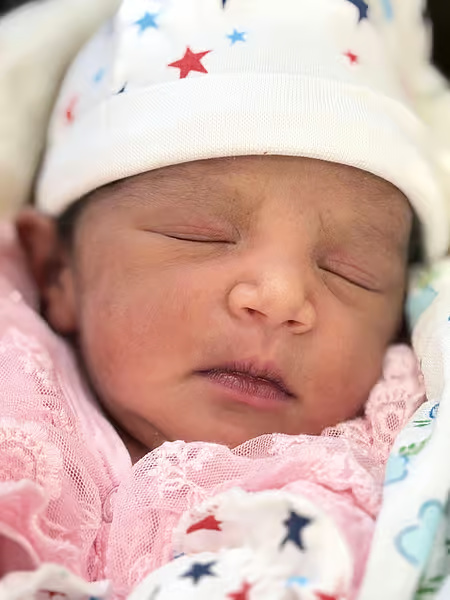
At 38 weeks, Shruthy welcomed a healthy baby girl weighing 2.8 kilograms — a moment that once seemed impossible for the family.
“Holding my daughter for the first time was overwhelming,” Shruthy said. “There was a time I thought I might lose both my health and my dream of becoming a mother. Today, I have both.”
Now, as mother and daughter settle into life together at home, Shruthy continues regular follow-up appointments to ensure she remains in remission.
Dr Rajalakshmi stressed the importance of seeking medical advice for unusual symptoms, regardless of age.
“Persistent abnormal bleeding should never be ignored, regardless of age,” she said. “Early diagnosis can make a profound difference, not only in treating cancer but also in preserving future quality of life.”

