

Gulf tensions rise as US strikes, Houthi attacks and oil price surge reshape regional outlook.
The US-Iran conflict has entered a more critical phase, with hostilities expanding across the Gulf, the Red Sea, and strategic shipping routes that are vital to regional security and the global economy.
Although the UAE has not been directly targeted, residents are closely monitoring the situation as military activity moves closer to Gulf countries and key energy infrastructure.
The conflict has intensified, with the US military carrying out its 12th consecutive night of airstrikes against targets inside Iran. Tehran has vowed an “eye-for-an-eye” response, while Iran-aligned Houthi rebels in Yemen have claimed responsibility for attacks on two commercial tankers in the Red Sea, further increasing concerns over regional security and key maritime routes.
Latest developments:
Airline suspensions and resumptions affecting UAE flights
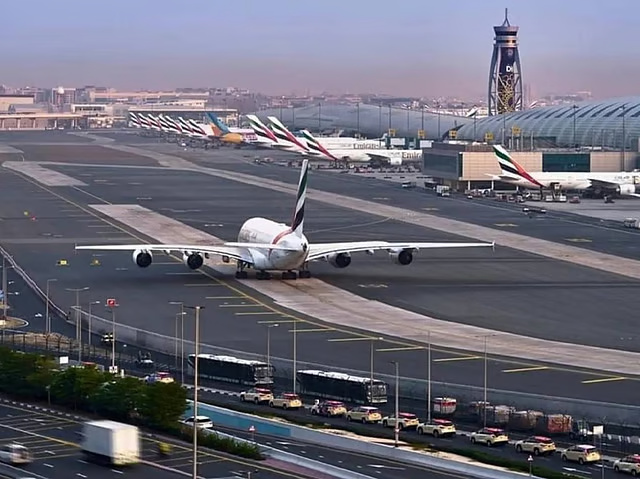
UAE airspace and airports remain operational, although travellers are advised to monitor airline updates as regional flight routes may be adjusted depending on the security situation.
Commercial shipping continues through Gulf waters, with heightened security measures in place.
Authorities are closely monitoring developments as neighbouring Gulf countries reinforce their air defence systems.
Residents are encouraged to rely on official government updates and avoid sharing unverified information on social media.
Several international airlines continue to suspend or reduce flights to the UAE and other Middle East destinations due to ongoing regional security concerns.
Many airlines have extended flight cancellations into late October, while some carriers have started gradually restoring services.
Travellers are advised to check directly with their airline before travelling to the airport, as schedules remain subject to change due to the evolving security situation.
Key flight updates:
- Flights suspended until late October: Air Canada, British Airways, Cathay Pacific, Finnair, ITA Airways, Singapore Airlines, and Philippine Airlines (Dubai route until October 2).
- Suspensions through August or September: Aegean Airlines and Air Astana (until August 31); KLM (until August 23); Lufthansa Group (Dubai services until September 13, with several regional destinations suspended until October 24); Scoot (Jeddah until August 8).
- Flights resuming: Air France plans to restart Dubai services on July 27. Turkish Airlines has resumed flights to Dubai, Abu Dhabi, Beirut, Damascus, and Amman, while Iran routes remain suspended. Philippine Airlines has resumed Manila–Doha services.
- Schedule reductions: British Airways is reducing flight frequencies to Doha and Riyadh and has permanently discontinued its Jeddah route.
- Passenger options: Most affected airlines are offering alternatives including refunds, free rebooking, rerouting, or travel credits for cancelled flights.
US extends bombing campaign into 12th straight night
The US military has carried out 12 consecutive nights of strikes against Iranian military targets, according to US Central Command (CentCom).
Iranian state media reported missile strikes in the southwestern cities of Ramshir and Ahvaz, while officials also reported an attack in Bushehr province along the Gulf coast.
Washington said the military campaign is aimed at weakening Iran’s missile, drone, and military capabilities following a series of attacks targeting US forces and commercial shipping.
Trump escalates warning to Iran
US President Donald Trump warned that the United States would target Iranian infrastructure, including bridges or power plants, for every commercial vessel attacked in the Strait of Hormuz.
Iran responded by reiterating its “eye for an eye” approach. Foreign Minister Abbas Araghchi said any strike on Iranian infrastructure would be met with a “powerful and decisive response.”
The exchange has increased concerns over further escalation across the Gulf region.
Kuwait intercepts hostile drones
Kuwait’s military said its air defence systems intercepted hostile drones overnight, following several days of Iranian attacks.
Authorities informed residents that explosions heard in parts of the country were linked to air defence systems engaging incoming aerial threats.
The incidents highlight the growing impact of the conflict on neighbouring Gulf states.
Houthis expand maritime attacks
Iran-aligned Houthi rebels in Yemen claimed responsibility for attacks on two commercial tankers in the Red Sea after announcing a maritime blockade targeting Saudi Arabia.
The developments have raised further concerns over the security of key regional shipping routes.
The UK Maritime Trade Operations (UKMTO) said one tanker caught fire after being hit by an unidentified projectile approximately 70 nautical miles southwest of Al Shuqaiq.
Shipping risks remain high
The Strait of Hormuz and the Red Sea continue to be among the world’s most important energy and trade corridors. While UAE ports remain operational, shipping companies are facing increased insurance costs, route changes, and heightened security risks as attacks on commercial vessels continue.
As one of the region’s key logistics and energy hubs, the UAE remains closely focused on maintaining freedom of navigation and the stability of vital maritime routes.
US and Saudi Arabia sign nuclear cooperation agreement
Amid the ongoing regional tensions, Washington announced a civilian nuclear cooperation agreement with Saudi Arabia.
The United States said the agreement provides a legal framework for a long-term civilian nuclear programme while including safeguards aimed at preventing the spread of nuclear weapons.
Officials described the agreement as a strategic partnership aimed at strengthening regional energy cooperation despite ongoing instability.
Oil prices rise
Global markets responded to the escalating tensions, with oil prices moving higher.
Brent crude briefly climbed above $95 a barrel before settling at $94.07, while the US benchmark West Texas Intermediate (WTI) rose to $86.83.
If the conflict continues, sustained higher oil prices could eventually contribute to increased transportation and travel costs.

