

Globally, the phenomenon is linked to a higher likelihood of extreme weather events, including droughts, intense rainfall, heatwaves and marine heatwaves.
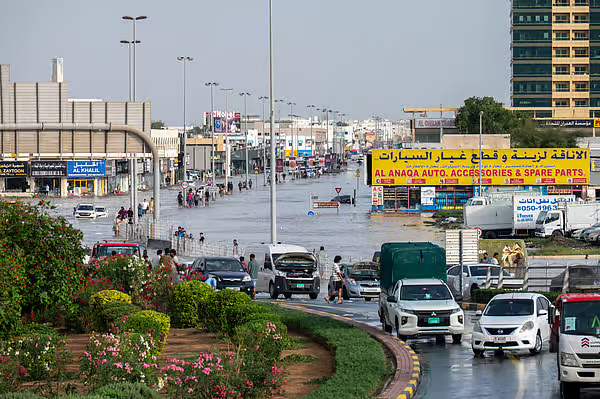
A climate phenomenon developing thousands of kilometres away in the tropical Pacific Ocean could influence weather patterns in the UAE in the coming months.
The World Meteorological Organisation (WMO) has forecast a rapid shift towards a strong El Niño event between July and September 2026, with sea surface temperatures in the central and eastern equatorial Pacific expected to rise significantly.
Forecast models from leading global climate centres are showing strong agreement, giving scientists increased confidence that El Niño will continue to intensify through the Northern Hemisphere autumn.
Globally, El Niño is linked to a higher risk of extreme weather events, including droughts, heavy rainfall, heatwaves and marine heatwaves. However, its impact varies significantly from one region to another.
While UAE residents may not experience immediate changes, climate experts say the strengthening phenomenon could begin influencing local weather patterns by autumn, potentially bringing higher humidity, increased cloud formation and greater chances of rainfall in parts of the country.
Why El Niño matters for the UAE
Ahmed Habib, a meteorologist at the National Centre of Meteorology (NCM), told Khaleej Times that El Niño is a global climate driver and its effects depend on regional conditions.
“El Niño is a global phenomenon and does not originate locally. Its effects differ depending on the region,” he said.
Habib pointed to parts of East Asia, including China, Japan, the Philippines and eastern India, where several tropical storms and cyclones have occurred in recent months.
“However, in our part of the Indian Ocean, there has been no tropical storm or cyclone activity this year. So, while El Niño is a global phenomenon, we need to understand how it specifically affects our region,” he added.
Despite global weather changes associated with El Niño, the UAE remained mostly dry through May and June.
“Global conditions may be changing, but local conditions are different. We currently do not have the factors needed for widespread cloud formation or rainfall,” Habib explained.
He said the UAE’s atmosphere remains relatively dry compared with parts of East Asia, where increased humidity has been linked to El Niño conditions. However, autumn could bring a shift, with higher moisture levels and improved chances of rain.
El Niño impact expected from autumn
Although major El Niño effects are not expected during the peak summer months, meteorologists are closely monitoring the coming season.
“From autumn, particularly in October and November, El Niño’s effect will be felt over our region. At present, during the summer season, its influence is stronger in East Asia than in West Asia,” Habib said.
As conditions change, residents may experience increased moisture in the atmosphere.
“In the UAE, this will increase the chances of rainfall,” he added.
Habib said El Niño is not expected to cause a significant increase in temperatures across the UAE. Instead, its main influence is likely to be through higher humidity levels, which can support cloud development and increase the possibility of rain events.
Rain chances and summer temperatures
The forecast comes as parts of the UAE experienced unsettled weather this week, despite limited rainfall during the summer season. Moderate to heavy showers were reported in parts of Al Ain on Wednesday, an unusual occurrence during the hottest months of the year.
“There is also a chance of rainfall on Thursday and Friday, particularly in the eastern and southern parts of the UAE. Rain could extend to some inland areas of Abu Dhabi, including Sweihan and Madinat Zayed,” Habib said.
Regarding temperatures, he noted that the UAE has not recorded 50°C this summer.
“We expect temperatures to remain within the same range over the coming days — between 47°C and 49°C in inland areas, and between 41°C and 44°C along the coast,” he said.

