

Families lose thousands to fake deals and OTP scams as authorities urge residents to verify before acting.
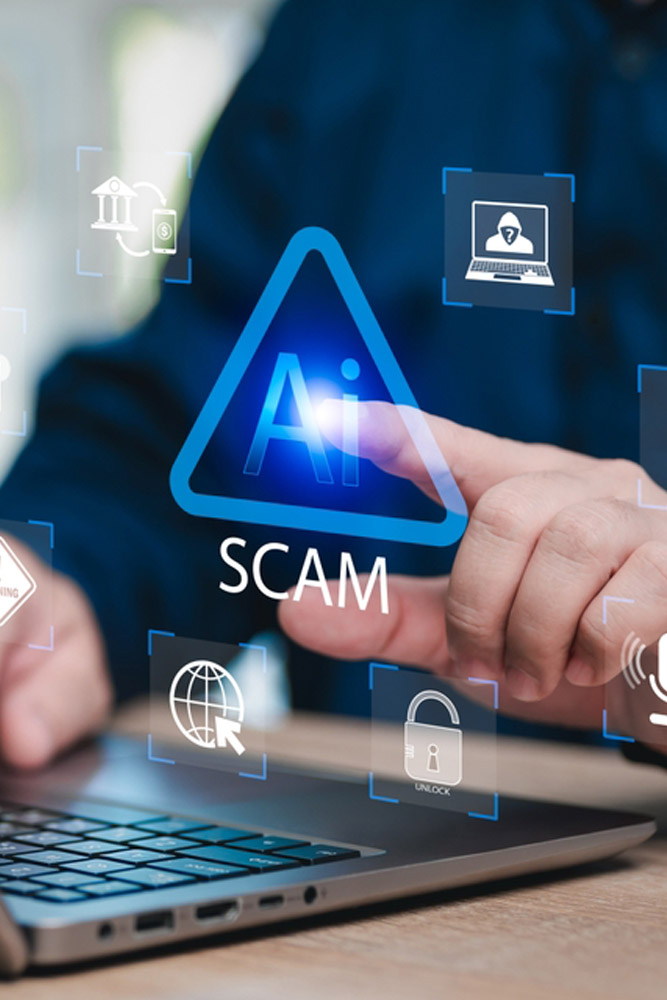
As the summer heat pushes UAE residents to plan holidays and staycations, cybercriminals are exploiting the travel rush to launch digital scams. Fake chalet bookings, too-good-to-be-true travel offers and advanced AI-powered impersonation schemes are among the tactics being used, prompting authorities to urge the public to remain cautious.
The UAE Cyber Security Council said more than 75 per cent of cyber breaches in the country stem from phishing emails and fraudulent messages. Globally, cybercriminals are estimated to send around 3.4 billion phishing messages every day as they target users with increasingly sophisticated scams.
The council has also warned that AI-powered phishing attacks now account for more than 90 per cent of digital breaches, with scammers using advanced tools to create highly convincing messages that closely mimic legitimate communications and remove many of the traditional signs of fraud.
The Global Anti-Scam Alliance (GASA) and BioCatch reported that more than 40,000 UAE residents fell victim to scams last year, resulting in millions of dollars in combined losses. The average victim lost more than $2,100, highlighting the growing financial impact of digital fraud.
The summer spike: Why are scams rising now?
As UAE residents travel, shop online and make holiday plans during the summer months, cybercriminals are increasingly exploiting these seasonal behaviours to launch fraud campaigns.
Alina Timofeeva, an AI expert and Managing Partner at Tamayouz Business Solutions, who advises clients including HSBC and JP Morgan, said the rise in summer scams is closely linked to human behaviour.
“During the summer, the risk increases because people travel more, shop online more frequently, book holidays, renew documents, and generally operate in a more relaxed and distracted state of mind,” Timofeeva told Khaleej Times.
She added that fraudsters target human trust rather than technology itself.
“Fraudsters exploit these predictable behaviours. The real target isn’t the technology, it’s human trust. They exploit urgency, familiarity, and our natural tendency to believe what looks legitimate on a screen or sounds authentic over the phone,” she said.
The scale of cybercrime continues to grow globally, with losses estimated at around $10.5 trillion annually. If cybercrime were considered an economy, it would rank as the world’s third-largest after the United States and China.
“What we’re seeing today isn’t necessarily a new type of fraud; it is a new scale of fraud,” Timofeeva said. “Artificial intelligence has dramatically lowered the barrier for criminals. They can now generate highly convincing emails, fake websites, clone voices, create deepfake videos, and impersonate trusted organisations in minutes and at very little cost.”
Common summer scams
UAE authorities, including the Ministry of Interior, Dubai Police and Abu Dhabi Police, have issued warnings about several scams targeting residents during the summer season.
1. Fake chalet and holiday home rentals
Dubai Police recently highlighted a case in which a family breadwinner lost Dh8,000 in a fake chalet rental scam. The victim responded to an attractive social media advertisement for a Dubai chalet.
After making contact, the victim was asked to pay a booking deposit along with a “refundable” insurance fee. Once the payment was transferred, the fraudster disappeared and switched off their phone. Abu Dhabi Police have issued similar warnings over fake farmhouse and chalet rental offers.
2. Fake vehicle insurance offers
The Ministry of Interior has warned motorists about fraudulent accounts impersonating vehicle insurance providers. Scammers often advertise unusually low insurance prices to convince victims to make advance payments.
Dubai Police has also cautioned residents about deceptive promotions circulating on digital platforms.
3. Untrusted apps and OTP theft
Dubai Police and Abu Dhabi Police have warned residents against downloading unknown applications and sharing one-time passwords (OTPs).
Abu Dhabi Police advised residents: “Stay alert… Do not share your one-time password (OTP) with anyone over the phone; your security starts with keeping your verification code confidential.”
Scammers frequently pose as bank officials or government representatives and persuade victims to install remote-access apps, allowing them to access accounts and steal funds.
How to protect yourself
While AI has made scams more convincing, Timofeeva said people can reduce their risk by taking simple precautions.
1. Verify independently
Do not rely only on a voice or video message. Use trusted contact details to confirm identities and verify requests before transferring money.
2. Keep your phone and cards separate
If criminals gain access to both a phone and bank card, they may be able to register the card on another device or intercept verification messages.
3. Protect your WhatsApp code
Never share a six-digit WhatsApp verification code, even if the request appears to come from someone you know. Enable two-step verification to add extra protection.
4. Never share sensitive information
OTP codes, UAE Pass approval codes, PINs, card CVVs and passwords should remain private. Legitimate banks and authorities will never request them through calls, SMS or WhatsApp.
5. Use official channels only
Residents should use licensed operators and verify information through official sources. Check insurers through the Central Bank register, companies through the National Economic Register, and visa details through GDRFA or ICP platforms.
“Above all, pause before acting, as fraudsters rely on urgency,” Timofeeva advised. “If you think you have already been targeted, the first objective is to stop the loss from spreading.”
Dubai Police has also urged residents to report suspected fraud attempts immediately through the eCrime platform or by calling 901 for non-emergency assistance.

