

In Gaza, livestock imports have been halted, and only around a quarter of the territory’s pre-war sheep population remains — about 15,000 animals for its 2.1 million residents, according to the UN.
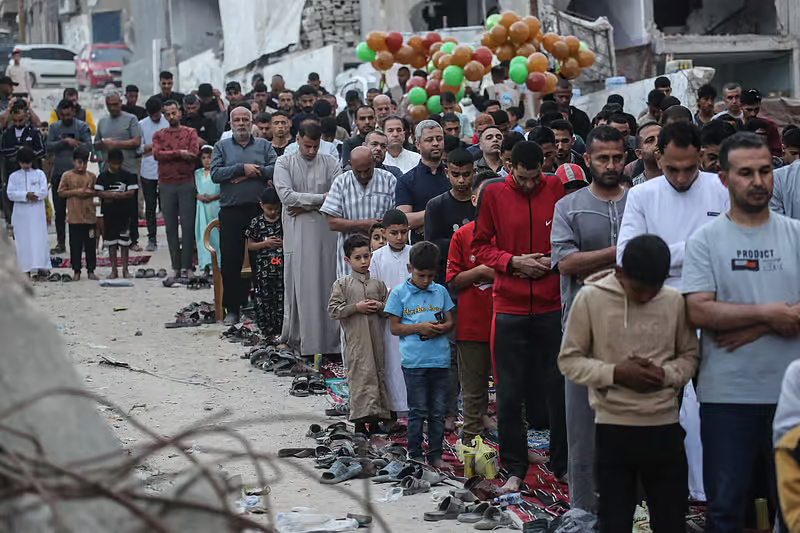
New clothes for children, sacrificial sheep and traditional Eid biscuits — all symbols of Eid celebrations — have become either too expensive or impossible to find in Gaza, dimming the joy of what is usually a festive occasion.
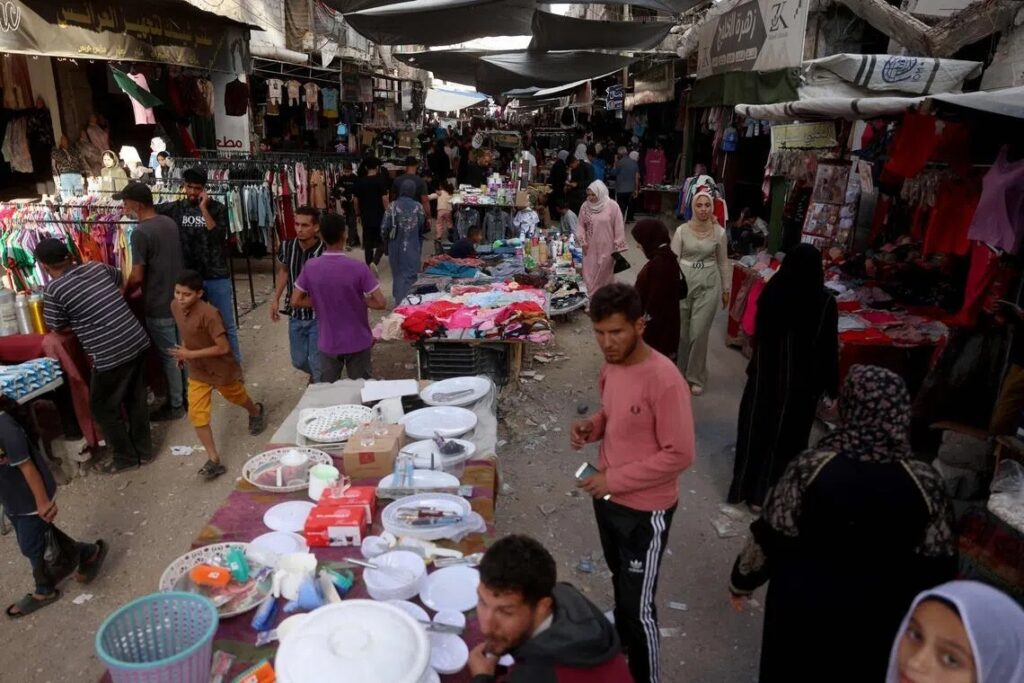
“I go to the market only to look around because I cannot afford to buy anything. Whenever I ask about prices, I return heartbroken,” Palestinian resident Nadia Abu Shamala told AFP.
“This year, Eid carries none of the joy we once knew in Gaza,” said the 40-year-old mother, originally from northern Gaza and displaced to the central city of Deir al-Balah for more than two years. “The war, soaring prices and our inability to provide even the most basic needs for our children have taken away the spirit of the celebration.”
Although a US-brokered ceasefire came into effect in October 2025, Israeli air strikes continue across Gaza. According to the United Nations, around 80 per cent of buildings in the territory were damaged during the war, while most residents now rely on humanitarian aid to meet their basic needs.
Israel controls all entry points into Gaza, and aid groups say the limited number of trucks carrying humanitarian assistance and commercial goods has done little to ease shortages or bring down prices inflated by the war.
“The truce is a big lie, but we are still trying to create some joy for the children,” said Abu Abdullah Al-Mosadar, 59, who told AFP he and his brother pooled nearly 13,000 shekels ($4,570) to buy a sheep for sacrifice.
For most families in Gaza, however, such an amount is out of reach.
“I know it is extremely expensive, but I decided to perform the sacrifice this year,” said Al-Mosadar, a former property dealer from central Gaza. He added that he hopes to restart his construction and real estate business when conditions improve.
Sheep shortage
One of the central traditions of Eid Al Adha, which marks the end of the Hajj pilgrimage to Mecca, is the sacrifice of a sheep.
According to Islamic tradition, God asked Prophet Ibrahim — known as Abraham in Jewish and Christian traditions — to sacrifice his son as a test of faith before replacing him with an animal at the final moment.
But in Gaza, livestock imports have stopped entirely. According to the UN’s Food and Agriculture Organisation (FAO), only about a quarter of the territory’s pre-war sheep population remains — roughly 15,000 sheep for Gaza’s 2.1 million residents.
“Sacrificial animal prices have reached unprecedented levels this year due to limited supply, rising breeding and feed costs, transportation challenges and the shutdown of many farms,” said Raafat Asaliya, spokesperson for Gaza’s agriculture ministry.
He explained that a sheep or goat that cost around 1,000 shekels before the war is now being sold for between 11,000 and 15,000 shekels.
Residents say the soaring prices are unlike anything they have seen before.
“We have never heard of such prices in our lives,” Gaza City resident Ahmed Abu Salem told AFP. “Families like ours, who used to offer sacrifices every year, can no longer even afford one kilogramme of meat for our children,” the 50-year-old added.
Tent-made sweets
Shortages of cooking gas have also made preparing Eid food at home increasingly difficult, said Abu Ahmed Wafi, a 42-year-old displaced in southern Gaza with his family.
“The markets are filled with kaak, maamoul and sweets, but we used to make them ourselves at home before the war,” he said. “Now prices have soared, and there is no cooking gas available for baking.”
In Khan Yunis, one family managed to prepare trays of maamoul beneath a makeshift shelter covered with a reused UNICEF tarp. Sitting on the ground, a mother and daughter shaped the dough by hand while a man baked the biscuits in a simple clay oven nearby.
From her tent in Deir Al-Balah, Nadia Abu Shamala said she longs for better days.
“We are still living in tents with no sense of celebration — only worry, fear and exhaustion, without any of the happiness we once knew,” she said.

