

From cancelled holidays and soaring airfares to delayed hiring and financial pressures, residents are leaning on faith, family, and community to keep the spirit of Eid alive.
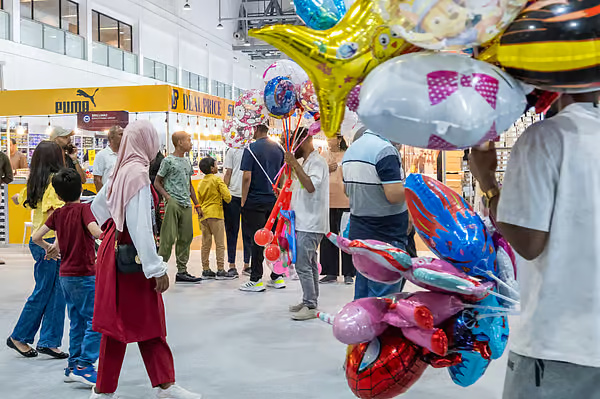
This Eid Al-Adha, many UAE residents say the festive season feels different.
What is usually a time of travel, family reunions, and celebration has, for some, been overshadowed by rising costs, delayed plans, and growing uncertainty linked to ongoing regional tensions.
From soaring airfares and postponed travel to delayed contracts and fewer job opportunities, families across the country say recent developments have affected both their finances and overall sense of wellbeing.
The impact was highlighted by UAE Minister of Industry and Advanced Technology Dr Sultan Ahmed Al Jaber, who said that the closure of the Strait of Hormuz would be “not just an oil story” but “an everything story.”
Al Jaber, who also serves as Managing Director and Group CEO of ADNOC, said fuel prices have risen by 30 per cent, fertiliser costs by 50 per cent, and airfares by 25 per cent, while nearly 80 countries have introduced emergency economic measures just over 80 days into the conflict.
He added that even if the conflict ends soon, full operations through the Strait of Hormuz are not expected to normalise until the first or second quarter of 2027.
For residents, this global disruption is being felt in more personal ways—through cancelled trips, tighter Eid budgets, delayed hiring, and fewer opportunities. Yet despite these pressures, many in the UAE say they remain determined to mark Eid, holding on to hopes for peace as diplomatic efforts toward a US-Iran deal continue.
Wellbeing coach Dr Hanadi Al Jaber said many people seeking support have been dealing with anxiety, financial strain, and uncertainty. “People entered a psychological state of stress and tension,” she said. “Ticket prices increased and many can no longer travel for the four or five-day holiday like before because it became too expensive, especially for families.”
She added that some residents have also seen projects and contracts delayed or frozen, making people more cautious about spending during Eid. “Even people who are financially comfortable have become hesitant because they fear unexpected circumstances.”
Still, Al Jaber said faith and community support are helping many residents stay resilient. “In positive psychology, a person needs to feel there is a greater power providing safety and reassurance,” she said. “For us as Muslims, this gives people comfort and balance.”
She noted that many residents, including herself, are now shifting away from costly travel and focusing instead on simpler, local ways of celebrating—such as public beaches, parks, and family gatherings.
She emphasised that Eid is fundamentally about togetherness rather than spending. “Eid is about visits, social solidarity, people making others happy, children receiving Eid gifts, and families gathering,” she said. “Even if someone cannot travel, it does not mean they cannot celebrate.”
‘Ticket prices were extremely expensive’
For Croatian expatriate Iva Sladic, travel plans became almost impossible due to soaring airfare costs and limited availability.
“Honestly, my plans for Eid were to stay in the UAE because ticket prices were extremely expensive and everything was getting complicated with bookings and availability.”
She eventually had to travel unexpectedly after a close family emergency.
“My friend’s husband suddenly passed away. He was only 44 and they have two daughters, 13 and 3,” said the marketing manager. “At that point it wasn’t about finding the best route or price anymore, it was just important to get there as soon as possible.”

Sladic said the situation has changed travel patterns in recent months.
“Tickets were much more expensive than usual, and flights were not as frequent, so even simple travel plans became harder to organise. You could really notice the difference compared to before, especially with last-minute bookings and availability.”
Despite these challenges, she said the Eid atmosphere in the UAE remains positive. “People are still celebrating, spending time with family, going out, and staying positive while hoping things improve soon.”
Egyptian MMA champion and coach Rajab Abdo also had to postpone plans to reunite with his family after nearly two years apart due to sharply higher ticket prices. “Normally the ticket would cost Dh900 or Dh1,000 maximum, but now it reached Dh1,700 or Dh1,800.”
Although he delayed his trip by 10 days to save money, prices remained high. “I only managed to save maybe Dh300.”
Abdo added that uncertainty has also affected his family’s work situation, with his brother struggling to find employment as hiring slowed. “He came looking for work, but things were slow and paperwork wasn’t moving,” he said, noting that his brother has since secured a position.
While trying to stay positive, Abdo admitted the prolonged uncertainty has taken a mental toll. “As a fighter, mentality is everything,” he said. “If my mental state suffers, everything suffers — training, work, everything.”
To cope, he spends time outdoors around Abu Dhabi’s Corniche and beaches.
‘It became too much’
Palestinian resident Alaa Baitam faced similar challenges after her family’s planned trip to Armenia was cancelled due to a sudden surge in airfares. “We got the visa, but by then ticket prices went up insanely,” she said. “We were travelling as a family, so it became too much.”
Instead of cancelling entirely, the family chose to postpone their trip until prices ease and the weather becomes more favourable later in the year.
She added that the economic slowdown is also becoming more visible in the job market. “Before, I used to see vacancies regularly online,” she said, noting that opportunities now appear far fewer.
Despite financial pressure and uncertainty, many residents this Eid share the same hope—of peace, stability, and better days ahead.

