

Barakah Nuclear Power Plant produces around 40 TWh of carbon-free electricity annually, meeting roughly 25% of the UAE’s electricity demand.
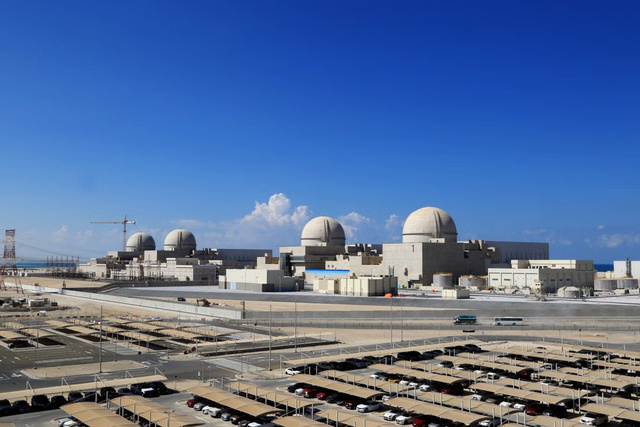
In Abu Dhabi’s Al Dhafra region stands the Barakah Nuclear Power Plant—one of the most significant projects in the UAE’s history.
Far beyond being the Arab world’s first peaceful nuclear energy facility, Barakah marks a major shift in how the UAE approaches energy security, sustainable development, and a low-carbon economy.
With all four reactors now fully operational, Barakah has become a central pillar of the UAE’s energy system and a globally recognised model for countries aiming to achieve climate goals while maintaining economic growth and energy reliability.
Located in Abu Dhabi’s Al Dhafra region, the Barakah Nuclear Power Plant consists of four advanced South Korean APR1400 reactors with a combined capacity of around 5,600 megawatts of carbon-free electricity.
The Barakah Nuclear Power Plant generates around 40 terawatt-hours of carbon-free electricity annually, enough to meet nearly 25% of the UAE’s electricity demand.
It also helps avoid more than 22.4 million tonnes of carbon dioxide emissions each year—equivalent to taking roughly 4.8 million cars off the road.
Barakah Nuclear Power Plant is regarded as the largest single source of clean electricity in both the UAE and the Arab world, supplying steady, around-the-clock power without interruptions or weather-related variability, unlike some conventional renewable energy sources.
From oil dependence to energy diversification
For decades, the UAE depended mainly on natural gas to generate electricity. However, rapid population growth, along with expanding industrial and urban development, created growing challenges around energy security and environmental sustainability.
In response, the UAE leadership took a landmark decision in 2008 to launch the country’s peaceful nuclear energy programme—marking a major shift in national energy policy aimed at diversifying power generation and reducing reliance on fossil fuels.
Energy experts note that the importance of Barakah Nuclear Power Plant goes beyond electricity production. It also helps shield the national economy from volatility in global oil and gas prices while strengthening long-term energy independence.
The plant is expected to operate for 60 to 80 years, making it a long-term strategic investment in the UAE’s energy security.
A cornerstone of the UAE’s Net Zero 2050 Strategy
Barakah Nuclear Power Plant is a key pillar of the UAE’s climate strategy and a major tool in its efforts to reach net-zero emissions by 2050.
Climate experts note that nuclear power is among the lowest carbon-emitting energy sources over its full lifecycle, placing it alongside solar and wind as one of the most important technologies for global decarbonisation.
Barakah Nuclear Power Plant has already made a significant contribution to emissions reduction, accounting for around 24% of the UAE’s nationally determined contributions toward climate mitigation targets.
It has also supported the country’s transition toward a greener economy by providing stable, carbon-free electricity to energy-intensive industries such as aluminium, steel, and petrochemicals.
A global engineering achievement
Construction of the Barakah Nuclear Power Plant began in 2012. The first reactor entered commercial operation in 2021, followed by the second in 2022, the third in 2023, and the fourth in 2024—an implementation pace widely regarded as one of the fastest modern nuclear deployment programmes globally.
Experts say the UAE’s successful delivery of the project in line with high international safety and quality standards has reinforced its reputation as a country capable of executing highly complex, large-scale technological infrastructure.
Barakah has also become a global case study in mega-project management, built through a strategic partnership with South Korea valued at more than $20 billion.
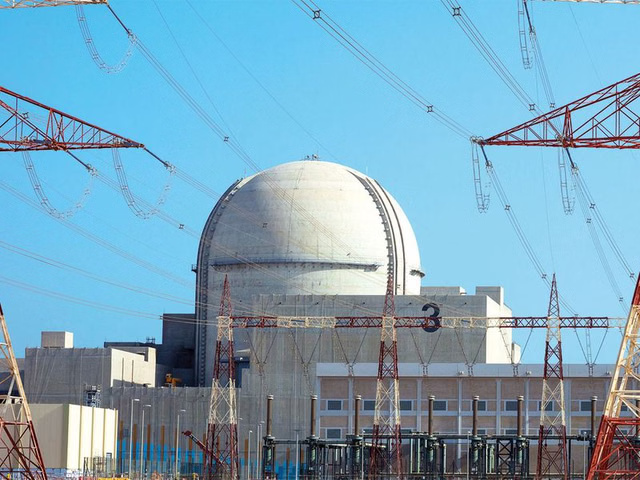
Nuclear safety according to the highest international standards
Since the launch of the UAE’s nuclear programme, nuclear safety has remained a top national priority, supported by an independent regulatory framework led by the Federal Authority for Nuclear Regulation in cooperation with the International Atomic Energy Agency.
Barakah Nuclear Power Plant has undergone more than 500 inspections and technical reviews both domestically and internationally, along with over 100 assessment missions conducted by the IAEA and the World Association of Nuclear Operators.
The plant operates on a “defence-in-depth” safety model, incorporating multiple redundant systems designed to respond to a wide range of potential emergency scenarios.
Building a new industry and a knowledge-based economy
The benefits of Barakah Nuclear Power Plant extend well beyond the energy sector, helping to build an entirely new economic and technological ecosystem in the UAE.
The project has contributed to developing Emirati talent in fields such as nuclear engineering, physics, cybersecurity, industrial artificial intelligence, and reactor operations. It has also supported the localisation of advanced technical expertise while strengthening domestic industries linked to nuclear energy, supply chains, and engineering services.
Thousands of employees and specialists from more than 50 nationalities work on the project, making it one of the region’s most advanced and internationally diverse technical environments.
Barakah: A UAE message to the world
Barakah Nuclear Power Plant is more than an energy project—it is also a political and developmental statement showcasing the Arab world’s ability to deploy peaceful nuclear technology under high standards of transparency and international compliance.
The project reflects the UAE’s long-term vision of building a future economy driven by knowledge, technology, and clean energy, moving beyond traditional reliance on oil.
As global interest in nuclear power grows as a solution to climate change and energy security challenges, the UAE has positioned itself as an influential player in the future of global energy and a reference model for countries seeking to develop successful peaceful nuclear programmes..
At a time when countries worldwide are striving to balance development with sustainability, Barakah Nuclear Power Plant stands out as more than just a power station—it is a sovereign strategic project shaping the UAE’s future for decades to come.
Advancing infrastructure and the electricity sector
The development of infrastructure, particularly in the electricity sector, remains one of the most critical foundations for economic growth, industrial expansion, and commercial activity worldwide.
The UAE continues to make steady progress in modernising its electricity sector to keep pace with expanding economic, industrial, and developmental needs.
The recent commercial operation of the fourth reactor at Barakah Nuclear Power Plant marks the culmination of years of extensive work since the launch of the UAE Nuclear Energy Programme.
The Federal Authority for Nuclear Regulation confirmed that it carried out comprehensive reviews across all stages of the project—from site selection and construction to testing and operational readiness—ensuring full compliance with all regulatory and safety standards.

