

Live polls, embedded quizzes, and breakout discussions play a key role in maintaining student engagement.
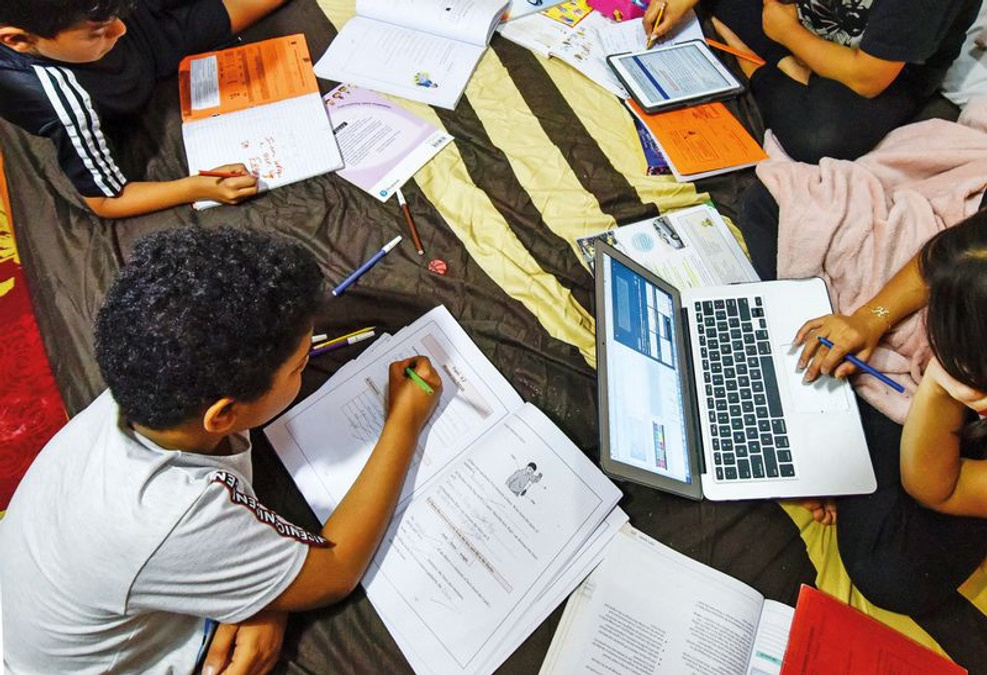
Long before Zoom, I was already struggling through digital chemistry games.
I didn’t grow up during the era of online learning as such, but I remember a science teacher in sixth grade who would march us into a room with a projector and launch an interactive learning programme where we solved quizzes and competed to answer correctly. The point is, I somehow ended up learning chemistry in sixth grade almost by accident.
But that was a different time. Today, amid ongoing disruption and geopolitical uncertainty, many children continue to shift between physical classrooms and online learning environments, sometimes with little warning.
Yet spending hours in front of a screen is rarely easy. Attention drifts, distractions multiply, and parents often find themselves attempting the near-impossible task of keeping a child focused on a maths lesson while three other tabs are open in the background.
Now, educators and online learning platforms say the next phase of digital education is aimed at solving exactly this problem. The focus is shifting away from passive video consumption towards something far more difficult to achieve online: genuine participation.
A common thread across virtual schools and educational platforms is the idea that students learn better when they are actively discussing and asking questions—often more so than when they are simply watching a screen.
As Sofiane Benna, Chief Operations Officer at Ankabut, puts it: “Learning doesn’t improve when students watch more. It improves when they do more.”
The biggest mistake: treating online learning like television
The pandemic delivered several hard lessons, one of which was that many schools initially tried to replicate traditional classrooms online without adapting the experience itself. Long lectures were simply transferred onto screens, leading to fatigue and reduced attention spans.
At Minerva Virtual Academy (MVA), educators say this prompted a complete rethink of how digital classrooms should function.
“The key lesson from the pandemic era was that successful online learning does not begin with technology,” the academy noted in response to. “It begins with clear routines, consistent communication, and manageable expectations for teachers, students, and families.”
Instead of relying heavily on recorded lessons, many online educators are now prioritising live interaction and active participation.
So how can this be achieved? With support from real-time engagement tools integrated into lessons, as Lobna Essam, Lead Facilitator at Peekapak Wellbeing Education, explains.
It means using tools such as live polls, embedded quizzes, breakout discussions, collaborative whiteboards, and scenario-based activities that require students to apply concepts immediately rather than passively absorb information. There is also an element of enjoyment in taking an interactive online quiz with feedback and encouragement, which can motivate students to improve.
It is, in a sense, the equivalent of earning a gold star in class.
As Essam notes, “The effective interactivity isn’t just frequent clicks or responses. It’s meaningful engagement that reinforces learning outcomes.”
That distinction—between activity and genuine engagement—is becoming central to how online learning is being redesigned.
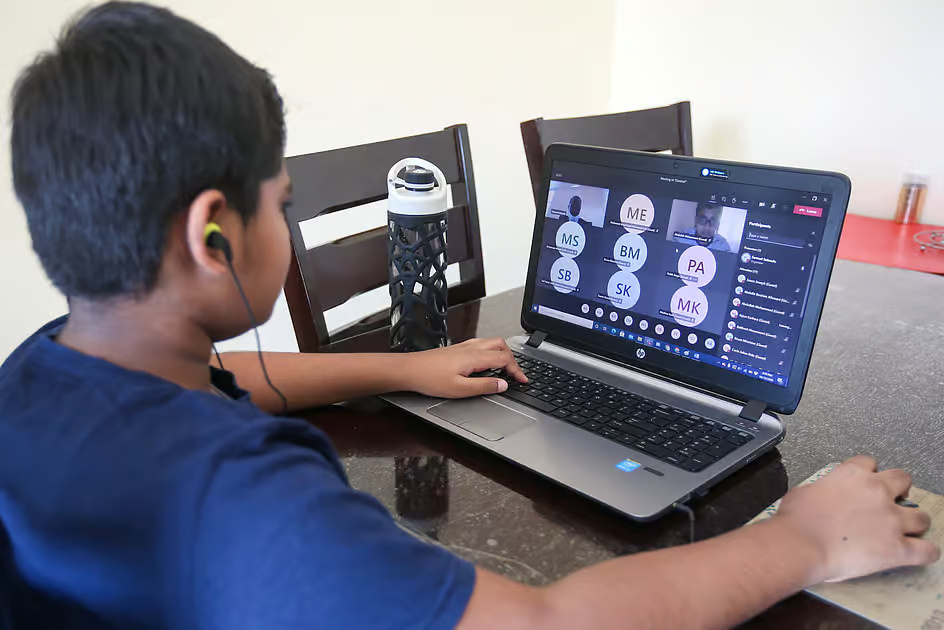
So what actually keeps students engaged?
The answer may lie in making classes feel more like conversations than lectures. Shorter, more focused sessions are becoming increasingly common, as educators move away from expecting students to sit through long online lessons. Instead, many are breaking content into smaller segments built around active, energetic discussion.
For instance, at Minerva Virtual Academy, live sessions are intentionally designed to be shorter and more dynamic—typically 20–30 minutes of high-intensity interaction, where the risk of students zoning out still exists, but is actively managed through engagement.
Beyond timing, the structure of lessons is also evolving. Rather than using entire sessions to introduce new concepts, some schools are adopting a flipped-learning model, where students review material beforehand and use live class time for discussion, clarification, and problem-solving.
This shift changes the quality of the classroom experience. As MVA notes, when students arrive at live lessons after already engaging with the material, the depth of interaction improves significantly. They come with questions, they come ready to defend viewpoints, and they come prepared to think rather than simply receive information.
Participation, educators say, goes far beyond simply showing up for class. Interactive boards, polls, collaborative tasks, discussion forums, and peer-to-peer activities are increasingly being encouraged to keep students actively involved throughout lessons.
The common thread running through these approaches is relevance. “Students understand when learning feels relevant, not when it feels longer,” says Benna.
According to educators, students are far more likely to remain attentive when lessons are connected to real-world applications, problem-solving, or personal goals, rather than simply covering material for completion’s sake.
AI is becoming the invisible teaching assistant
It’s time to address the artificial intelligence elephant in the room.
As AI becomes increasingly embedded in everyday life, it is also reshaping online learning—not necessarily through flashy tools, but through personalisation.
It can be a major advantage: helping identify struggling students early, tailoring learning pathways, and supporting teachers in designing more effective lessons. “We’re also exploring analytics dashboards for instructors to quickly identify disengaged learners and intervene early; for example, Kahoot, quizzes, Wayground, Padlet, Nearpod,” explains Essam.
Rather than slowing learning to the limits of a 20th-century curriculum, we enable responsible use of powerful AI within clear boundaries to deepen inquiry and accelerate understanding. Our approach is balanced: strict human-in-the-loop oversight alongside thoughtful integration of AI to raise expectations.
— Hugh Viney, CEO and founder at Minerva Virtual Academy
Gamification, Essam says, remains a strong focus because it directly influences motivation and consistency. AR and VR also show promise for experiential learning, although she notes they are most effective when they genuinely deepen understanding rather than simply add novelty.
At Peekapak Wellbeing Education, Essam says adaptive learning paths and instant formative assessments are becoming key priorities, alongside analytics tools that help educators quickly identify disengaged learners.
Echoing a similar view, Benna believes the real value of AI lies in helping platforms adapt to individual students rather than forcing students to fit rigid systems. “Engagement starts when learning adapts to the student, not the other way around,” he says.
At Minerva Virtual Academy, AI is being used through what the school describes as a “human-in-the-loop” approach, where technology supports teachers rather than replacing them.
“AI is not being used to automate learning or lower the bar,” the school explained. “It is being used to raise it, giving teachers better intelligence and giving students more precisely tailored challenge.”
The truth is, if you can’t measure engagement, you’re just guessing, as Benna says.

The screen fatigue problem
Yet even as online learning becomes more interactive, educators acknowledge another major challenge: screen fatigue. The physical and mental strain on the eyes can quickly set in, and students may begin to simply glaze over. For many, the issue is not just the amount of learning, but the amount of time spent looking at screens. “The problem is wasted screen time,” Benna says.
He adds that encouraging students to take on tasks such as content creation, problem-solving, and peer collaboration—rather than skimming PDFs or watching passive videos—helps shift the quality of screen time.
Shorter, more focused sessions also tend to sustain attention better than longer ones, while continuous feedback loops help keep students engaged throughout. Engagement, educators note, is not solely a student’s responsibility; it depends equally on the teacher’s ability to observe, respond, and adapt in real time. Teachers therefore need clear visibility into progress to guide learning effectively.
To reduce fatigue, many online schools are redesigning lessons around shorter sessions, offline tasks, and varied pacing. This includes reflection exercises, hands-on activities, as used by Peekapak Wellbeing Education, as well as discussion prompts that do not require constant screen time.
Minerva Virtual Academy has also introduced what it calls “Step-Away” tasks—activities deliberately designed to move students away from devices.
“These are not gaps in the learning,” the school noted. “They are part of the design.”
The broader philosophy is that effective online learning should not mean students being online all day.
The biggest driver is relevance combined with participation. When learners see clear value in what they are doing and are actively involved through discussion, problem-solving, or real-world application, they remain more engaged. Instructor presence also plays a major role; responsiveness, energy, and feedback can significantly influence attention and motivation.
The myth of the universal classroom
Every child learns differently, so a single approach cannot realistically fit all ages or learning styles. Younger learners often respond better to visually engaging activities, gamification, and shorter task cycles, educators say, while older students tend to prefer discussion, debate, and greater autonomy.
Minerva Virtual Academy has observed similar patterns across age groups and subjects. “Younger learners respond best to structured, visually engaging, and highly guided interactions,” the school noted. “Older students engage more deeply through discussion, debate, critical analysis, and genuine intellectual autonomy.”
This shift is driving digital classrooms away from one-size-fits-all models toward more personalised learning experiences. “One digital experience won’t work for every learner, and it shouldn’t,” Benna says.
The future of online learning may be more human
Despite the growing emphasis on AI, analytics, and immersive technologies, educators consistently return to one central point: technology alone does not create engagement.
Beyond tools and structure, they highlight the human dimension of online learning—particularly the relationships between students and teachers, and the access to subject expertise that digital classrooms can unlock.
As Suzanne Lindley, Principal of MVA, notes, hybrid and online environments can create more interactive and personalised learning unconstrained by geography. For older learners in particular, this opens access to subject specialists they may never encounter in traditional schooling—teachers with deep expertise and genuine intellectual passion for their disciplines.
MVA also points toward a future where learning tools adapt more fluidly to individual pace and learning styles, allowing educators to adjust classroom experiences in real time.
The school advocates for stronger support for flipped learning systems—platforms that make it easier to assign pre-lesson content, track completion, and generate insights that directly shape live teaching. While the technology already exists, it is not yet “integrated in ways that feel natural and low-friction for teachers,” the school notes. It adds that the biggest opportunity lies in reducing administrative workload through smarter automation, while keeping high-value human interaction at the centre of teaching.
Ultimately, teacher presence remains critical, along with responsiveness, structure, and interaction. “The biggest driver is relevance combined with participation,” Essam says. “When learners see clear value in what they’re doing and are actively involved, they stay engaged.”
After all, no amount of AI can fully replace the human satisfaction of finally wanting to raise your hand in class.

