

Government fee deferrals and alternative trade routes are helping to reduce pressure on companies.
Dubai’s economic priorities have remained unchanged despite pressures on oil, shipping, business costs, and investor sentiment stemming from the US–Israel–Iran conflict, according to a senior official at the Dubai Economic Development Corporation.
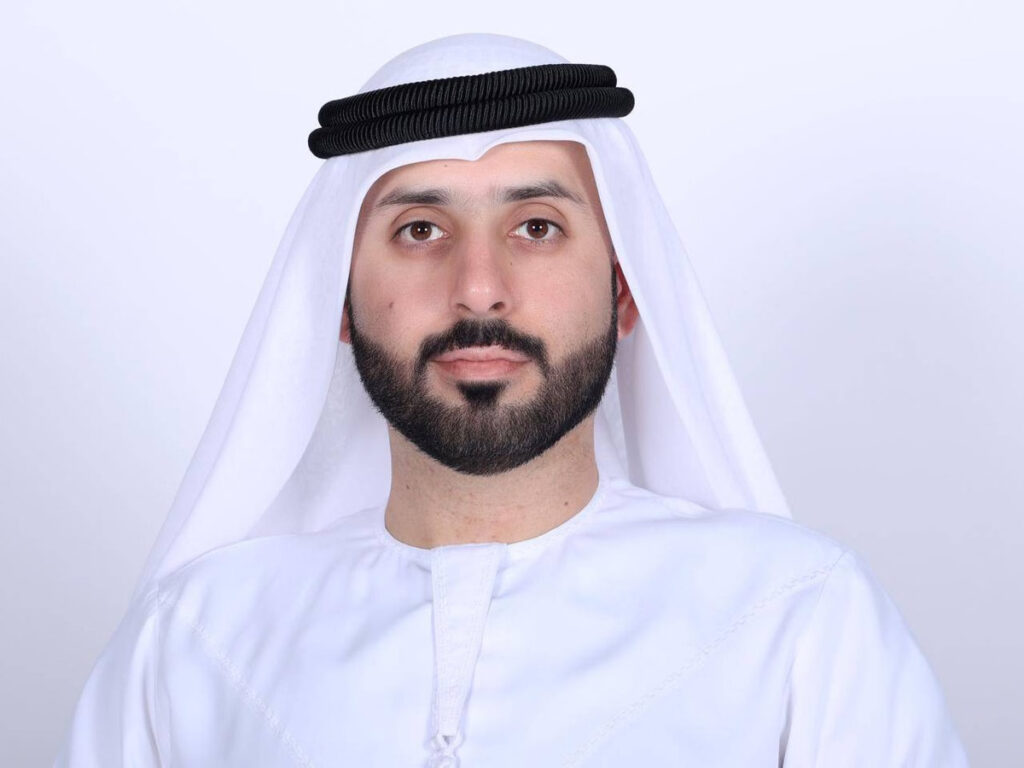
Mohamad Sharaf, Chief Operating Officer of Investment Attraction at the Dubai Economic Development Corporation (DEDC), the economic development arm of Dubai Economy and Tourism, said the emirate remains committed to the Dubai Economic Agenda D33 and its goal of doubling GDP by 2033.
“Our goals and our targets have not changed and have not shifted,” Sharaf said in an exclusive interview. We are still moving forward with D33 and its stated ambitions; it does not deter us.
The current regional backdrop has prompted Dubai to take a more careful approach to allocating resources across initiatives, while the overall direction remains unchanged, he noted.
“It has forced us to look at reprioritising the allocation of resources towards certain initiatives more than others, based on the current geopolitical situation,” Sharaf explained. “But we remain strongly convinced that these fundamentals have made Dubai the special place it is today and brought us to where we are. These are areas where we want to continue to expand and double down on.”
Supply chains face a live stress test
Regional tensions have placed pressure on shipping routes, supply chains, and operating costs, but Sharaf said Dubai’s long-standing investment in infrastructure and global connectivity is helping the city absorb the impact.
“Dubai and the UAE have always prioritised being not only a local hub but a regional and global hub that focuses on connecting the world through world-class infrastructure,” he said.
He added that during periods of conflict, supply chains undergo “a lot of stress testing,” noting that Dubai and the UAE’s investments in building a resilient global network have been crucial in supporting both local and international markets.
“Our investments as a city and as a country in building resilience across our global network were tested during this period and have proven valuable not only for our local economy and consumption, but also for global economies,” he said.
With shipping routes affected, Dubai has been developing alternative channels to ensure trade continues to flow.
“We have found unique ways to create green lanes and green corridors with ports across neighbouring countries, while also continuing to ramp up our air connectivity to countries both east and west,” Sharaf said.
Cost pressures hit businesses
Businesses in Dubai are facing higher costs linked to fuel, freight, insurance, and supply chain disruption, Sharaf said, while the emirate continues to closely monitor the market to prevent unfair pricing practices.
“What we are seeing in Dubai and the UAE is obviously pressures from the conflict that are creating some challenges,” he said. “Our role at Dubai Economy and Tourism is to ensure that we don’t see any predatory activity as a result. Therefore, our consumer protection and fair trade teams are constantly on top of these matters.”
He noted that rising fuel prices have affected many businesses, making targeted support measures increasingly important.
“We do see that increasing fuel prices has had an effect on many businesses,” Sharaf said. “And that’s why measures such as the package announced by Sheikh Hamdan at the end of March, including the deferral of many government fees, have been a step in the right direction in alleviating some of these pressures.”
The support measures are being continuously reviewed, with decisions guided by prevailing market conditions.
“These measures are not taken as a reaction,” Sharaf said. “They are continuously studied, so that depending on certain factors, it is determined whether these are extended support packages or whether additional measures are warranted.”
Investor confidence rests on stability
When asked how Dubai is maintaining foreign investor confidence amid regional uncertainty, he said investors need to understand the strength of the emirate’s legal framework, including the availability of both civil and common law systems, such as those offered within the Dubai International Financial Centre.
“There is transparency and justice in a legal system that is proven,” he said. “There is also familiarity in the legal systems in Dubai, whether in civil or common law jurisdictions such as the DIFC.”
Safety and security remain central to the emirate’s investment proposition, particularly during periods of regional uncertainty.
“Most importantly, it is about understanding what Dubai and the UAE have promoted for quite some time—the concept of placing people’s and businesses’ safety and security at the forefront of priorities,” Sharaf said.
He added that the latest period of uncertainty has once again tested those fundamentals.
“We’ve seen resilience play an important role in business sustainability and supply chain robustness,” Sharaf said. “What they have seen helps build greater credibility for future and new investors, giving them a more robust understanding of how Dubai and the UAE are a land of prosperity, a welcoming destination, but also a land of execution.”
Manufacturing gets a stronger role
Manufacturing, logistics, AI, the green economy, and advanced technologies are central to Dubai’s diversification strategy and its efforts to reduce exposure to oil cycles and geopolitical volatility, Sharaf said.
The D33 agenda, announced in January 2023, sets an ambitious goal of doubling Dubai’s GDP within a decade. Sharaf said achieving this target depends on productivity and production, making manufacturing a key sector.
“The goal of doubling our GDP in the span of a decade is ambitious, but achievable,” he said.
Manufacturing is closely linked to logistics, he added, with Dubai’s early investment in air, land, and sea connectivity creating a long-term advantage that continues to support growth.
“That was a very important step early in Dubai’s history—to create a logistics and trading hub by investing in infrastructure, which has been paying dividends for four decades,” Sharaf said.
He noted that national champions such as Emirates Airlines and DP World remain central to this model, enabling manufacturers to access global markets efficiently.
“Building physical channels and connections through air, land, and sea, with national champions like Emirates Airlines and DP World, has been critical to the success of Dubai’s hub story,” he said. “It has added value for manufacturers, as their goods can reach every corner of the world in a more efficient manner.”
Incentives and export support
Dubai is also increasing its focus on incentives for manufacturers looking to expand existing facilities or establish new ones, Sharaf said.
The emirate is assessing financial incentive structures based on the economic impact of investments, while the Dubai Economy and Tourism department (DET) has introduced an export assistance programme designed to connect manufacturers with overseas customers and open new trade channels.
The Dubai Economic Development Corporation (DEDC) is also advancing its elite buyers programme, which aims to bring major international purchasers closer to UAE-made products.
The programme helps global buyers gain “a better understanding of Emirati-produced products, their quality, and the reliability of being able to stock those in a timely manner,” Sharaf said.
Industry 4.0 is another key focus area, with Dubai supporting manufacturers in upgrading processes, automating operations, adopting AI, and integrating advanced technologies to improve efficiency.
The emirate is also placing greater emphasis on in-country value at both federal and local levels, providing local manufacturers with added advantages in government procurement and tenders.
Sustainability is also embedded in the industrial strategy, with the UAE’s net-zero 2050 commitment shaping manufacturing policy and long-term planning.
“We are also cognisant of the fact that we have made a national commitment to achieve net zero by 2050, and supporting more sustainable manufacturing is another priority for us,” Sharaf said.
He added that the adoption of solar energy and recent changes in solar policy have helped reduce costs for manufacturers.
Businesses need different forms of support
Companies are not all seeking the same type of assistance, Sharaf said, noting that needs vary by sector and business model. Some require cost relief, others need supply chain support, improved access to financing, or clearer policy direction.
“It varies from sector to sector and business to business,” he said. “There are businesses that require some of each of what you’ve pointed out, and there may be continuity of themes based on sectors.”
He said Dubai’s role is to continuously monitor these needs and respond with targeted solutions where required.
“Our role is to listen, our role is to monitor, and our role is also to come up with solutions,” Sharaf said. “How and when these solutions get executed depends on a number of factors that we are constantly reviewing.”
The broader objective, he added, is to help businesses navigate the current period and return to the growth trajectory Dubai has experienced in recent years.
“Our major goal is to help businesses continue to get through this phase and return to the growth we have seen in Dubai over the past couple of years, which has been outpacing most advanced economies around the world,” Sharaf said. “We want all partners and investors in Dubai to play a part in that journey.”

