

Gold Line, Blue Line, Hessa Street: Dubai’s transport network undergoes a major upgrade.
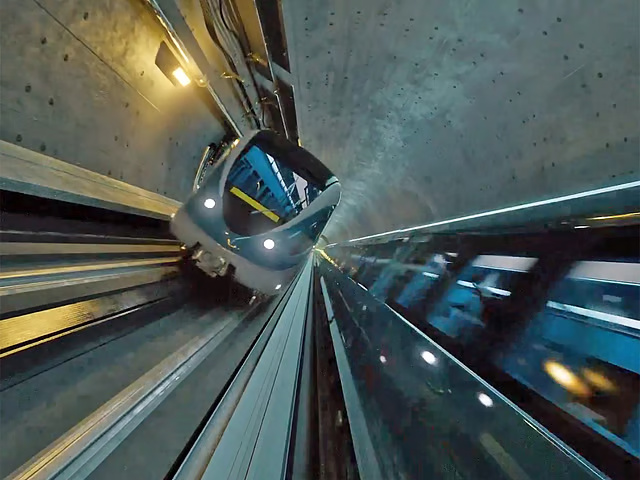
Dubai: Some cities plan for the future — and then there is Dubai. At a time when much of the wider region is navigating uncertainty, the emirate has chosen momentum, announcing, building and opening infrastructure at a pace that reflects not just ambition, but confidence.
The latest wave of transport developments — a landmark new metro line, continued progress on another, and the completion of a major road upgrade — paints the picture of a city that refuses to stand still.
The Gold Line: A new chapter underground
On April 22, Sheikh Mohammed bin Rashid Al Maktoum announced the Dubai Metro Gold Line, described as the largest public transport project in the emirate’s history. The Dh34 billion investment is expected to serve 1.5 million residents.
Spanning 42 kilometres, the Gold Line will be Dubai’s first fully integrated underground metro route. It will begin at Al Ghubaiba in old Dubai and pass through 15 strategically selected locations, including Mina Rashid, City Walk, Business Bay, Mohammed Bin Rashid City, Nad Al Sheba, Meydan, Al Barsha South, Jumeirah Village Circle and Jumeirah Golf Estates, among others.
The tunnel network alone will be equivalent to twice the length of all existing Dubai Metro tunnels combined. There are also plans for the Gold Line to potentially connect with Etihad Rail, the UAE’s national rail project, further extending its reach beyond the city.
The Blue Line: Already taking shape
Announced last year, the Dubai Metro Blue Line is already well underway, reaching 10 per cent completion within just five months of construction beginning. The line will include 14 stations and extend in two directions.
The first branch runs 21 kilometres from Creek Interchange Station on the Green Line in Al Jaddaf, passing through Dubai Festival City, Dubai Creek Harbour and Ras Al Khor Industrial Area before reaching International City, which will feature an underground interchange, then continuing through Dubai Silicon Oasis and ending at Dubai Academic City.
The second branch stretches nine kilometres from Centrepoint Interchange Station on the Red Line in Al Rashidiya, passing through Mirdif and Al Warqa before connecting at International City. A depot and maintenance facility will also be built in Al Ruwayyah 3.
Together, the two lines represent a major reimagining of how residents across high-density communities and business districts will move through the city.
Hessa Street: The road transformation
While the metro expansions have drawn much of the attention, Roads and Transport Authority (RTA) has also been delivering major upgrades on the ground. The completed Hessa Street Development Project has officially opened, transforming one of Dubai’s most congested corridors into a smoother, free-flowing arterial route.
The upgraded 4.5-kilometre stretch between Sheikh Zayed Road and Al Khail Road has reduced travel times from around 15 minutes to just four, while road capacity has doubled from 8,000 to 16,000 vehicles per hour in both directions.
Work on Phase 2 is already under way, extending the project by a further three kilometres to Sheikh Mohammed bin Zayed Road. This phase will include more than 8,800 metres of bridges, a 480-metre tunnel and upgrades to three major intersections.
The bigger picture
Since the Dubai Metro first opened in 2009, it has become the backbone of daily life in the city. These latest developments are not simply additions to the network — they reflect a broader vision for a city expanding to meet the needs of a growing population.
At a time when much of the wider region faces uncertainty, Dubai has continued to push forward without slowing construction or delaying major projects. The Gold Line, the Blue Line and Hessa Street are more than infrastructure upgrades — they represent a clear statement that Dubai’s long-term growth and ambition remain firmly on track.
Dubai doesn’t wait — it builds, and it shows no signs of stopping.

