

Geopolitical deadlock in the Strait of Hormuz pushes oil prices toward post-Ukraine conflict highs.

Oil prices continued their upward climb in early trading on Wednesday, April 29, 2026, driven by persistent concerns over the risks facing tankers crossing the Strait of Hormuz.
According to the latest market data at 5:54 AM Beijing time, benchmark crude prices posted strong gains across the board, even as traders assessed the UAE’s decision to leave OPEC and OPEC+ effective May 1, 2026.
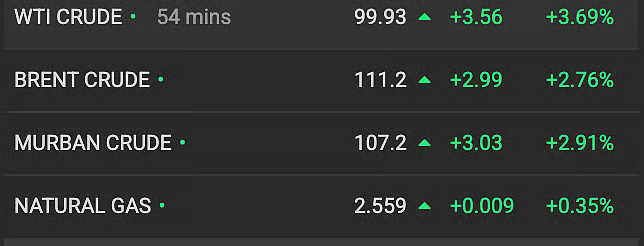
WTI, the US benchmark for crude futures, jumped 3.69% to $99.93 per barrel, up $3.56, while Brent Crude climbed nearly 3% to $111.20 per barrel, gaining $2.99.
Murban, a Gulf crude benchmark, stood at $107.20, up 2.91 per cent, while Natural Gas also edged up 0.35 per cent to $2.559.
Market drivers
The primary catalyst behind the latest oil price surge remains the geopolitical deadlock in the Middle East.
Markets remain highly sensitive to stalled peace negotiations between Washington and Tehran, along with continued restrictions on shipping through the Strait of Hormuz — a critical artery for global energy trade. The waterway handles around 20 million barrels of oil per day, roughly 25 per cent of the world’s seaborne oil trade, while nearly one-fifth of global LNG trade also passes through it.
Despite recent diplomatic efforts — including Iran’s reported proposal to reopen the Strait of Hormuz in exchange for postponing nuclear negotiations with the United States — traders remain skeptical, as no breakthrough has been confirmed and shipping risks continue to weigh heavily on sentiment.
Energy prices are now projected to surge by 24 per cent throughout 2026, reaching their highest levels since Russia’s 2022 invasion of Ukraine, according to the World Bank. The bank said attacks on energy infrastructure and shipping disruptions in the Strait of Hormuz have triggered the largest oil supply shock on record, with an initial reduction of about 10 million barrels per day in global supply.
Analysts from the World Bank and S&P Global warn that even if traffic through the strait returns to normal, tighter underlying supply conditions and the need to rebuild depleted inventories are likely to keep oil prices elevated through the rest of the year.

