

Several analysts expect limited short-term impact, but see greater uncertainty over the long term.
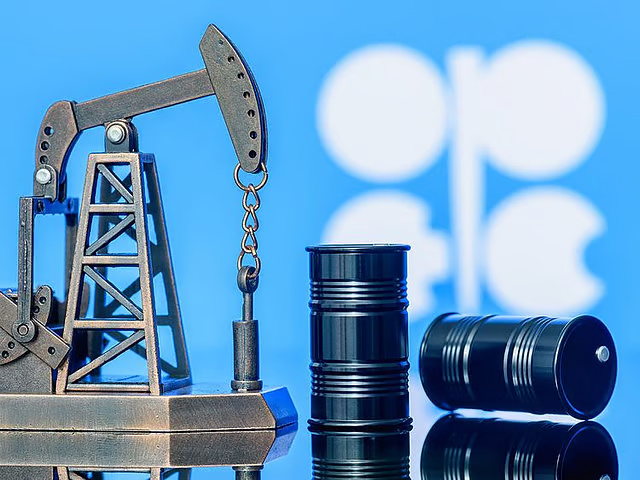
Dubai: The UAE’s decision to leave the Organization of the Petroleum Exporting Countries and the wider OPEC+ alliance from May 1, 2026, is prompting questions about how global oil prices may respond, with analysts expecting limited short-term impact but greater long-term uncertainty.
The move, announced through state news agency WAM, follows a review of production policy and capacity, with the UAE seeking greater flexibility outside quota limits while continuing to supply markets in a “gradual and measured manner.”
For markets, the key question is whether greater production freedom for a major Gulf producer will lead to lower oil prices or create higher volatility over time.
Limited short-term impact expected
Most analysts expect little immediate impact on oil prices, as global supply remains constrained by the Iran conflict and the closure of the Strait of Hormuz, a key transit route for nearly one-fifth of global oil flows.
Brent crude remained above $111 per barrel on the day of the announcement, reflecting supply disruptions and shipping bottlenecks that have restricted oil movement despite available production capacity.
Michael Brown, Senior Research Strategist at Pepperstone, said the announcement was more notable for its timing than its substance. “In many ways, the main surprise regarding today’s announcement… is in its timing, as opposed to its substance,” he said, adding that “the near-term implications of the move are likely to be relatively limited.”
Logistics remain the dominant constraint
He said logistics remain the main constraint. “As the US-Iran conflict continues, and the Strait of Hormuz remains impassable, the most significant issue for the crude market is not production, but actually shipping product to where it is needed.”
Suhail Mohamed Al Mazrouei, the UAE’s Energy Minister, told Reuters that the move followed a policy review. “This is a policy decision… after a careful look at current and future policies related to level of production,” he said, adding that the UAE did not consult other countries.
Al Mazrouei told CNBC that the decision came after “a very careful and long review,” saying flexibility was needed to respond to market conditions “at the right time and at the right pace,” particularly at a time when global supply requires agility.
He said the timing was intended to minimise disruption, noting the market is currently undersupplied and that the UAE’s exit would have “a minimum impact on the price.”
Speaking to CNN, he said the closure of the Strait of Hormuz was a key factor, explaining that the decision was taken at a point when it would not significantly affect prices because “everyone is constrained, including us,” and describing the move as a “sovereign national decision.”
Capacity expansion and market absorption
The UAE had been producing around 3.4 million barrels per day before the conflict, with plans to raise capacity to about 5 million barrels per day by 2027 after years of investment.
Analysts say this expansion is central to the decision and helps explain the shift away from quota-based production agreements.
Sam North, Market Analyst at eToro, said the UAE’s investment cycle had increasingly come into conflict with OPEC+ limits. “The UAE has spent heavily to lift production capacity toward 5 million barrels per day, and OPEC+ quotas had increasingly looked like it was stifling a growing economy,” he said.
At the same time, global inventories have been drawn down sharply. Ole Hansen, Head of Commodity Strategy at Saxo Bank, said the conflict has “drained global commercial and strategic crude inventories, leaving the market facing a prolonged rebuilding phase once hostilities end,” suggesting additional UAE supply could be absorbed without sharply lowering prices in the near term.
Long-term outlook remains uncertain
While short-term effects may be limited, analysts see more significant implications over the longer term, particularly once logistical constraints ease and additional supply can reach global markets.
Ole Hansen said the UAE’s exit removes “the production quota straitjacket that for years frustrated the oil-rich nation,” potentially allowing higher output and greater market share. However, the move also weakens coordinated supply management.
Jorge Leon, Head of Geopolitical Analysis at Rystad Energy, said the UAE’s departure removes one of OPEC’s key sources of spare capacity. “A structurally weaker OPEC… will find it increasingly difficult to calibrate supply and stabilize prices,” he said.
Sam North said the decision “raises the risk” of a shift toward market share competition if other producers follow suit.
Broader market shifts and price outlook
The decision comes amid wider changes in the oil market, including rising U.S. production, which now exceeds 13 million barrels per day, and weakening cohesion within OPEC following Qatar’s exit in 2019.
Dr Sahitya Chaturvedi, Secretary General of the Indian Business & Professional Council Dubai under Dubai Chamber of Commerce, said the move comes at a time of elevated prices and supply disruption. “With Brent crude at $111–113 per barrel and global supply disruption exceeding 10 million barrels per day… this may drive short-term volatility but enhance future supply responsiveness,” he said.
Taken together, analysts say the UAE’s exit may not immediately shift prices, but it could reshape supply dynamics over time, with the balance between increased output and reduced coordination likely to determine whether markets stabilise or become more volatile.

