

The UAE recorded its highest-ever petrol prices in 2022 following the Russia-Ukraine war, when fuel rates crossed Dh4 per litre for the first time in the country’s history.
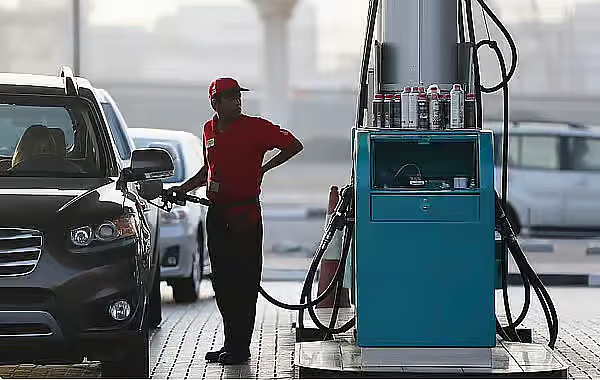
Petrol prices in the UAE are set to be revised next week for May, in line with global market fluctuations.
Oil prices traded mostly in the high $90s and above $100 per barrel during April, driven by the closure of the Strait of Hormuz and ongoing regional military tensions involving the US, Israel, and Iran. Brent crude surged above $100 a barrel following the disruption in Hormuz, a key global oil transit route.
Crude prices eased after the US-Iran ceasefire was extended, but climbed above $100 again as both sides exchanged fresh military threats and rhetoric.
The UAE Fuel Price Committee raised petrol prices by around Dh0.80 per litre, or nearly one-third, for April after oil prices surged in March following the outbreak of the Middle East war on February 28.
For April, Super 98, Special 95, and E-Plus were set at Dh3.39, Dh3.28, and Dh3.20 per litre, respectively.
The average closing price of Brent crude in April stood at $99.16 per barrel, compared to $96.96 in March, suggesting fuel prices could see a slight increase. However, the final decision will be made by the committee, which is set to announce the revised rates on April 30.
The UAE recorded its highest-ever petrol prices in 2022 following the Russia-Ukraine war, when rates crossed Dh4 per litre for the first time in the country’s history.
In July 2022, petrol prices hit record highs, with Super 98 reaching Dh4.63 per litre and Special 95 climbing to Dh4.52 per litre.
The impact of the Middle East conflict on global oil prices has been more severe due to the closure of the Strait of Hormuz and the wider number of oil-producing nations affected by regional tensions.
The effective closure of the Strait of Hormuz since late February has removed an estimated 10–13 million barrels per day of supply — roughly 12 per cent of global output — triggering the sharpest disruption to global energy flows since the oil crises of the 1970s.

