

India’s telecom and digital infrastructure depend on undersea cables near the Strait of Hormuz and the Red Sea, meaning any disruption could affect internet speeds, digital networks, and cloud services.
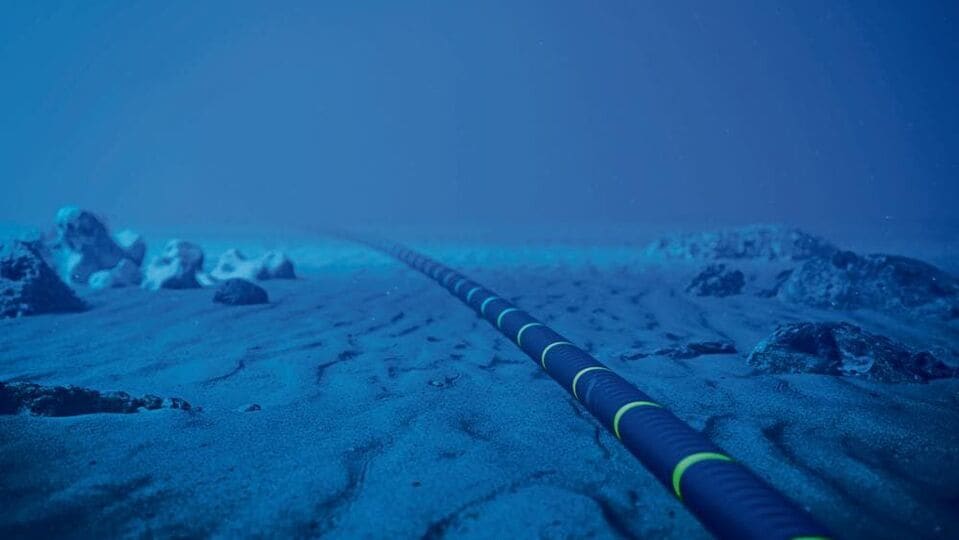
Concerns are rising in India over the safety of subsea cables running through the Strait of Hormuz and the Red Sea, as around 60% of the country’s internet traffic passes through the critical Mumbai-to-Europe route.
A disruption to these cables could affect internet speeds, digital networks, and cloud services across India. While Iran has not officially mentioned the cable infrastructure in the conflict-affected region, concerns remain over the undersea cables passing through the Red Sea.
Seventeen submarine cables run through the Red Sea, carrying significant data traffic between Asia, Europe, and Africa. Analysts say it would be challenging to disrupt all of them, but partial damage could still cause slowdowns. The remaining 40% of India’s internet traffic is routed eastward from Chennai to Singapore and across the Pacific.
Repairing and maintaining existing subsea cables is particularly challenging amid the ongoing conflict in the Middle East. Even under normal circumstances, detecting and fixing underwater faults requires significant effort.
India is linked to the world through five major subsea cable systems from the west: AAE-1 (Asia-Africa-Europe 1), Falcon Network, Tata TGN-Gulf, SEA-ME-WE 4 (Southeast Asia–Middle East–Western Europe), and IMEWE (India–Middle East–Western Europe).
All of India’s leading telecom and digital infrastructure firms—including Reliance Jio Infocomm, Bharti Airtel, Tata Communications, and Vodafone Idea—rely on undersea cables near the Strait of Hormuz and the Red Sea. Last year, three of these cables were severed, disrupting 25% of India’s data traffic with Europe.
Anil Kumar Lahoti, chairman of the Telecom Regulatory Authority of India (TRAI), has warned that India’s subsea cable infrastructure falls short of the country’s digital ambitions. Speaking at the first International Subsea Cable Systems conference in India last year, he noted that India hosts only 1% of the world’s subsea cable landing stations, compared to Singapore’s 26 cables across three sites. Lahoti called for a tenfold expansion of India’s subsea cable infrastructure, emphasizing that protecting underwater networks is a national security imperative.
The Indian government has instructed subsea cable operators and telecom firms to conduct risk analyses of critical data pipelines that traverse multiple oceans, including regions affected by conflict. Telecom industry leaders have also urged the government to engage diplomatically with Iran to reduce threats to subsea infrastructure in the Strait of Hormuz and the Red Sea.

