

The crescent moon is expected to be visible to the naked eye across much of the Islamic world.
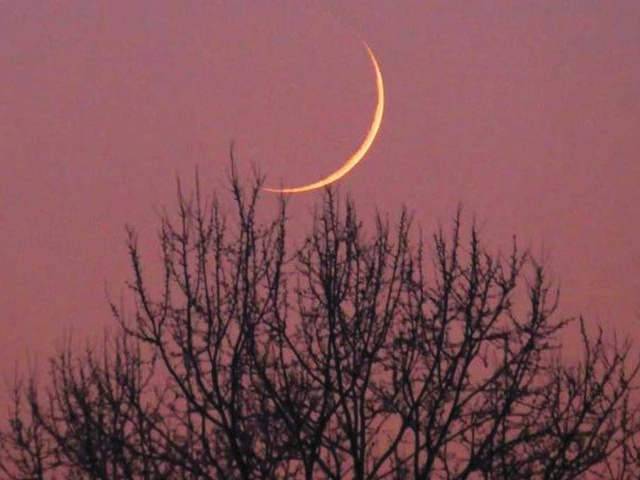
Saudi Arabia’s Supreme Court has called on Muslims across the Kingdom to look for the crescent moon marking the start of Dhu Al Hijjah on the evening of Sunday, May 17, corresponding to the 29th of Dhu Al Qa’dah in the Umm Al Qura calendar.
In its statement, the court urged anyone able to sight the crescent moon to join the official moon-sighting committees established across the Kingdom.
Meanwhile, the International Astronomical Center said Islamic countries are expected to observe the Dhu Al Hijjah crescent on Sunday, May 17. It added that visibility forecasts suggest the moon may be seen with telescopes in East Asia, southern Africa, and parts of South America, while naked-eye visibility is expected across areas of central and western Asia, North Africa, and most of the Americas.
Engineer Mohammed Shawkat Odeh, Director of the International Astronomical Center, said that current astronomical calculations indicate Monday, May 18 is likely to be the first day of Dhu Al Hijjah, while Wednesday, May 27 is expected to be the first day of Eid Al Adha in most Islamic countries.
He added that crescent moon visibility on Sunday is expected to vary by location. In Abu Dhabi, the moon is forecast to set 58 minutes after sunset and will be about 18 hours and 45 minutes old, while in Makkah it is expected to remain visible for 58 minutes after sunset and be around 19 hours and 22 minutes old.
According to the centre, the crescent is also expected to be visible to the naked eye in Amman, Jerusalem, Cairo, and Rabat under favourable conditions.
Odeh noted that the timing of Eid Al Adha depends on the official sighting of the Dhu Al Hijjah crescent moon. If the crescent is sighted on Sunday evening, Monday will mark the start of the Islamic month and Eid Al Adha will fall on Wednesday, May 27. If the crescent is not confirmed, both the month and the Eid holiday would shift by one day.
He further explained that while the moon’s age and time above the horizon are important, visibility also depends on other factors such as its angular distance from the sun and its position in the sky during observation.

