

G7 videoconference to include energy and finance ministers, along with central bank governors.
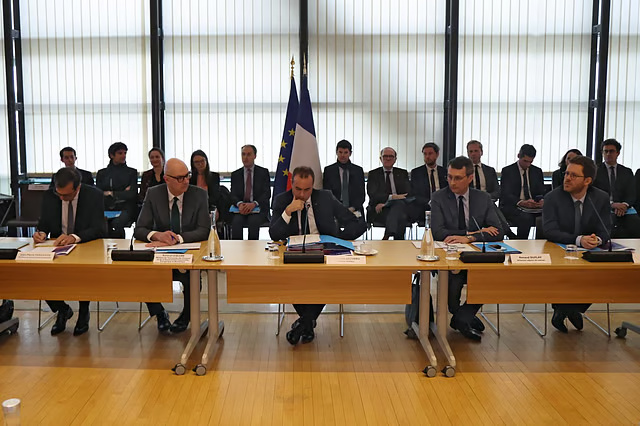
G7 ministers set to tackle financial fallout of Mideast war
Ministers from the Group of Seven (G7) are scheduled to meet on Monday in Paris to discuss the economic consequences of the ongoing war in the Middle East, as soaring oil and gas prices continue to strain global markets, the French government said.
The videoconference will bring together key officials including energy and finance ministers, as well as central bank chiefs, to examine how the conflict is impacting energy costs, supply chains, financial stability and broader economic growth.
The meeting comes against a backdrop of escalating tensions in the region following strikes by the United States and Israel on Iran, and Tehran’s retaliatory actions that have affected crude-exporting countries and disrupted shipments through the Gulf — developments that have sent global energy prices higher.
In related G7 activity this week, foreign ministers from the member states issued a joint statement calling for an end to attacks on civilians and urging the reopening of key maritime routes such as the Strait of Hormuz to help stabilise markets and supply chains.
The tightening of energy supply has driven up oil and natural gas prices, creating widespread ripple effects across global supply chains in numerous industries.
French Finance Minister Roland Lescure said the G7 videoconference will bring together energy and finance ministers, central bank governors, and leaders of other international agencies.
“There are already differences in the responses, largely due to varying levels of exposure to the crisis,” Lescure told reporters on Friday, highlighting that Asian economies are particularly vulnerable to the turmoil.
The United States has sought backing from the G7 to help counter Iran’s blockade of the Strait of Hormuz shipping route.d Lescure said the G7 videoconference will bring together energy and finance ministers, central bank governors, and leaders of other international agencies.
Following a meeting last week, G7 foreign ministers described it as an “absolute necessity” for Iran to restore free passage through the Strait of Hormuz and called for an end to attacks on civilian infrastructure.
Governments are responding quickly, introducing measures to mitigate the effects of supply disruptions and soaring energy prices.
However, uncertainty over US objectives, the potential duration of the conflict, and the risk of hostilities spreading has left many administrations struggling to develop coherent strategies.
US officials, including President Donald Trump, have stated that their goals in the conflict are nearly achieved, even as thousands of US troops have been deployed to the region in an unprecedented military build-up.
Activists outside Iran report that the US-Israeli campaign has claimed over 3,000 lives in the country, with more than half being civilians. Meanwhile, Lebanese authorities say that over 1,000 people have died since Israel launched strikes in response to Hezbollah attacks on March 2.
By contrast, officials in Israel and across the Gulf report significantly lower casualty figures.

