

Hunt underway for Iran’s fast‑attack and drone boats squeezing tanker traffic in the Strait of Hormuz.
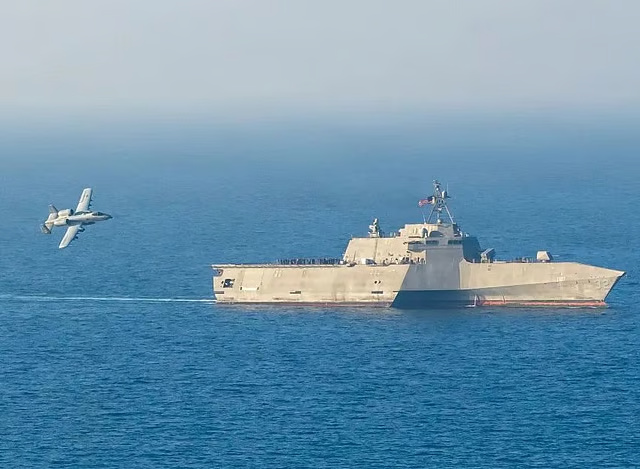
The U.S. military has stepped up operations in the Strait of Hormuz, deploying A‑10 Warthogs and AH‑64 Apache helicopters to actively engage Iranian fast‑attack craft and explosive‑laden unmanned vessels that have been threatening commercial tankers and blocking key shipping lanes. This escalation reflects broader efforts to reopen the vital waterway amid ongoing conflict with Iran, with Apaches also targeting drones and militia‑linked threats in the area.
This represents a notable shift in the Pentagon’s strategy, emphasizing the use of military assets for close-range control in active combat scenarios.
Originally designed for precision strikes against ground and surface targets, A‑10 Warthogs are now being deployed to track and engage fast-moving vessels in one of the world’s most strategically important waterways. Meanwhile, Apache helicopters are broadening their operations, neutralizing threats before they can escalate—signaling a new phase in U.S. military engagement in the region.
The U.S. Department of Defense is reportedly ramping up operations in the Strait of Hormuz, marking a more aggressive phase in efforts to secure one of the world’s most vital trade routes.
According to General Dan Caine, the battlefield is increasingly shifting toward the water’s surface.
A‑10 Thunderbolt II jets, renowned for their devastating low-altitude strike capabilities, are now being deployed to directly target Iranian fast-attack vessels, operating alongside U.S. minesweepers and littoral combat ships such as the USS Santa Barbara.
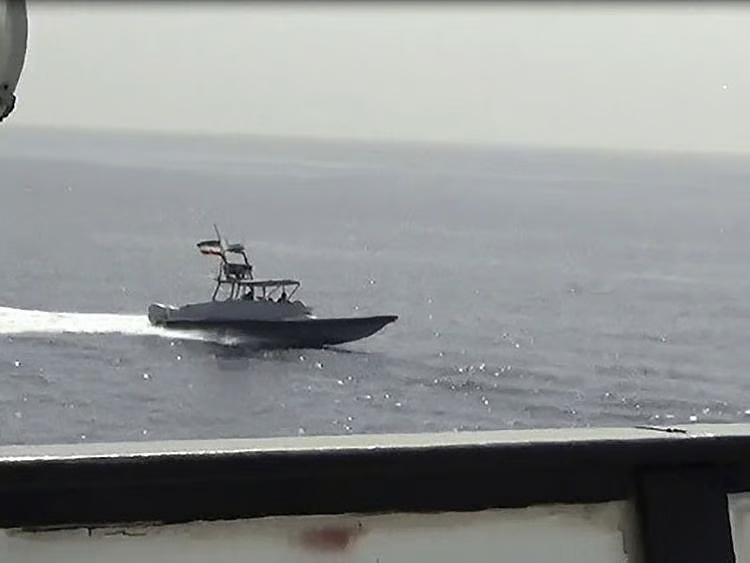
Swarm boat attacks
The threats include swarm-style boats and, increasingly, remote-controlled explosive vessels, which pose a rising danger to commercial oil tankers navigating the narrow Strait of Hormuz.
Complementing the A‑10 Warthogs, AH‑64 Apache gunships are reportedly intercepting drones and monitoring militia-linked maritime activity throughout the Arabian Gulf.
Pivot’ to close-range engagements
Defense analysts say this combination reflects a deliberate “pivot” toward close-range, high-precision operations, designed to neutralize threats before they can reach major shipping lanes.
Open-source intelligence and defense analysts have observed increased U.S. aerial patrols and rapid-response maneuvers in the Gulf, with some X posts noting the redeployment of A‑10 aircraft in maritime interdiction roles—an uncommon, though not unprecedented, mission profile.
Asymmetric war tactics
The deployment comes amid rising tensions with Islamic Revolutionary Guard Corps naval units, which have historically employed asymmetric methods—such as fast-attack boats, mines, and drones—to challenge larger conventional fleets.
Deploying aircraft originally built for close air support into this environment allows Pentagon planners to counter speed with precision, aiming to disrupt Iran’s control over the strategic Strait of Hormuz.
Evolving air-sea battle
Although U.S. Central Command has not disclosed full operational details, analysts see this as part of a broader strategic shift: ensuring the security of maritime traffic not only through deterrence but via active, near-contact enforcement.
With nearly one-fifth of the world’s oil transiting the Strait of Hormuz, even minor disruptions can send ripples across global energy markets.
This evolving air-sea battle highlights a stark reality: control of the strait is no longer solely about naval superiority, but about who can act fastest, at the lowest altitudes, and with the greatest precision in the world’s most volatile shipping lane.

