

Could Fake AI Content Spark an Energy Crisis? Markets Move Before Truth Catches Up.

Oil markets have long been vulnerable to shocks from wars, sanctions, refinery outages and shipping disruptions.
Increasingly, however, analysts are warning of another threat capable of moving prices within minutes: misinformation and disinformation.
As tensions in the Middle East continue to rattle global energy markets, traders are often forced to react to fragmented reports, viral social media posts and unverified breaking news long before official confirmation arrives. In an industry where prices can swing dramatically on perceptions of risk, a false claim or misleading report can trigger market turbulence within seconds, while the truth may take hours to catch up.
In such an environment, a fabricated event does not have to be true to influence markets. It only needs to appear credible long enough for traders, algorithms and investors to react. Even a brief window of uncertainty can trigger rapid buying or selling, causing prices to move sharply before facts are verified and the misinformation is corrected.
The growing risk of misinformation has prompted increased interest in technologies designed to verify digital content in real time.
According to the American Psychological Association, misinformation refers to false or inaccurate information shared without necessarily intending to mislead, while disinformation involves the deliberate spread of false information to deceive others.
Among the companies seeking to address this challenge is Hydaway Digital, which has developed a platform designed to assess the authenticity of images, videos, audio recordings and online reports before they influence decision-making in financial markets and other sectors.
Why oil markets are especially vulnerable
Oil markets are particularly susceptible to misinformation because prices are highly sensitive to any perceived disruption in supply. Reports of attacks on energy infrastructure, shipping routes or production facilities can trigger immediate market reactions, even when the information is later proven false. In a fast-moving trading environment, the mere perception of risk can be enough to drive significant price volatility.
Reports of attacks on pipelines, tanker collisions, refinery fires or threats to major shipping routes can send crude prices sharply higher within minutes, often before authorities have confirmed the facts.
The recent conflict involving Iran highlights the challenge. Markets have reacted swiftly to reports of military strikes, infrastructure damage and potential disruptions to shipping lanes, reflecting the reality that traders cannot afford to wait for complete information. By the time events are verified, prices may already have moved significantly.
Historically, such volatility has been driven by geopolitical events themselves. Today, however, analysts warn that misinformation and disinformation could amplify market turbulence by creating uncertainty where none exists or by exaggerating the scale of genuine events. In an era of instant communication and AI-generated content, the speed at which information spreads may become as important to oil prices as the underlying event itself.
Today, however, uncertainty can also be manufactured through artificial intelligence, deepfakes and increasingly sophisticated forms of digital manipulation.
The result is a market exposed not only to genuine disruptions but also to convincing false narratives capable of influencing prices before they can be verified.
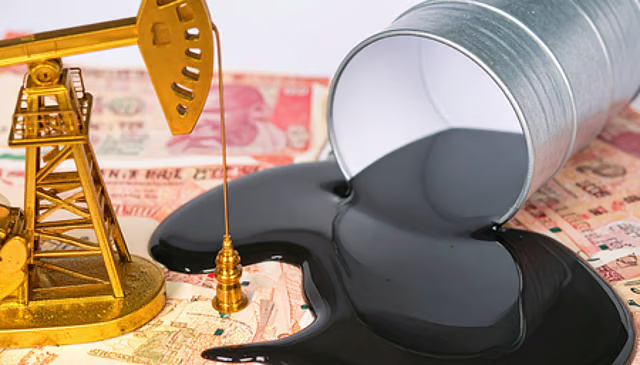
Fake news has moved markets before
Financial markets have repeatedly demonstrated their vulnerability to misinformation.
One of the most notable examples occurred in 2013, when hackers gained access to the social media account of the news organisation Associated Press and falsely reported explosions at the White House that had injured then-US President Barack Obama.
Although the report was quickly debunked, the reaction was immediate. Major US stock indices briefly plunged, wiping out billions of dollars in market value within minutes before recovering once the hoax was exposed. The incident underscored how rapidly false information can spread through financial markets and how quickly traders and algorithms can respond to perceived risk.
Within minutes, US stock markets briefly lost more than $100 billion in value before recovering once the report was exposed as false.
Oil markets have experienced similar episodes.
Over the years, false reports of attacks on energy infrastructure, exaggerated claims of disruptions in the Strait of Hormuz and misleading social media posts about tanker incidents have contributed to bouts of short-term volatility before the facts became clear.
The conflict between Russia and Ukraine provided further examples of how quickly uncertainty can spread through commodity markets. As concerns over energy supplies intensified, rumours and unverified reports about disruptions to Russian exports periodically fuelled sharp price swings, illustrating how traders often react to emerging narratives before definitive information is available.
These incidents highlight a broader reality: in fast-moving markets, the impact of information is often determined not by whether it is true, but by how quickly it is believed.
More recently, the rise of generative artificial intelligence has heightened concerns that fabricated images, videos and audio recordings could create even more convincing market-moving narratives.
AI misinformation challenge
Recent months have seen a surge in AI-generated content circulating online during major global events, raising fresh questions about the reliability of digital information.
Researchers and technology firms have identified numerous examples, including fabricated images of celebrities appearing at events that never took place, videos falsely presented as footage of military attacks and computer-generated scenes depicting disasters that never occurred.
Periods of geopolitical tension have proven particularly vulnerable to such content. During recent unrest in the Middle East, several widely shared videos purporting to show missile strikes and military operations were later found to be unrelated footage, taken out of context or digitally manipulated. In some cases, the content amassed millions of views before fact-checkers and authorities were able to challenge its authenticity.
For financial markets, the concern is not merely that false content exists, but that it can spread globally within minutes, influencing sentiment and decision-making long before verification processes catch up. As AI tools become more sophisticated and accessible, distinguishing genuine information from fabricated content is becoming increasingly difficult, raising the risk that misinformation could trigger real-world market reactions with significant economic consequences.
The concern for energy traders is straightforward: if a fabricated video appears to show a successful attack on a major oil facility, pipeline or tanker fleet, markets could react within minutes, long before the footage is verified. In an environment where supply disruptions can have significant implications for global energy flows, even a convincing fake may be enough to trigger buying, selling and sharp price movements before the truth emerges.
Building tools to verify reality
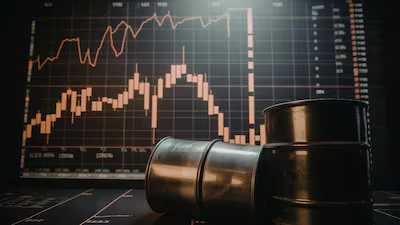
Hydaway Digital says it is seeking to address this challenge through its RealityChek platform and DETECT verification technology.
According to the company, the system analyses images, videos, audio recordings and text simultaneously, using a range of forensic techniques to assess authenticity. These include examining compression patterns, metadata, audio signatures, frequency analysis and pixel-level inconsistencies that may indicate digital manipulation or AI-generated content.
By combining multiple layers of analysis, the platform aims to identify signs of tampering and provide users with a more comprehensive assessment of whether digital content is genuine. The objective is to help organisations make decisions based on verified information rather than potentially misleading or fabricated material, particularly in environments where timing and accuracy are critical.
The company says its models have been trained on millions of labelled examples of authentic and synthetic content, enabling them to detect patterns and anomalies associated with AI-generated manipulation.
Hydaway Digital also advocates the use of cryptographic verification and blockchain-based authentication technologies to help establish the provenance of digital content at its source, providing an additional layer of trust and traceability.
The objective is to deliver a rapid assessment of whether images, videos, audio recordings or text are genuine before organisations make decisions based on them.
Millions of fake images generated daily
The emergence of increasingly sophisticated image-generation tools has transformed the misinformation landscape.
What once required significant technical expertise can now be accomplished in seconds using widely available AI applications. Highly realistic images depicting events, people and locations that never existed can be created at scale, making it increasingly difficult for users to distinguish authentic content from fabricated material.
For markets that depend on timely and accurate information, this shift presents a growing challenge. As the volume of synthetic content continues to expand, so too does the risk that convincing but false imagery could influence public perception, investor sentiment and market behaviour before its authenticity can be verified.
Industry estimates suggest that tens of millions of AI-generated images are now created each day, while the cumulative number produced since generative AI tools became widely accessible in 2022 has reached into the billions.
Research has consistently shown that many people struggle to distinguish authentic images from synthetic ones, highlighting concerns about the potential impact of AI-generated content on politics, business, security and financial markets.
The rapid proliferation of increasingly realistic AI-generated media has accelerated the spread of misinformation worldwide, enabling false narratives to be created and distributed at unprecedented speed and scale.
“Never before has misinformation become more mainstream than with the rise of AI-generated content,” said Karl Kottmeier, Chief Executive of Hydaway Digital.
He argued that advances in generative AI have dramatically lowered the barriers to producing convincing fabricated content, creating new challenges for organisations that rely on accurate information to make time-sensitive decisions. As a result, demand is growing for technologies capable of verifying the authenticity of digital content before it influences public opinion, business operations or financial markets.
Hydaway’s acquisition of RealityChek, a deepfake detection platform, adds expertise from technology veterans with backgrounds at major cybersecurity and networking companies, including Check Point and Cisco.
The move reflects a broader bet that the future of computing will depend not only on processing power and AI capabilities, but also on the ability to verify the authenticity of digital information. As AI-generated content becomes increasingly sophisticated, technologies designed to distinguish fact from fabrication may become a critical component of the digital economy.
Why it matters
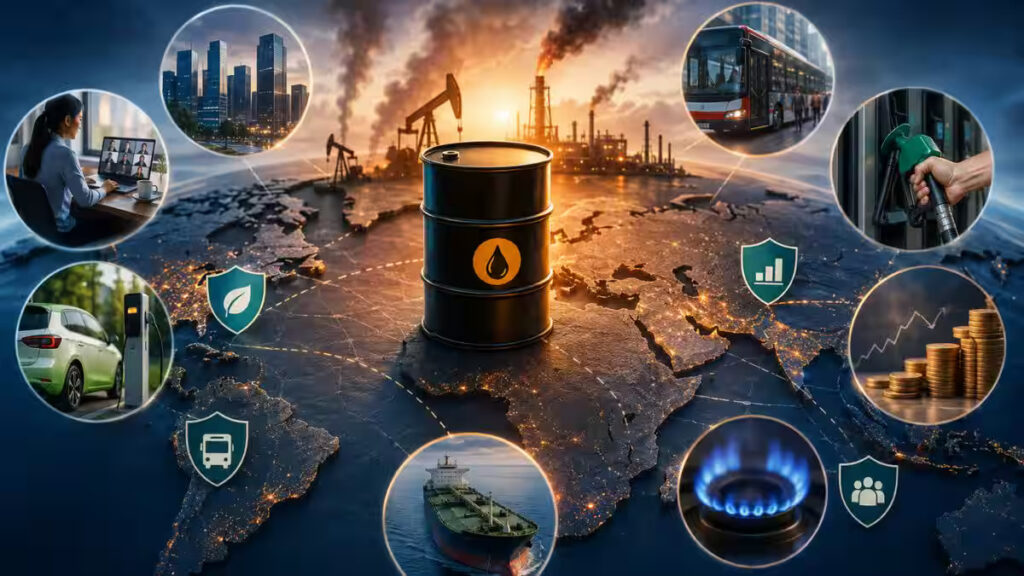
DETECT is Hydaway’s digital authenticity assessment platform, developed to help address the rapid growth of AI-generated misinformation.
According to the company, the platform combines neural-network analysis with forensic-level verification techniques to evaluate images, videos, audio recordings and text. By examining multiple indicators of authenticity simultaneously, it aims to provide users with rapid assessments of whether content has been manipulated, fabricated or generated using AI.
The broader significance extends beyond social media and online content. For industries such as finance, energy, security and government, the ability to verify information quickly could help reduce the risk of decisions being influenced by false or misleading material. As markets increasingly react in real time to digital information, tools capable of assessing authenticity may become as important as the information itself.
In an era when artificial intelligence can generate highly realistic videos, images and audio recordings within minutes, the ability to verify information quickly may become as valuable as the information itself.
For oil traders, governments and investors, the next major market shock may not originate from a missile strike, refinery outage or disruption to a critical shipping route. It could stem from a convincing digital fabrication that spreads across global networks faster than the truth can be established.
As AI-generated content becomes increasingly sophisticated, the challenge for markets is no longer simply responding to real-world events, but distinguishing genuine developments from manufactured ones. In that environment, trust, verification and digital authenticity may emerge as essential tools for managing risk in the global energy economy.
The implications extend well beyond oil markets. As financial systems become ever more dependent on real-time information, the ability to separate fact from fiction could become a critical safeguard against volatility, misinformation and unintended economic consequences.

