

Historic UK–GCC trade deal set to strengthen investment, trade, and services ties with the UAE.
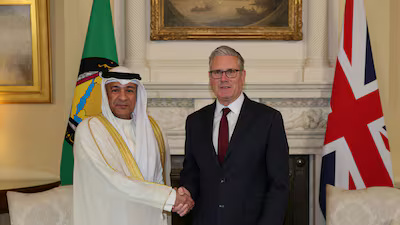
Dubai: The United Kingdom has signed what it described as a “historic” free trade agreement with the Gulf Cooperation Council (GCC), becoming the first G7 nation to secure a trade pact with the six-member bloc that includes the UAE.
The agreement is expected to strengthen the UAE’s role as a regional hub for trade, logistics, financial services, and investment flows between Britain and the Gulf, while boosting cross-border activity across sectors such as infrastructure, aviation, technology, and professional services.
Britain’s Department for Business and Trade said the deal could add an estimated £3.7 billion ($4.9 billion) annually to the UK economy in the long term and increase bilateral trade by nearly 20%. The GCC comprises the UAE, Saudi Arabia, Bahrain, Kuwait, Oman, and Qatar.
Deeper economic integration
HSBC Group Chief Executive Georges Elhedery said the agreement would unlock wider investment and commercial opportunities across the Gulf region.
“The GCC is a region of growing strategic importance and long-term opportunity, and one where HSBC’s heritage runs deep,” Elhedery said in comments released by the UK government. “The UK is one of our home markets and we have a presence in all six GCC states. We see first-hand the opportunity this agreement can unlock and stand ready to help deepen economic ties and support businesses to connect, invest and grow.”
The deal includes provisions aimed at easing trade barriers, speeding up customs clearance processes, and improving market access for services firms operating across GCC markets.
According to the UK government, tariffs worth an estimated £580 million annually on UK exports to the Gulf will eventually be eliminated, with around £360 million removed immediately once the agreement comes into force.
British exports expected to benefit include cereals, cheddar cheese, chocolate, butter, medical equipment, and advanced manufacturing products.
Services and investment flows
For the UAE, the agreement is expected to reinforce its position as a regional hub for multinational companies managing Middle East operations, particularly across financial services, consulting, logistics, and digital industries.
The deal also includes digital trade commitments that will allow UK companies to store and process data outside the Gulf for the first time, helping reduce operational costs associated with local data centre requirements.
In addition, it introduces customs provisions under which shipments are expected to clear within 48 hours, while perishable goods could be released in under six hours once all requirements are met.
British Prime Minister Keir Starmer described the agreement as a significant boost for British businesses and workers, saying: “Today’s agreement is a huge win for British business, and for working people who will feel the benefits in the years ahead through higher wages and more opportunities,” according to the UK government statement.
Resilience amid tensions
Starmer added that Gulf states remain key economic partners for Britain.
“The Gulf states are valued economic partners and this agreement deepens that relationship, building trust and unlocking new possibilities for trade and investment,” he said.
Reuters reported that the agreement was finalised amid heightened regional tensions linked to the Iran conflict, with British officials positioning the deal as part of broader efforts to strengthen economic resilience and ensure long-term trade certainty.
UK Business and Trade Secretary Peter Kyle said the agreement sends a broader signal of economic confidence amid ongoing geopolitical uncertainty.
“At a time of increased instability, today’s announcement sends a clear signal of confidence — giving UK exporters the certainty they need to plan ahead and reinforcing the strength and stability of the UK’s trading relationship with the Gulf at a critical moment,” Kyle said.
Services, mobility, infrastructure
The agreement also includes measures aimed at simplifying visa procedures and improving business mobility for professionals such as lawyers, consultants, and engineers working between the UK and GCC markets.
According to the UK government, services account for more than half of British exports to GCC countries, with UK services exports to the bloc exceeding £20 billion last year.
EY UK Regional Managing Partner Anna Anthony said the agreement could create further opportunities for professional services firms operating across Gulf markets.
“The agreement’s visa transparency and digital trade provisions will make it easier for UK professionals to deliver in-person and cross-border services, giving businesses the clarity and confidence to compete in these markets,” Anthony said.
The UK government said bilateral investment between the UK and GCC reached £18 billion in 2024, supporting infrastructure and strategic projects including Heathrow Airport.

