

White House banks on naval blockade and diplomacy to rein in Iran’s nuclear ambitions.
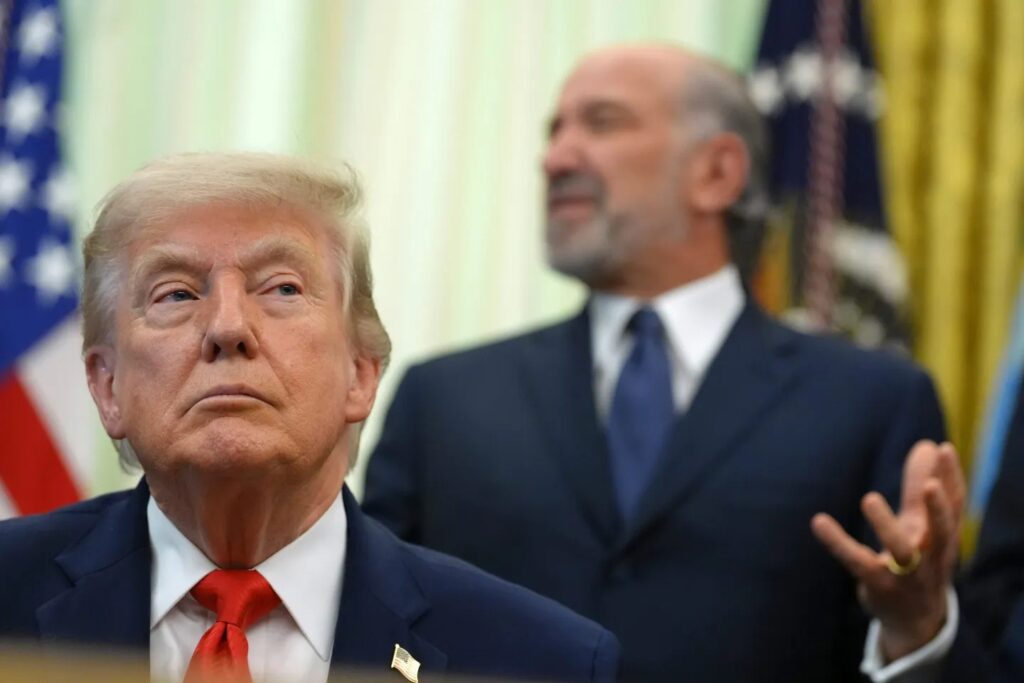
Washington, DC: US President Donald Trump on Thursday (local time) expressed confidence that the conflict involving Iran would end “pretty soon,” saying he believes the Islamic Republic “can’t go much longer.”
Trump also voiced optimism over ongoing negotiations related to the Strait of Hormuz while reiterating his administration’s commitment to preventing Iran from acquiring a nuclear weapon.
Speaking to reporters in the Oval Office, Trump said, “When I started the very important excursion into the Islamic Republic of Iran, it was a very important excursion because they can’t have a nuclear weapon. Otherwise, the whole world would get blown up. We’re not gonna let that happen. Not only us, not only the Middle East—the whole world. It would have been catastrophic. We had no choice.”
He added, “We will see those days pretty soon again, based on everything I see, as soon as the war ends. And I think the war’s got to end pretty soon. I don’t think they can go much longer.”
Trump also expressed optimism about negotiations concerning the Strait of Hormuz, one of the world’s most strategically important maritime routes and a key corridor for global oil shipments.
Commenting on the possibility of a US-Iran agreement, Trump said the talks remain open while highlighting the US Navy’s role in maintaining security in the waterway.
“I don’t want to say it has been… it’s sort of open right now. We have a thing called the blockade headed up by the US Navy, and we control it. But they can always shoot something or drop a mine… if you have one mine sitting out there, you sort of mess things up because people don’t want to take their billion-dollar boats and accidentally get hit by a mine,” he said.
Expressing confidence in the diplomatic process, Trump added, “I think we’re doing very well. I am involved in the negotiations. I think we are doing fine… it could be soon.”
However, on Wednesday, Iran’s Acting Defense Minister Brigadier General Seyed Majid Ibn Reza expressed confidence in the country’s defence capabilities, stating that Tehran is prepared to “spare no effort” in delivering a “crushing and decisive response” to any threats, particularly from the US and Israel.
“Every day, the signs of the enemy’s declining capabilities become more evident. But our armed forces, backed by the country’s defence industry, have everything they need to respond to any threat,” Brigadier General Ibn Reza said, according to Iran’s Fars news agency.
Trump’s remarks come amid continued uncertainty over the future of US-Iran diplomacy following the collapse of a 14-point Memorandum of Understanding signed in June aimed at halting hostilities.
Iran’s top negotiator and Parliament Speaker Mohammad Bagher Ghalibaf accused Washington of engaging in “theater diplomacy” and rejected what he described as US pressure tactics.
In a post on X, Ghalibaf criticized Washington’s approach, writing, “Massive attack coming… wait, never mind, they want to negotiate. That’s theater diplomacy on loop. Using bullying, broken promises, and fake news as leverage is a failed strategy. Acknowledge the facts and fulfill your commitments. We don’t need more theater.”
Earlier, US Vice President JD Vance described negotiations with Tehran as likely to be “messy” and prolonged, citing internal divisions within Iran’s leadership as a key challenge.
In an interview with Fox News, Vance said the Trump administration would continue to use a combination of military, economic, and diplomatic measures to achieve what he called a favourable outcome, while reiterating that Iran would not be allowed to acquire a nuclear weapon.

