

US says Hormuz oil exports remain below pre-war levels but are higher than tracking data suggests.
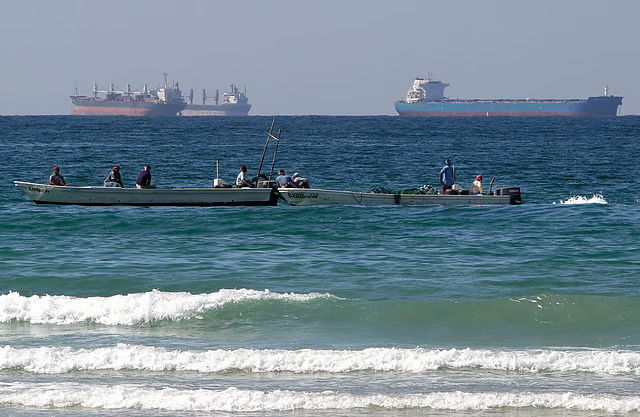
Washington: US Energy Secretary Chris Wright said an estimated eight million to nine million barrels of oil are currently moving through the Strait of Hormuz each day, challenging commercial tracking data that suggests traffic has fallen sharply during the conflict with Iran.
Wright told Fox News that commercial tracking services do not capture the full picture because many vessels are sailing with their transponders switched off and under military escort. He said US authorities are receiving direct reports from vessels and have a clearer view of traffic through the waterway.
“We know every day exactly how many ships transit the strait of Hormuz in and out,” Wright said in an interview with Bret Baier. He added that US authorities also know what cargo the vessels are carrying.
“We know exactly what they’re carrying,” Wright said, adding that US authorities are coordinating directly with vessels and receiving daily reports on traffic through the Strait’s northern and southern routes.
Commercial tracking company Kpler had estimated that more than 100 vessels crossed the Strait each day before the conflict. According to Fox News host Bret Baier, Kpler recorded just 14 crossings on Monday and another 14 on Tuesday.
‘Incomplete’ figures
Wright disputed those figures, saying commercial tracking systems do not capture vessels travelling with their identification systems switched off.
“Almost all of these ships have their AIS, their transponders are off. So they’re dark, they’re under escort,” he said.
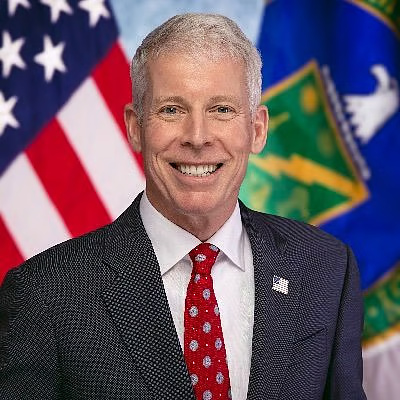
Wright said an average of 8 million to 9 million barrels of oil a day was still moving through the Strait of Hormuz, while another six million barrels were being diverted through pipelines.
“In round numbers today, 14, 15 million barrels a day are leaving the Arabian Gulf region versus the 20 million barrels a day pre-conflict,” Wright said.
That puts the current shortfall at roughly 5 million to 6 million barrels a day compared with pre-conflict levels.
But Wright said the shortfall was smaller than widely believed.
Baier pressed Wright on President Donald Trump’s claim that the United States had total control of the Strait of Hormuz. Wright stopped short of repeating that assertion, acknowledging that Iran was still creating difficulties for neighbouring countries and the global economy.
However, he argued that Tehran’s ability to disrupt shipping was diminishing as US escort operations expanded.
“They have sort of one card and it’s shrinking in size,” Wright said.
Wright also acknowledged that US petrol prices remained elevated at around $4 a gallon. He said the administration’s goal was to bring prices back towards $3, although he offered no timetable.
“We absolutely will get there. The question is just the timing of that,” he said.
Wright said the more immediate pressure was now being felt in refining rather than in crude oil supplies. He also pointed to Ukrainian attacks on Russian refineries as another factor reducing global supplies of refined petroleum products and contributing to higher fuel prices.
The Strait of Hormuz connects the Arabian Gulf with the Gulf of Oman and the Arabian Sea. It is a critical maritime gateway for energy exports from several Gulf producers and one of the world’s most important oil transit routes.

