

UAE travel update: Flights and shipping continue, but travellers advised to stay alert.
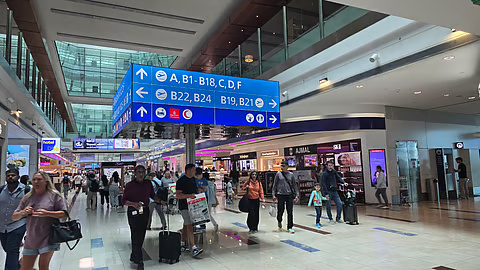
UAE airspace remains open, although the US-Iran conflict continues to create uncertainty amid renewed warnings from Iran, a reported strike on a tanker in the Strait of Hormuz and uneven airline operations across the UAE.
Dubai and Abu Dhabi airports remain operational, with major UAE carriers continuing to operate many services. However, travellers may still face delays, route suspensions or cancellations at short notice as the situation develops.
Shipping through the Strait of Hormuz has yet to return to normal, with commercial vessels continuing to pass through in limited numbers amid competing US and Iranian restrictions and differing accounts of the number of vessels using the waterway.
UAE residents are advised to rely on official updates from airlines, airports and UAE government authorities, rather than unverified information circulating on social media.
UAE aviation: Flights operating, but check before travelling
UAE aviation remains operational, although flight schedules continue to be adjusted in response to regional security conditions and airspace restrictions. Travellers are advised to check with their airline and airport before heading to the airport, as timings and routes may change at short notice.
- Dubai International Airport (DXB) and Zayed International Airport (AUH) in Abu Dhabi reported little to no widespread disruption on their websites, although some arrivals and departures were delayed.
- Emirates continued to operate scheduled services to Bahrain and Kuwait.
- Etihad Airways largely maintained services to Bahrain, Kuwait, Riyadh, Al Qassim and Medina, although its Abu Dhabi-Dammam and Abu Dhabi-Jeddah flights were delayed.
- flydubai reported some cancellations, including services between Dubai and Bahrain and Dubai and Yanbu. The airline advised passengers travelling from Dubai to arrive at least four hours before departure, check in online where possible and monitor their flight status.
- Air Arabia cancelled several Gulf services, including selected flights between Sharjah and Kuwait, Sharjah and Bahrain, as well as an Abu Dhabi-Kuwait service.
- Flights to Iran remain suspended by UAE carriers. Turkish Airlines has also suspended services to Iran until at least March 2027, according to reports citing an airline representative.
- What to do: Check your airline’s website or app before leaving for the airport, allow extra time, keep travel documents and essential medicines in your hand luggage, and avoid relying on outdated boarding times shared on social media.
Hormuz: Ships still moving, but risks remain high
The Strait of Hormuz remains one of the most sensitive flashpoints in the conflict. Some commercial vessels continue to pass through the waterway, but traffic remains well below normal, while risks to crews, cargo and marine insurance remain elevated.
- A tanker was struck by an “unknown projectile” while entering the Strait of Hormuz on Monday, according to the United Kingdom Maritime Trade Operations centre. Two crew members suffered minor injuries, and the vessel continued under its own power to its next port.
- Ship-to-ship oil transfers: Middle Eastern producers continue to export oil on tankers travelling with their transponders switched off, even as visible vessel traffic through the Strait of Hormuz has fallen sharply, Reuters reported. This indicates that publicly visible ship-tracking data may not capture all maritime traffic.
- The reported incident follows weeks of threats, suspected mine incidents and shipping restrictions that have significantly reduced commercial traffic through the waterway.
- US Central Command said it had redirected 109 commercial vessels as of September 20 as part of Washington’s enforcement of a naval blockade against Iran. The restrictions apply to ships travelling to or from Iranian ports and coastal areas, according to US Central Command.
- A Qatar-to-Pakistan liquefied natural gas (LNG) shipment reportedly transited the Strait of Hormuz over the weekend after Pakistan reached an arrangement with Iran. The reported passage indicates that limited, negotiated transit remains possible, but does not signal a general reopening of the waterway.
- Why it matters for UAE residents: Disruption in the Strait of Hormuz can affect energy exports, shipping schedules, insurance costs and, over time, the prices of fuel, food and imported goods. It does not automatically mean shortages or widespread disruption within the UAE.
Iran’s latest warnings
Iranian officials and the Islamic Revolutionary Guard Corps (IRGC) have issued stronger public warnings as diplomatic efforts remain stalled.
- An Islamic Revolutionary Guard Corps (IRGC) spokesman said Iran would “change the geography of the war” if the United States escalated, suggesting Tehran could alter its targets, tactics or weapons.
- Iran has said the Strait of Hormuz will not return to normal operations until Washington meets Tehran’s conditions, including commitments related to the US naval blockade.
- Parliament Speaker Mohammad-Bagher Ghalibaf said Iran would not return to the previous negotiating framework or reopen the Strait of Hormuz unless its conditions were met.
- Iran’s military command has also warned regional governments that supporting US military operations could make them parties to the conflict, according to Iranian media.
- These statements reflect positions and deterrence messaging and do not, by themselves, confirm an imminent attack or any change in UAE security guidance.
Travel tips
UAE airports continue to operate, with no reported widespread disruption to everyday services. However, the regional situation can change rapidly, potentially affecting flight schedules and travel arrangements.
- Follow official UAE government channels, airline updates, airport websites and notices from your employer or school for operational information.
- Reconfirm your flight before travelling to Dubai International (DXB), Al Maktoum International (DWC), Zayed International Airport, Sharjah International Airport or Ras Al Khaimah International Airport.
- Build flexibility into travel plans, particularly for routes involving the Gulf, Saudi Arabia, Bahrain, Kuwait, Yemen and Iran.
- Keep a fully charged phone, power bank, travel insurance details, copies of your passport and essential medication readily available.
- Do not share or act on claims about airspace closures, missile alerts or flight cancellations unless they have been confirmed by airlines, airports or official authorities.
- US authorities have advised citizens to reconsider travel to and through the Middle East because of the risk of sudden flight cancellations and airspace restrictions. The advisory is not a UAE government directive, but reflects the fluid operating environment across the region.
What to watch next
The key development to monitor is whether the US and Iran announce or hold talks on the sidelines of the United Nations General Assembly, and whether any diplomatic engagement leads to changes in military or shipping restrictions.
- Any verified Iranian decision to reopen the Strait of Hormuz or impose further restrictions on transit.
- Additional tanker incidents, mine warnings or attacks targeting port and energy infrastructure.
- Airline notices affecting UAE-Gulf routes and services to or from Iran.
- Official updates from UAE authorities on public safety, travel and aviation operations.
- Oil prices fell sharply on Monday amid hopes for US-Iran diplomacy and signs of recovering Saudi exports. However, the risk premium remains elevated as commercial shipping through the Strait of Hormuz remains constrained.
- Saudi Arabia has sought to restore oil flows following attacks on its East-West pipeline, an export route designed to bypass the Strait of Hormuz.
- Continued threats to shipping through the Strait of Hormuz and the Red Sea could push crude prices higher again.
- Changes in global oil prices do not necessarily translate immediately into changes at the pump.
The immediate picture is one of continued operations alongside heightened uncertainty. UAE airports remain open, many flights are operating and some commercial vessels continue to transit the Strait of Hormuz. However, a single military incident or breakdown in diplomatic efforts could quickly alter the situation.

