

UK, France weigh naval and drone options to break Iran’s hold on the Strait of Hormuz.
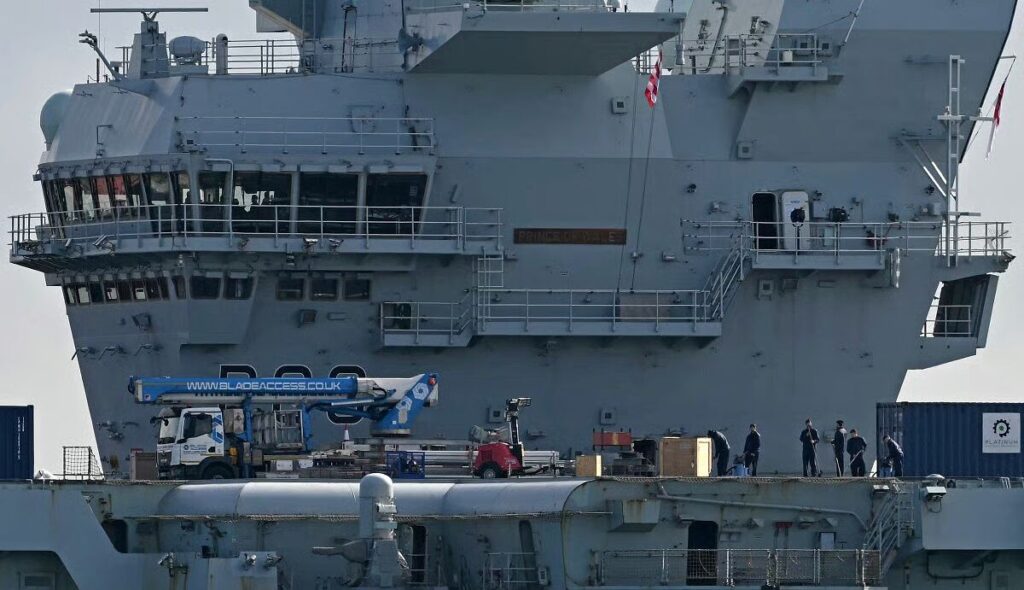
Britain and France are preparing to back a high-stakes naval operation aimed at reopening the Strait of Hormuz, the narrow waterway that carries roughly one-fifth of the world’s oil and LNG.
Recent attacks on commercial vessels in and around the Strait have placed it at the forefront of regional tensions, with widening economic consequences.
Iran’s blockade of the strait—through marine mines and assaults on tankers—has sharply reduced maritime traffic, driving up global oil prices and posing a threat to energy security in Europe, Asia, and beyond.
British Energy Secretary Ed Miliband confirmed on Sunday that the government is “intensively” reviewing all options—including deploying additional warships and autonomous mine‑hunting drones—in close coordination with the United States and other allies.
The Royal Navy has already stationed the advanced Type 45 destroyer HMS Dragon in the Gulf to carry out air‑defence duties.
Mine‑hunting drones
London is placing significant emphasis on next-generation technology.
Mine‑hunting drones, which mimic the acoustic and magnetic signatures of larger vessels, are designed to safely trigger Iranian sea mines from a distance, clearing maritime lanes without putting crewed ships at risk.
The disruption in the Strait of Hormuz has already prompted emergency releases from strategic reserves and the rerouting of LNG shipments. Meanwhile, US President Donald Trump announced plans to involve seven nations in deploying warships to help maintain transit through the strait, as ongoing tensions with Iran continue to affect this critical corridor.
Trump did not identify the participating countries but noted that they are nations heavily dependent on Middle Eastern oil supplies.
Autonomous minesweepers
By contributing autonomous systems, Britain can help neutralize the mine threat more quickly and with less risk than traditional minesweepers.
The move highlights the growing determination of allied nations to restore freedom of navigation in one of the world’s most vital energy arteries.
For British households already feeling the pinch at the pump, success in reopening the Strait of Hormuz could translate into lower fuel prices and greater market stability.
As the conflict with Iran enters a decisive phase, the UK’s potential deployment of both traditional warships and advanced drones could make the difference between prolonged disruption and a swift return to open sea lanes.
France sends carrier strike group to Gulf
French President Emmanuel Macron announced on March 9 that France would deploy 10 additional warships to the Middle East amid escalating tensions with Iran. The move aims to bolster maritime security along one of the world’s most critical oil routes.
The French warships will primarily focus on escorting commercial vessels through the Strait of Hormuz, a narrow maritime chokepoint that handles a significant portion of the world’s oil exports from Gulf states.
With hostilities escalating, merchant traffic in the area has slowed sharply due to fears of missile, drone, and naval attacks.
The French deployment follows a series of Iranian strikes targeting NATO- and EU-linked facilities, including missile activity near RAF Akrotiri in Cyprus and attempted ballistic missile attacks intercepted over Türkiye by the US Navy.
“Air and sea power is deployed to ensure the security and protection of our fellow citizens and European nationals, to support our regional partners in their defence, and to guarantee freedom of navigation and maritime security,” said Nicolas Vaujour, Chief of Staff of the French Navy, in a statement posted on LinkedIn.
Defence analysts note that once Iranian missile and drone capabilities are sufficiently weakened, protected tanker convoys could restore the normal flow of roughly 20 million barrels per day within weeks.
US President Donald Trump’s remarks on Sunday (US local time) came amid reports that he intends to form an international coalition to provide escorts for vessels navigating the strait, which handles nearly 20 percent of the world’s oil exports.

