

From award-winning date products to eco-friendly tea brands, female agri-entrepreneurs are transforming the nation’s food security landscape.
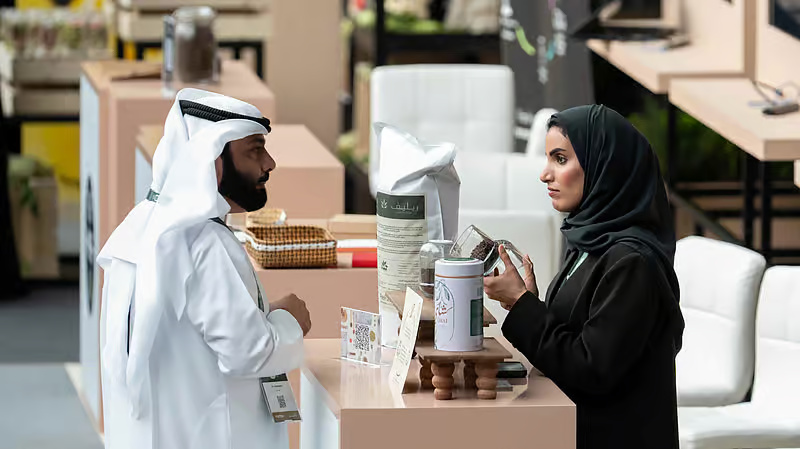
Food security has become one of the UAE’s most pressing national priorities, and Emirati women are stepping up to meet the challenge. Across the country, a new generation of female entrepreneurs is entering the agricultural sector not as bystanders, but as pioneers.
Armed with a deep connection to the land and a strong modern business instinct, they are transforming homegrown ideas into ventures that strengthen the nation’s food system from within.
Their approach is distinctive—rooted in Emirati heritage, driven by innovation, and guided by a long-term vision that extends far beyond the harvest season. In doing so, they are quietly redefining what it means to farm, produce, and lead in the UAE.
Plant whisperer of Al Ain
For more than 25 years, Salima Alshamsi has cared for 300 date palms alongside a wide variety of vegetables and fruits at her farm in Al Ain. Her success has earned her a reputation unlike any other — she is affectionately known as the “plant whisperer,” with those around her saying that everything she touches grows juicier, plumper, and sweeter.
Her farm, Lulu, received the Sheikh Mansour bin Zayed Award for Agricultural Excellence from the Abu Dhabi Agriculture and Food Safety Authority — recognition that her work goes far beyond personal passion.
“Managing Lulu Farm taught me that empowering women in this sector does not just affect the success of a single project — it reaches further, touching communities through job creation and encouraging people to rely on local products,” said Salima.
From heritage to high value
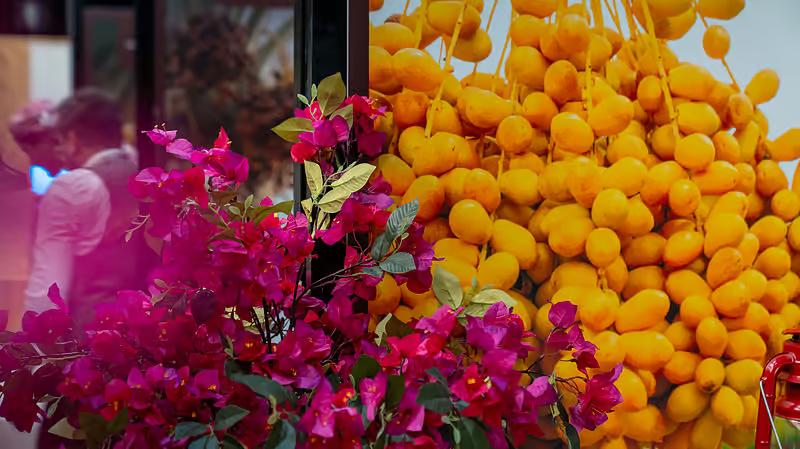
Maitha Almehrzi, founder of Shiyoukhi, took one of the most iconic symbols of Emirati culture — the date — and transformed it into a line of modern nutritional products without losing its essence.
Her project blends traditional knowledge with contemporary production methods, creating value-added products that meet modern consumer demands while preserving the fruit’s deep cultural significance.
“By combining knowledge with experience, and heritage with modern technology, we turn challenges into real business models, transforming agriculture from a seasonal activity into a forward-thinking, integrated project,” Maitha said.
Raising the next generation
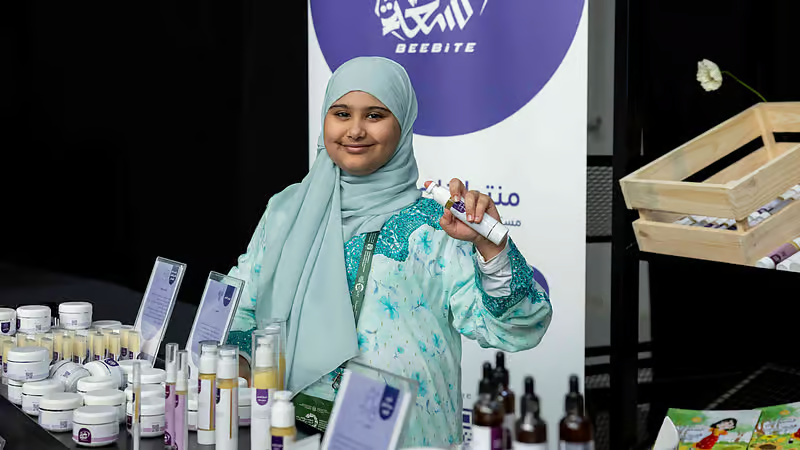
Seddiqa Ghuloum, founder of Bee Bite, a venture specialising in organic beeswax products, is taking sustainability a step further by actively involving her daughter, Hamda, in every aspect of the business.
For Ghuloum, entrepreneurship is not just a career — it is a legacy to be passed on.
“I want her to understand entrepreneurship and realise that innovation is a responsibility that begins in childhood. I would like to think I am contributing something meaningful and helping to raise a generation that is ready to carry this country forward,” Seddiqa said.
Tea, identity, and a family legacy
What began as a family tradition dating back to 1962 has grown into one of the UAE’s most distinctive entrepreneurial stories. Fatma Almoosawi inherited her passion for tea from her grandfather and father, who spent decades blending varieties from around the world as a personal hobby.
She later transformed that passion into Ygnd El-Ras, the UAE’s first eco-friendly tea brand, whose name translates simply as “mood-setter.”
But Almoosawi’s vision extends far beyond tea itself. Her brand repurposes tea waste into compost, patented water purification solutions, and natural inks — turning what many would discard into tools for environmental impact.
Selected among the 40 Arab Youth Pioneers in 2025, she also serves on the Emirates Youth Entrepreneurship Council, bringing Emirati identity and sustainable values to global platforms.
“Innovation with sustainability proves that Emirati women entrepreneurs can turn small ideas into distinctive, eco-conscious brands that look to the future without losing touch with their roots,” Fatma said.
The road ahead
As artificial intelligence, urban farming, and agricultural data analytics continue to reshape the agricultural sector globally, Emirati women are well-positioned to lead that transformation at home.
What they demonstrate collectively is that empowering women in agriculture is not a side story to the UAE’s food security ambitions — it is central to them.
A platform that makes it possible
Behind each of these ventures lies not only individual ambition, but also a national ecosystem designed to support it. The Emirates Agriculture Conference and Exhibition 2026, held in Al Ain from April 22 to 26, gave female entrepreneurs a valuable platform for visibility, networking, and market access under one roof.
The event was designed to turn agricultural strategy into real economic value by connecting local products directly to markets — exactly the kind of support women-led agri-businesses need to grow beyond their immediate communities.
Officials described it as more than a traditional exhibition, saying it was created to serve farmers, investors, researchers, and the wider community through an integrated national system.
For Emirati women in agriculture, the conference did more than showcase their work — it reinforced that their role in the sector is not incidental, but structural, supported, and built for long-term growth.

