

Freedom of navigation seen as crucial to fertiliser flows and safeguarding grain supplies.
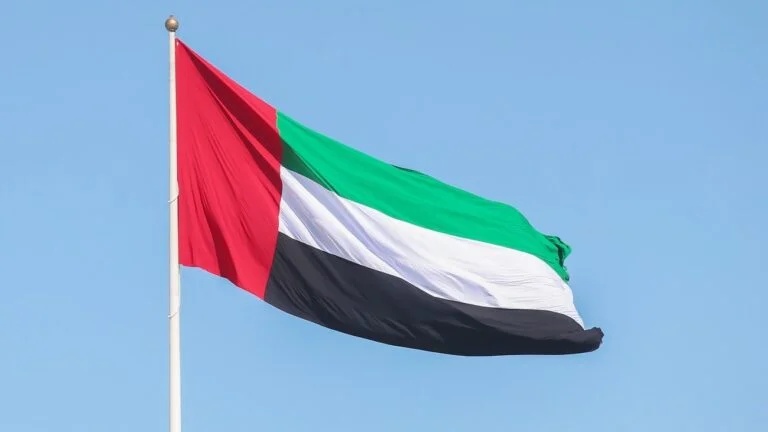
Dubai: The United Arab Emirates has reaffirmed that food security is a sovereign pillar and a fundamental component of national security, calling for “proactive and adaptive strategies” to strengthen supply chain resilience and protect regional and global food systems from the shocks of an increasingly volatile geopolitical and climatic landscape.
The UAE is serving as Chair of the 38th session of the Food and Agriculture Organization Regional Conference for the Near East and North Africa (NERC38), held in Rome, with broad participation from ministers and senior officials across the region.
In her opening remarks as Chair of the current session, Dr. Amna bint Abdullah Al Dahak stressed that the UAE’s leadership of the session comes at a critical moment, requiring the region to move beyond crisis management and take an active role in driving meaningful and lasting transformation.
Drawing on the United Arab Emirates’s experience, Dr. Amna bint Abdullah Al Dahak highlighted how water scarcity and limited arable land had been transformed into drivers of innovation and technological advancement. She urged member states to mobilise climate finance and place equity at the centre of efforts to protect rural populations bearing the greatest burden of environmental change.
She also stressed that the landmark outcomes of the COP28 UAE Declaration on Sustainable Agriculture, Resilient Food Systems, and Climate Action are intended to go beyond political commitments, serving as a foundational framework and guiding reference for regional efforts across the Near East and North Africa to build resilient and sustainable food systems.
Tackling crises
Dr. Amna bint Abdullah Al Dahak said nature-based solutions can generate strong economic returns, making ecosystem protection not only an environmental priority but also a profitable investment and a development necessity.
She warned that land degradation threatens the livelihoods of more than 410 million people across the region, stressing that every dollar not invested in food security today could cost the world hundreds of times more tomorrow in managing future crises.
Calling on the international community, Al Dahak highlighted the stark inequality of climate impacts, pointing to data showing that women and poor rural communities suffer income losses from climate shocks far greater than those experienced by wealthier populations.
She also called for decisive reform of financing frameworks to ensure equity and inclusivity are placed at their core.
Ministerial meeting
The ministerial meeting, held under the theme “Innovating for the Transformation of Agrifood Systems,” reviewed an intensive agenda focused on urgent responses to systemic shocks caused by conflicts and climate change.
The conference also featured a high-level roundtable on accelerating circular solutions in agricultural value chains and explored ways to bridge the climate financing gap across the region in support of sustainable rural development pathways.
The Food and Agriculture Organization (FAO) presented its latest assessment on the impact of conflict in the Middle East on food systems, with discussions warning of the severe effects of geopolitical tensions on supply chains and the trade of fertilisers and energy.
The assessment found that disruptions to navigation in strategic maritime corridors — particularly the Strait of Hormuz, through which around 30% of global fertiliser trade passes — directly lead to higher costs for agricultural production inputs.
Reports clarified that these imbalances — reflected in rising fertiliser and fuel costs — threaten lower crop yields and a contraction in global grain supplies, with particularly severe consequences for import-dependent countries.
Mohammed Saeed Al Nuaimi, Undersecretary of the Ministry of Climate Change and Environment, said the UAE leadership’s forward-looking vision has made proactivity a cornerstone of the country’s national food security strategy.
He noted that this approach has provided the national system with both the operational flexibility and the foresight needed to stay ahead of emerging challenges and pressures, including recent disruptions to critical maritime routes.
Stabilising markets
He said: “The UAE’s measured and strategic approach has proven highly effective in keeping goods moving and stabilising domestic markets.”
“This success is built on world-class logistics infrastructure and a broad network of international partnerships, which together enable the country to diversify import sources and build more resilient supply chains.
“At the same time, protecting freedom of navigation and ensuring global supply chains continue to function smoothly are not merely policy goals — they are essential conditions for securing the agricultural inputs that food production depends on and for safeguarding food security across the region and beyond. This is especially critical at a time when fertiliser and energy markets remain highly vulnerable to geopolitical tensions.”
Mohammed Saeed Al Nuaimi also outlined the UAE’s commitment to turning policy into action, stressing that the country is pursuing a comprehensive institutional transformation aimed at strengthening the agricultural sector and securing supply chains.
During the ministerial roundtables held on the sidelines of the conference, Al Nuaimi emphasised the importance of unlocking development and innovative financing as a powerful tool to support regional economies and food systems.
He highlighted the UAE’s strategic engagement through the Abu Dhabi Fund for Development, which is driving investment in water infrastructure and land reclamation projects across the region and internationally, as well as the commitment of Emirates Development Bank to allocate Dh100 million in support of agricultural technology projects within the country.
Pioneering efforts
In a strategic move to ensure stronger economic returns for farmers, Mohammed Saeed Al Nuaimi highlighted the UAE’s pioneering efforts to create guaranteed market demand for local agricultural products.
He also called on the Food and Agriculture Organization (FAO) to adopt a proactive approach to protect import-dependent countries by developing early warning systems to monitor food, energy, and fertiliser markets, similar to the “Observatory” initiative.
He said such a mechanism would strengthen the ability of countries across the region to anticipate future shocks and contain them before they escalate.
Role of young people and innovation
The United Arab Emirates delegation emphasised the importance of youth in driving change across the regional and global agricultural sector. Laila Ahmed Al Dhaheri, Agricultural Development Researcher at the Ministry of Climate Change and Environment, said that empowering young people and investing in agricultural technology innovation represent the most reliable path to unlocking the productive potential of arid lands worldwide.
She called for a reimagining of youth’s role — from beneficiaries to active participants in decision-making — and stressed that innovative startup financing is a key driver for turning climate-smart agricultural solutions into reality through young entrepreneurs.
The ministerial meeting concluded with strong regional consensus to develop a comprehensive roadmap under the UAE’s presidency, aimed at aligning national policies and deepening regional integration to protect critical trade and logistical corridors.
Through the Ministerial Declaration, participants committed to accelerating the adoption of circular bioeconomy innovations, scaling up investment in climate-smart agricultural solutions, and strengthening ecosystem restoration programmes to address the interconnected challenges of water scarcity and climate change.
The conference affirmed that this session marks a defining turning point for the region, shifting collective action from merely diagnosing challenges to coordinated implementation on the ground.
With a clear focus on mobilising finance and advancing the exchange of knowledge and modern agricultural technologies, the session set a firm course toward building resilient and inclusive food systems capable of withstanding geopolitical pressures and securing the food future of generations to come.

