

Hormuz tensions and limited flight availability keep fares elevated as Eid travel demand rises.
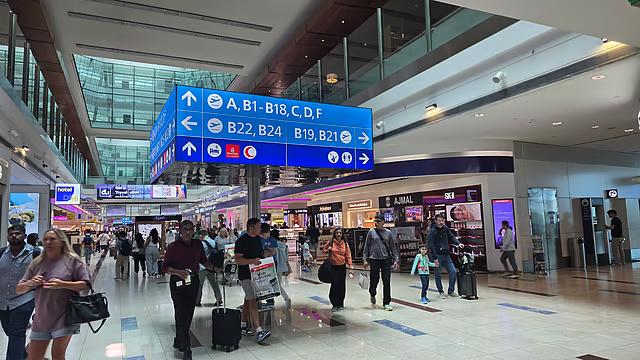
Dubai: Planning an Eid Al Adha getaway? Book now or be prepared to pay more as your travel date approaches. That is the clear message from UAE travel agents, as strong demand, limited flight capacity, and rising fuel costs continue to keep airfares elevated in the weeks ahead.
With Eid al-Adha expected to fall between May 27 and May 29, travellers are looking at a long weekend break — but fares are already significantly higher than earlier this year.
No respite
Nonstop fares from Dubai for travel between May 26 and May 31 have risen sharply across key routes. Flights to Mumbai are around Dh2,000, to Bengaluru about Dh2,360, and to New Delhi approximately Dh2,110.
Tickets to Kerala have climbed to between Dh2,940 for Kochi and Dh3,300 for Thiruvananthapuram, while fares to Mangaluru are reaching an eye-watering Dh4,080.
Within the GCC, fares remain relatively affordable, with Riyadh at around Dh875, and both Manama and Muscat at approximately Dh1,100.
Long-haul routes are also seeing steep pricing. Flights to London are about Dh3,840, to Edinburgh Dh4,040, and to Zurich Dh3,760. Milan is lower at Dh2,390, while Istanbul stands at Dh2,610 and Athens at Dh3,730. Fares to Almaty and Tbilisi are around Dh2,330, while the fare to New York City is nearing Dh4,760.
Travel agents say these fares are “considerably higher” than the peaks seen in January and February.
“Demand is high, but supply has not been fully reinstated,” said Raheesh Babu, COO of Musafir.com. “IndiGo was operating around 40 daily flights earlier; now it has about 11. Slots are being opened, but very slowly.”
He added: “Fares are Dh2,000 and above. Some passengers are also taking connecting flights via Bengaluru and Mumbai — that’s how strong the demand is. The bottom line is that there is no choice but to book early.”
Fuel crisis adds pressure
The surge in fares is also being driven by a broader energy crunch. Tensions around the Strait of Hormuz continue to keep oil markets volatile and jet fuel prices elevated.
“Aviation as the patient is walking, but the storm just changed the forecast,” said Linus Benjamin Bauer, Founder and Global Managing Partner of BAA and Partners, in an earlier interview,
“Structurally recovered, geopolitically stress-tested… The demand engine is intact. The route architecture is under duress. I’d call this ‘recovery interrupted.’”
Linus Benjamin Bauer said the conflict has more than doubled kerosene prices, “blowing up every airline’s cost assumptions,” while flight rerouting and airspace closures continue to add billions in unplanned expenses.
Flights are returning, but slowly
Airlines are gradually restoring services, particularly to leisure destinations, but overall capacity remains below pre-conflict levels.
“Turkish and European carriers may resume more fully by early May, with full capacity around May 5,” Raheesh Babu said. “UAE carriers like Emirates and Air Arabia are also scaling up.”
Safeer Mahmood, General Manager of Smart Travels Group, said the recovery remains uneven.
“Things had been improving over the last two days, but tensions in the region have picked up again today,” he said. “So, we cannot say that regular travel has fully resumed, but airlines are operating a good number of flights, especially UAE carriers.”
He pointed to Air Arabia’s planned expansion into destinations such as Baku, Almaty, Tbilisi, Tashkent, and Yerevan as a sign that leisure travel is returning.
With Eid al-Adha travel demand building, inbound tourism rising, and airline capacity still constrained, travel agents say elevated fares are likely to persist in the coming months.
For travellers, the message is clear: book early — or be prepared to pay significantly more.

