

Five reporting channels have been made available as electronic examinations for Grades 5–12 continue through July 3.
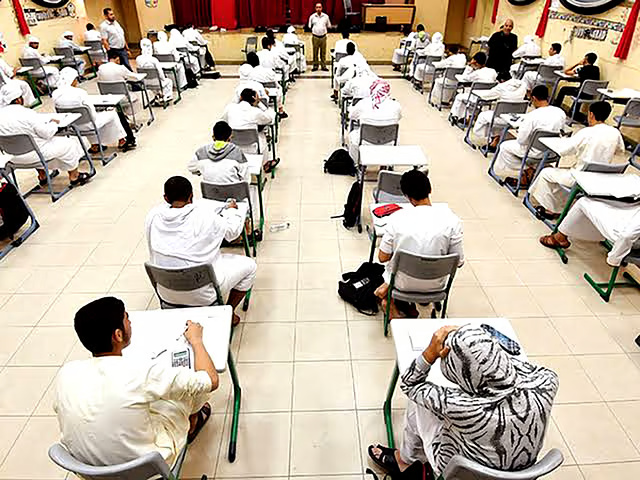
Abu Dhabi: After approving the first-session year-end exam schedule for the 2025–2026 academic year for Grades 7–12 under the Integrated Continuous Education System, the Ministry of Education has issued guidelines to prevent cheating and exam violations. Exams will be held from June 22 to July 3 using an in-school electronic testing system.
Year-end exams for Grades 5–12 in public and private schools following the Ministry curriculum will begin on Sunday and run until July 3.
The guidelines introduce five reporting channels for detecting misconduct, covering students, school staff, exam personnel, external individuals, and private school employees.
Channel one relates to violations by examination staff, which must be reported to the school administration or principal for investigation and reporting.
After verification, the school branch refers the case to the Student Assessment and Performance Evaluation Department, which passes it on to the Human Capital Department to apply the relevant administrative sanctions. If criminal activity is suspected, the matter is referred to the Legal Affairs Department for legal action and reporting to the competent authorities.
The second channel offers a confidential system for reporting cheating and exam violations.
The Ministry has introduced several reporting options, including a dedicated online link, the email address of the Student Assessment and Performance Evaluation Department, and the toll-free number 80037322. All reports must include relevant information and supporting evidence, and are reviewed by a specialised committee for verification.
Cases involving employees are referred to either the Human Capital Department or the Legal Affairs Department, depending on the violation, while student cases are handled by the school branch in line with the Student Behaviour Management Regulations.
The third channel addresses cheating or misconduct detected inside examination halls. The chief invigilator must promptly inform the second invigilator, record the incident, and gather evidence, including notes, photographs, or other relevant materials.
The student is then transferred to another examination room under supervision while the designated school authority investigates the matter. The procedure involves preparing a “Cheating or Examination Violation Report,” notifying the parent or guardian and securing their signature, applying the Student Behaviour Regulations, and submitting the case to the Student Assessment and Performance Evaluation Department for final approval.
The fourth channel covers individuals who are not part of the Ministry’s workforce. The school administration reviews the case and refers it to the Student Assessment and Performance Evaluation Department, which subsequently forwards it to the Legal Affairs Department for appropriate action. Where criminal conduct is suspected, the case is escalated to the relevant authorities.
The fifth channel applies to examination personnel in private schools that follow the Ministry of Education curriculum. All violations or misconduct must be reported to the Ministry’s concerned departments and the Student Assessment and Performance Evaluation Department, ensuring unified oversight and consistent examination procedures across all schools delivering the national curriculum.
The measures form part of a strict oversight framework designed to prevent malpractice, enhance accountability, and ensure equal opportunities through clear reporting, investigation, and disciplinary processes.
For Grades 3 and 4, School-Based Summative Assessments (SSA) will replace centralised end-of-third-term exams in the 2025–2026 academic year.
As per Ministry guidelines issued nationwide, examinations for Grades 5–12 in all streams will be conducted electronically at schools through physical attendance.
Electronic written examination
Grade 12 students will sit an electronic English language exam, and all students must bring their personal computers to school during the exam period.
The guidelines further specify that teachers are not allowed to read centralised examination questions aloud to students.
Grade 12 students in private schools implementing the Ministry’s curriculum will also take all examinations in government schools, according to geographical distribution arrangements and under the joint supervision of School Operations Sector coordinators.
Examination schedule and duration
All exams will last two hours, from 12pm to 2pm, across subjects and streams, giving students adequate time to complete and review their answers.
The English language exam will be conducted in two sections:
Writing section: 12pm–1.30pm (90 minutes)
Reading section: 1.30pm–2.30pm (60 minutes)

