

Aridge and Xpeng Design executive Tan Wang explains how the detachable flying car could reshape personal mobility in the UAE.
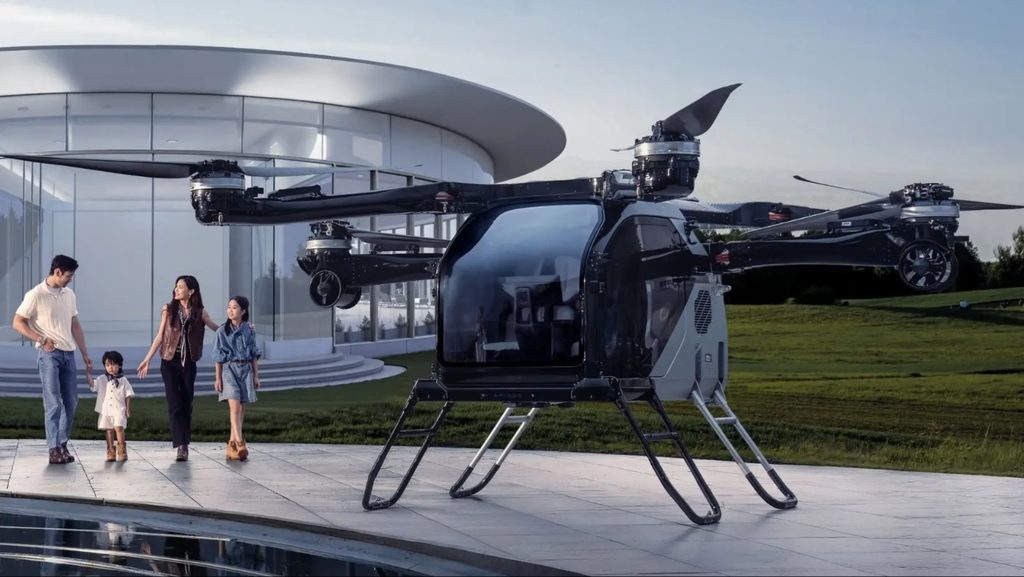
UAE residents could soon have the option of owning a flying car that can be driven on public roads, parked at home and transformed into an aircraft for short flights, as Chinese company Aridge prepares to bring its personal flying vehicle to market.
Unlike electric air taxis being developed by companies such as Joby Aviation for commercial passenger transport, Aridge’s Land Aircraft Carrier is designed for individual buyers. The vehicle combines a six-wheeled road-going carrier with a detachable electric aircraft capable of carrying two people.
Speaking to, Tan Wang, Co-founder and Vice-President of Aridge and General Manager of XPENG Design, explained how the two modules work together, the technology behind the system and what potential buyers in the UAE should know ahead of its commercial launch.
How does the flying car work?
The Land Aircraft Carrier comprises two separate modules: a road vehicle that transports the aircraft and a two-seater electric vertical take-off and landing (eVTOL) aircraft stored inside its rear compartment.
Owners can drive the vehicle to a designated take-off location before deploying the aircraft. Both the separation and reconnection processes are automated and can be completed through a one-touch operation, Wang said.
“We use at least seven systems and more than 1,000 parts to build a mechanism. This mechanism can be reconnected and separated just in one-touch operation,” he said.
Once activated, the vehicle opens its rear compartment and deploys the aircraft. The flying module is lowered to the ground, with a specialised air suspension system helping it adapt to different surfaces and ground conditions.
After landing, the aircraft can be returned to the road vehicle through an automated docking process. Cameras identify the aircraft and guide the vehicle towards it, while the suspension system adjusts its height to ensure the two modules align correctly.
The vehicle then moves into position and retrieves the aircraft into its rear compartment. Wang said the entire reconnection process takes around four to five minutes.
Who can buy it?
Unlike air taxis, which are primarily intended for commercial passenger services, Aridge is targeting individual consumers interested in owning and operating their own aircraft.
Rather than requiring owners to rent hangar space or keep an aircraft at an airport, the Land Aircraft Carrier allows the flying module to be stored inside the road vehicle. Owners can park the vehicle in their own parking spaces, subject to applicable parking and vehicle regulations.
The company has received around 7,000 pre-orders globally, Wang said, adding that approximately 600 came from the GCC market.
What licences and permits will residents need?
Owning the vehicle will not automatically give buyers permission to take off and fly whenever they wish. The aircraft must first secure the necessary aviation approvals, while regulations governing individual operators and permitted flying locations in the UAE are still being established.
Wang said Aridge must first obtain type certification from China’s Civil Aviation Administration of China (CAAC). The company will then seek validation through the UAE’s General Civil Aviation Authority (GCAA) to enable legal operation in the country.
“First, we need to achieve our target from China. We need to have our type certification from the CAAC. After that, we’re going to have the VTC. It’s already valid from China’s type certification, and then we can use the VTC to fly legally here,” he said.
Where will owners be allowed to fly?
The aircraft will not necessarily be permitted to take off from any open space. Its operations will depend on approved flying zones, airspace regulations and infrastructure developed in coordination with local authorities.
Aridge has signed an agreement with Ras Al Khaimah to establish a regulatory sandbox for testing the technology under the supervision of UAE aviation authorities.
The company is also open to sharing existing infrastructure with other electric aircraft operators, including Skyports’ vertiports being developed for Joby’s air taxi operations.
Wang said this could involve using existing vertiports and helicopter landing facilities, rather than requiring Aridge to develop an entirely separate infrastructure network.

