

The figure reflects its cultural contribution, institutional influence and long-term legacy.
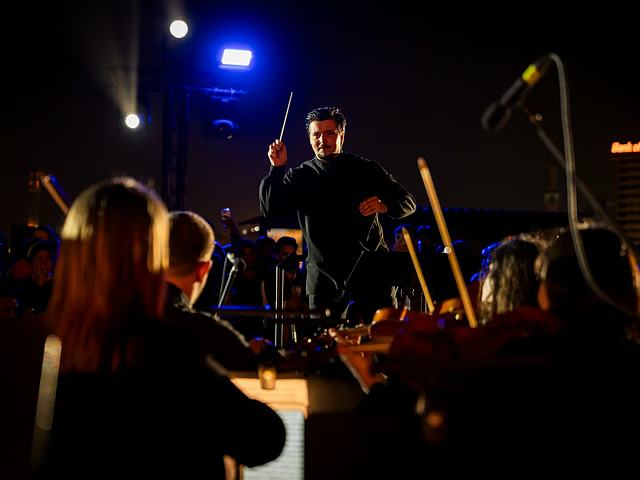
The UAE Philharmonic Orchestra could reach a cultural value of Dh1 billion as it continues to expand its presence, according to its Artistic Director and Chief Conductor, Nicolas Mann.
In a recent interview with Mira FM, Mann discussed the orchestra’s journey, its growing international profile and the role of classical music in strengthening the UAE’s cultural identity.
Drawing comparisons with established international institutions such as the Berlin Philharmonic, Mann estimated the UAE Philharmonic’s current cultural value at between Dh20 million and Dh30 million, with the potential to reach Dh1 billion in the future.
He clarified that the figure does not represent the orchestra’s financial assets or revenue, but rather its cultural contribution, institutional influence and long-term legacy.
Founded by Mann and Executive Director Xenia Baknina, with support from BACKART Production, a luxury events company, the UAE Philharmonic started without an initial budget. Its musicians rehearsed in a tower space provided free of charge.
What began as a small independent initiative has since developed into an internationally active orchestra, working with major entertainment companies and renowned artists.
Its performances have included collaborations with World of Hans Zimmer, Warner Bros., A. R. Rahman, Shreya Ghoshal, Andrea Bocelli and Il Volo. The orchestra has performed at Dubai Opera, Kuwait’s Sheikh Jaber Al-Ahmed Cultural Centre and venues across Russia and India.
In March 2026, the orchestra performed at the Dubai World Cup. Another milestone came when Mann received the Conductor of the Year award at the BraVo International Music Awards at Moscow’s Bolshoi Theatre, while the UAE Philharmonic was recognised as the Orchestra of the Future.
Beyond international performances, Mann highlighted the importance of making orchestral music accessible to contemporary audiences.
The orchestra brings together traditional classical compositions, jazz, film music, Arabic melodies and Emirati musical traditions, creating performances aimed at audiences across generations and cultural backgrounds.
“You have to be the most creative person in the room,” Mann said, stressing the importance of innovation in attracting audiences without compromising artistic standards.
Its initiatives include introducing the Viennese New Year Ball concept to the UAE, staging interactive concerts in which audiences can vote on musical selections, and presenting family productions such as Fairytales with Orchestra to introduce children to live classical music.
Mann also acknowledged the operational challenges of running a professional orchestra, including transporting musicians, instruments and equipment between international venues.
Looking ahead, he sees significant opportunities for the UAE Philharmonic to contribute to Dubai’s expanding cultural landscape, support professional musicians and build a lasting musical institution for future generations.