

Missiles and drones showcase the strength and sophistication of UAE security systems.
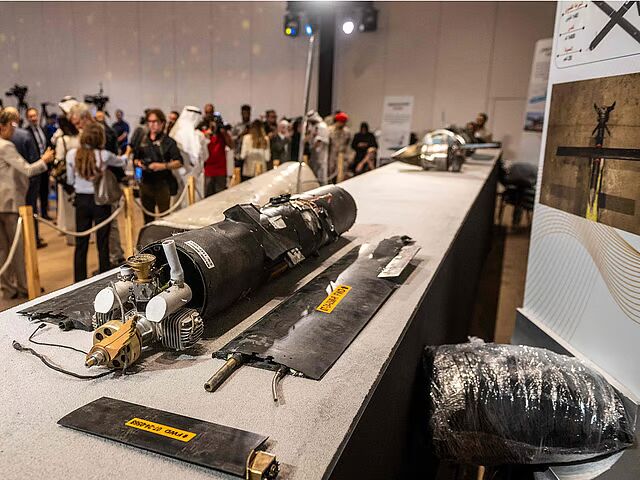
In its highly professional handling of Iranian missile and drone attacks, the United Arab Emirates has demonstrated exceptional readiness and capability in neutralizing threats to its national security. The country has managed the repercussions of such crises with precision and composure, preserving the calm and stability that define it as a secure and safe oasis — a cornerstone of its development model and a key factor in its global appeal.
The most tangible evidence of the UAE’s defence preparedness is reflected in the numbers. The country faced a magnitude of attacks comparable to the combined total experienced by other Gulf Cooperation Council states. During the first four days of the US-Israeli offensive against Iran, the UAE Armed Forces intercepted more than 1,000 Iranian missiles and drones. According to official UAE media briefings:
- Ballistic missiles: 186 engaged; 172 destroyed, 13 fell into the sea, 1 landed on UAE territory.
- Drones: 812 engaged; 755 destroyed, 57 fell within the country.
- Cruise missiles: 8 engaged, all destroyed.
Beyond the numbers
These figures are not merely statistics. They reflect the immense and sustained efforts of detection, reporting, planning, operational coordination, and tracking teams, as well as a wide array of precise technical, logistical, and combat operations. There is no margin for error: any miscalculation could have had severe consequences for strategic assets and human lives, far outweighing economic or infrastructural losses.
At stake was also the UAE’s global reputation and standing, long recognized as an oasis of security, safety, and stability. This presented a significant challenge for the Armed Forces, which succeeded with distinction in upholding and reinforcing that perception.
It must be acknowledged that the sheer scale of these attacks could have destabilized any nation lacking a highly prepared and capable air and missile defence system—one capable of countering missile and drone threats that vary widely in range, type, technological sophistication, and destructive power. Successfully confronting such threats requires a detailed understanding of the attacks and a sufficient strategic stockpile of munitions to intercept diverse aerial threats across overlapping and closely timed waves—a scenario that tests even the most advanced defence systems.
‘Saturation’ strategy
In combat, Iran often employs a “saturation” strategy, launching successive waves of hybrid attacks that combine missiles and drones. These waves include different types of aerial threats, each varying in operational capability, with two key objectives. First, to overwhelm and disperse air defence systems, forcing them to expend large numbers of interceptor missiles to maintain effectiveness. Second, to challenge advanced aerial defence systems tasked with shooting down drones, some of which feature stealth, high manoeuvrability, and radar-deception capabilities.
Successfully neutralizing such a vast number of missiles and drones over a matter of hours and days—without any breach of UAE airspace—demonstrates exemplary operational and strategic performance by the UAE Armed Forces. Any successful strike inside the country could have caused catastrophic material and human losses, making the flawless defence one of the most remarkable demonstrations of military preparedness in the region’s modern history.
The second military objective behind Iran’s large-scale offensive tactics against the UAE is to deplete the country’s strategic stockpile of air defence systems, eventually creating an opportunity to strike strategic targets within UAE territory. Such a moment would represent the most dangerous phase of any military confrontation—a scenario that Iran itself faces amid the intensive attacks launched against it by the United States and Israel.
Strategic planning
Strategic planners in the UAE maintain a forward-looking vision that accounts for even worst-case scenarios. This approach forms a core pillar of the country’s strategic planning across all sectors of work and development. The effectiveness of this planning was demonstrated in the successful deterrence and destruction of more than 1,000 missiles and drones without depleting air defence stockpiles, while reaffirming that reserves remain sufficient to sustain deterrence in the event of continued attacks.
Iranian missile and drone attacks thwarted by UAE air defences
The missile and aerial saturation strategy employed by Iran failed against the readiness and effectiveness of the UAE’s air defence systems. Despite their intensity and variety, the attacks achieved little beyond highlighting the strength of the UAE’s strategic deterrence and the efficiency of its air defence network. More than 1,000 missile and drone attacks resulted only in limited and manageable material damage during interception operations.
A key factor in the failure of the Iranian attacks lies in the UAE’s preparedness. Strategic studies consistently affirm that the country possesses one of the most advanced and integrated air defence networks at both regional and global levels. Its multi-layered defence systems cover different altitudes and ranges to ensure comprehensive protection of national airspace, demonstrating complete effectiveness in intercepting this massive volume of attacks.
Sustained efforts and leadership
The exceptional performance of the UAE Armed Forces in defending the homeland and safeguarding national capabilities reflects years of sustained strategic investment by the nation’s leadership. This remains a top priority for President His Highness Sheikh Mohamed bin Zayed Al Nahyan, whose own professional background as a fighter pilot gives him a deep understanding of the importance of advanced combat systems across all branches of the Armed Forces.
The UAE’s unique multi-layered missile defence architecture is specifically designed to counter high-speed ballistic threats and drones. Equipped with the latest interception systems, it can neutralize incoming threats across graduated defensive layers, regardless of their technological sophistication or advancement.

