

The EEG discussion centred on desalination, water recycling, and long-term strategies to strengthen water resilience.
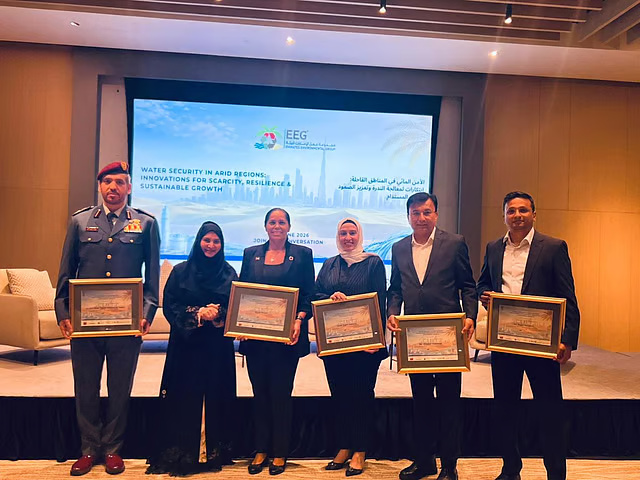
Dubai: Water security in arid regions was the focus of a panel discussion hosted by the Emirates Environmental Group (EEG) on Tuesday, which brought together policymakers, researchers, industry experts, and educators to explore practical solutions to rising water scarcity.
Held in conjunction with the UN World Day to Combat Desertification and Drought, the session highlighted how innovation, policy, and collaboration can support stronger long-term water resilience across the UAE and the wider GCC region.
Opening the event, EEG Chairperson Dr Habiba Al Mar’ashi said that rising temperatures, shrinking freshwater resources, and increasing demand have made water security one of the region’s most urgent sustainability challenges.
She said technologies such as renewable-powered desalination, wastewater recycling, smart water systems, and AI-driven monitoring are helping to transform water management, but stressed that sustained progress also depends on strong policy frameworks and shared responsibility. The Emirates Environmental Group (EEG) said it will publish an analytical paper based on the panel’s discussions and recommendations.
The programme also included an inter-school debate on whether desalination is the most reliable long-term solution for water security in arid regions. Students from JSS International School and American School of Creative Science debated the environmental, economic, and technological trade-offs of desalination, wastewater recycling, and aquifer recharge. The audience vote ultimately ended in a tie.
Panel discussions highlighted growing pressure on freshwater supplies driven by climate change, rapid urbanisation, and rising industrial and agricultural demand.
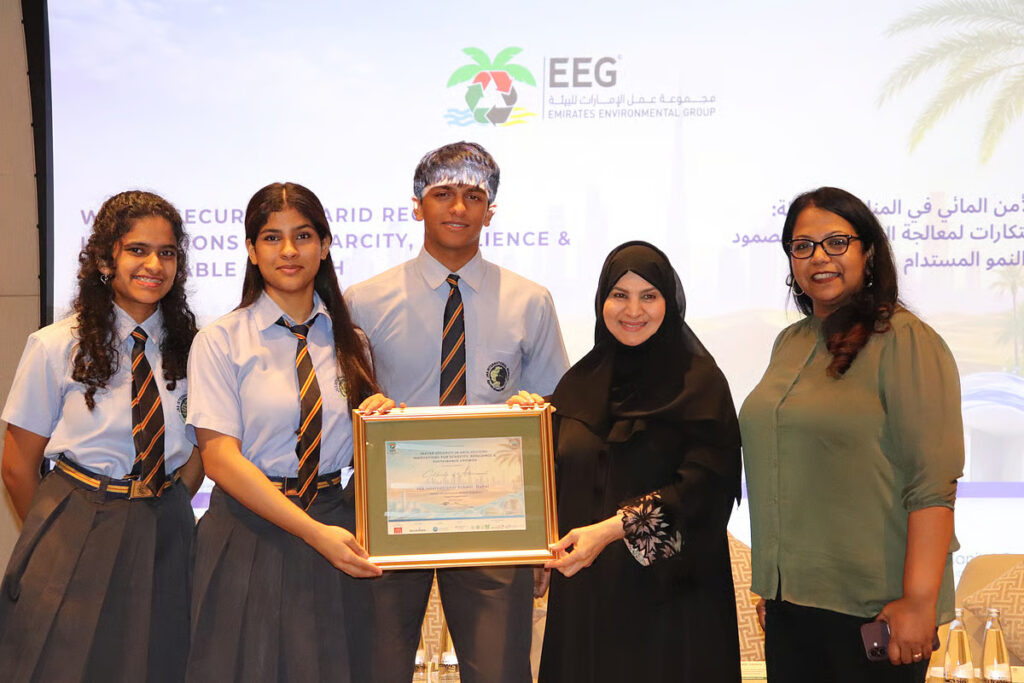
Experts pointed to renewable-powered desalination, wastewater reuse, digital leak detection, smart water management systems, and aquifer recharge as key technologies essential for strengthening long-term water resilience.
Speakers also flagged challenges facing existing water infrastructure, including high energy consumption, brine discharge from desalination plants, and ageing distribution networks. They emphasised the need to pair technological innovation with stronger policy frameworks, greater private-sector involvement, and increased public awareness to improve overall water efficiency.
The discussion concluded with a question-and-answer session addressing implementation challenges, regulatory preparedness, technological innovation, and cross-sector collaboration.
The event was supported by McDonald’s UAE, with Accenture serving as a supporting contributor. It was hosted at Holiday Inn & Suites Dubai Science Park and organised in partnership with organisations including the Emirates Green Building Council, Clean Energy Business Council, Swiss Business Council Dubai, Capital Club Dubai, and the Arabia CSR Network.

