

Both leaders underscored the importance of strengthening bilateral ties and supporting regional peace and security efforts.
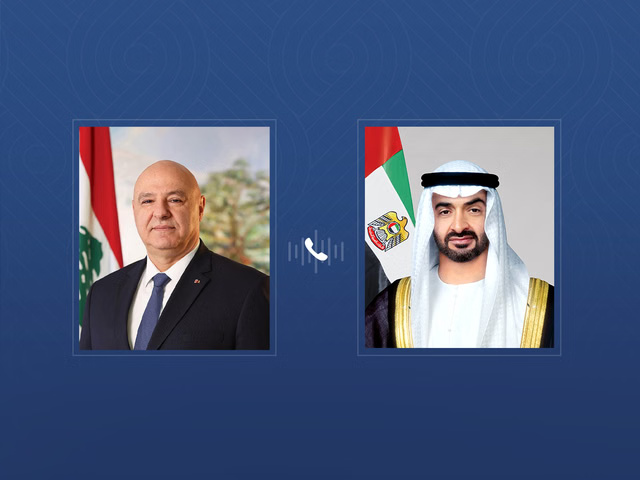
Abu Dhabi: UAE President His Highness Sheikh Mohamed bin Zayed Al Nahyan received a phone call from Joseph Aoun, President of the Lebanese Republic, during which the Lebanese President renewed Lebanon’s condemnation of the Iranian terrorist attacks targeting civilians and civilian facilities in the UAE. He also affirmed Lebanon’s solidarity with the UAE and its support for all measures taken to safeguard its security, sovereignty, and the safety of its territory and people.
The two leaders also discussed fraternal relations and various aspects of development cooperation, reaffirming their commitment to further strengthening ties in a way that supports prosperity for both peoples.
The call also covered recent developments in Lebanon and ongoing efforts to strengthen security and stability in the country. President Aoun praised the UAE’s long-standing support for Lebanon’s sovereignty, territorial integrity, and the Lebanese people’s aspirations for security and stability.
The two sides also reviewed developments in the Middle East, stressing the importance of supporting efforts to advance peace and reinforce the foundations of regional security and stability for the benefit and prosperity of all peoples in the region.

