

Gulf hubs account for 14% of global transit traffic, placing UAE aviation at the centre of the crisis.
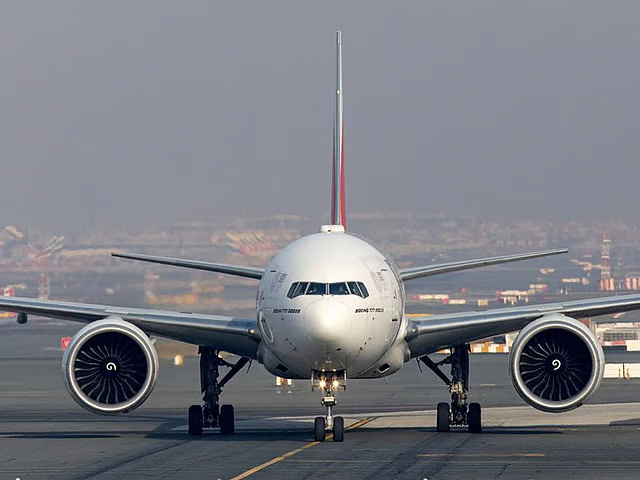
Dubai: UAE airfares could remain elevated throughout 2026, with a new report warning that disruptions to Gulf airspace, airline capacity and fuel markets may take months to ease.
Even under a relatively positive scenario, global airfares could remain 5 to 10 per cent above pre-war expectations in 2026, while a prolonged crisis could drive prices significantly higher, according to a new report by Tourise and Oxford Economics.
Dubai and Abu Dhabi are at the heart of one of the world’s most important aviation corridors. Around 14 per cent of global transit traffic passes through Gulf hub airports, while nearly one-fifth of Europe-Asia travel typically connects through the region, the report said.
The impact of disruptions to Gulf airspace extends beyond passengers travelling between the UAE and neighbouring countries. It can also affect long-haul travellers relying on Dubai and other Gulf hubs to connect Europe, Asia and other major global markets, the study noted.
The report, titled ‘Resilience in a World that Doesn’t Reset: Redesigning Tourism for an Era of Permanent Disruption’, analyses 85 major crises over two decades and identifies a clear pattern.
In a world shaped by recurring shocks, destinations that prepare for disruption in advance can recover up to 1.5 times faster than those that respond only after a crisis hits.
“In a world that does not reset between crises, disruption is becoming a constant feature of the global tourism landscape,” said Ahmed Al-Khateeb, Saudi Arabia’s Minister of Tourism and Chairman of Tourise.
He said the real test for destinations lies in their ability to prepare for volatility, maintain traveller confidence and ensure continuity in the face of disruption.
Why fares may remain high
The report warns that the impact of the Middle East crisis could persist even after the immediate security situation improves.
Airlines are dealing with higher fuel costs, longer flight routes and reduced capacity as they navigate airspace restrictions. The report also notes that the effect on ticket prices may take time to materialise, as airlines often hedge fuel purchases and many flights are booked months in advance.
As a result, UAE travellers may not see an immediate drop in airfares even if airspace restrictions begin to ease.
According to the report’s modelling, global airfares could remain 5-10 per cent above pre-war expectations in 2026, even under a positive resolution scenario. If disruptions persist, the impact on fares could be significantly greater.
Moreover, disruptions to energy exports through the Strait of Hormuz have added upward pressure on oil and jet fuel prices. According to the report, jet fuel prices have risen more sharply than crude oil prices, driven by higher refining margins and concerns over storage and supply capacity.
Gulf hubs exposed
The Gulf’s critical role in international aviation leaves the UAE particularly exposed to the impact of the crisis.
The report estimates that Gulf hubs handle around 14 per cent of global transit traffic, while approximately 20 per cent of Europe-Asia travel typically connects through the region.
When airspace restrictions force airlines to reroute flights around affected areas, journeys can take longer and require more fuel, adding to operating costs and potentially pushing airfares higher.
For UAE-based airlines and passengers, this could translate into higher operating costs, schedule changes and fewer available seats on certain routes.
The report says the crisis has already had a significant impact on Middle Eastern aviation. IATA data cited in the study shows that international capacity to and from Middle Eastern countries was nearly 40 per cent lower in April than a year earlier, while passenger demand declined by almost 50 per cent.
War or ceasefire?
The report outlines three possible scenarios for the current Middle East crisis. If a ceasefire holds, global travel is expected to grow by around 6 per cent in 2026.
If hostilities resume, global travel growth could slow by around 1 per cent. Under a prolonged disruption scenario, global travel could contract by about 3 per cent, with the weakness potentially extending into 2027.
For Gulf aviation, however, even a ceasefire would not necessarily bring an immediate return to normal operations.
The report says connectivity would recover gradually as airspace restrictions and travel advisories are eased. However, airline capacity may take longer to recover, meaning some routes could remain constrained as carriers gradually rebuild their networks.
Long-term impact on Gulf hubs
One of the report’s key warnings concerns the potential long-term impact on Gulf hub airports.
If airlines are forced to use alternative routes for an extended period, they could begin restructuring their networks and permanently adopt new long-haul routes.
That could put pressure on the competitive position of Gulf hubs if alternative networks become established even after the crisis ends.
For Dubai, one of the world’s major connecting hubs, this distinction is particularly important. The immediate question is how quickly flight operations can return to normal once restrictions are eased. The longer-term concern is whether airlines could permanently adjust their networks in ways that reduce their reliance on Gulf hubs for international connections.
Flights cut
The scale of the disruption is already significant.
The report cites Cirium Ascend data showing that Middle Eastern carriers operated around 50 per cent fewer flights year-on-year in March 2026, while forward bookings through major Gulf hubs for the second and third quarters fell by more than 40 per cent.
Globally, more than 12,000 flight cancellations were recorded in May, representing around two million seats. The report said the cuts included significant reductions by Lufthansa, Turkish Airlines and Air China.
The report also suggests that airlines are not cutting flights solely because of safety concerns. Some reductions have been concentrated on lower-yield routes with weaker load factors, indicating that carriers are also responding to uncertainty and seeking to protect profitability.
UAE travel patterns could change
The disruption could also influence how people in the UAE plan and undertake their travel.
The report says prolonged disruption could make travellers more price-conscious, encourage greater regional and domestic travel, lead to more last-minute bookings and increase the importance of value for money.
This could be particularly significant for the UAE, where residents have access to a wide range of short-haul destinations as well as extensive long-haul connectivity.
The report also highlights the growing importance of flexibility, refundable bookings and access to real-time information, particularly when geopolitical uncertainty is high.
Recovery takes time
The study’s broader findings show that while tourism has become more resilient to individual shocks, recovery can still take time. Average recovery periods have fallen from around 24 months in the early 2000s to approximately 10-12 months today.
However, the report warns that increasingly complex, multi-country crises could slow this progress.
Adam Sacks, president of Tourism Economics, said the key lesson is that resilience can be strengthened before disruption occurs through measures destinations take to prepare for potential shocks.
For UAE travellers, the takeaway is clear: even if hostilities end, the impact on Gulf aviation may not disappear immediately.
Higher fuel costs, longer flight paths, reduced capacity and changes to airline networks could continue to influence airfares and travel patterns across the region.

