

IQRA programme boosts reading progress by 25%: who should join it starting September.
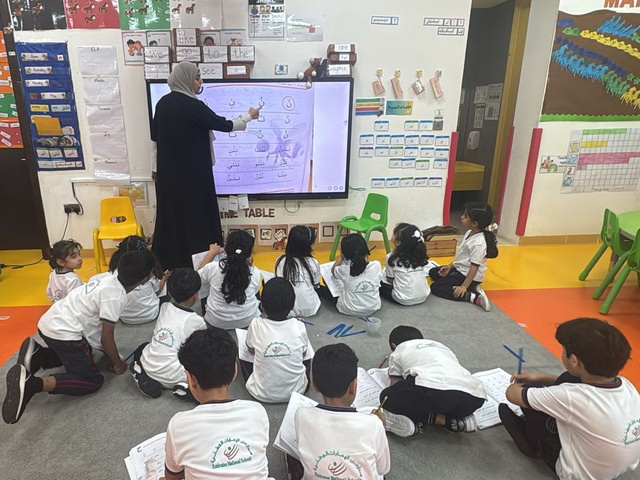
Ras Al Khaimah: A new Arabic language programme will be introduced in private schools across Ras Al Khaimah starting September 2026.
Called IQRA programme—named after the Arabic word for “read”—the initiative was developed by the Sheikh Saud bin Saqr Al Qasimi Foundation for Policy Research and has been independently shown to significantly improve reading outcomes for young learners in the emirate.
A rigorous independent evaluation found that students in IQRA programme classrooms achieved reading progress equivalent to an additional 25% of a school year compared with peers following the standard Arabic curriculum, the foundation announced on Thursday.
The study was conducted by J-PAL MENA and covered 83 classrooms across 26 schools in Ras Al Khaimah during the 2024–2025 academic year, making it one of the largest studies of its kind focused on early Arabic literacy in the UAE.
Students in IQRA programme classrooms showed measurable improvements in key literacy skills, including letter identification, word reading, non-word decoding, and oral reading fluency. The strongest improvement was in word reading, where the median student progressed from the 50th to the 58th percentile, a foundational skill essential for future learning. Overall literacy performance also improved, with the median student moving from the 50th to the 54th percentile.
Importantly, these gains were observed among both native and non-native Arabic speakers.
Bridging the language gap
A key challenge in Arabic education is diglossia—the difference between the Arabic spoken at home and Modern Standard Arabic (MSA) used in textbooks and classrooms across the United Arab Emirates.
For many young learners, reading Arabic at school requires simultaneously learning new letters, sounds, vocabulary, and a more formal version of the language they already speak.
IQRA programme was designed to address this challenge. Developed with Dr Helen Abadzi, a cognitive psychologist and education specialist, the programme introduces reading in structured, incremental steps, focusing first on phonics, letter recognition, decoding, and fluency before progressing to more complex skills.
Dr Natasha Ridge, Executive Director of the Sheikh Saud bin Saqr Al Qasimi Foundation for Policy Research, said that weak Arabic literacy outcomes have often been misinterpreted as a flaw in the language itself. She noted that IQRA demonstrates that when Arabic is taught in alignment with how children naturally learn to read, progress can be rapid, measurable, and achievable within existing school systems.
Designed for schools as they are
One of the most practical aspects of IQRA programme is that it does not require additional classroom time or extra resources. In 21 of the 26 schools involved in the trial, it was implemented fully within the regular timetable, with teachers receiving only a few days of training before beginning instruction.
Lessons are delivered through structured workbooks featuring large fonts, carefully sequenced letter instruction, and teaching methods such as paired reading, echo reading, and choral reading. These approaches are designed to build reading fluency and confidence progressively.
Hanadi Mohammed, Education and Community Development Manager at the Sheikh Saud bin Saqr Al Qasimi Foundation for Policy Research, said the programme is based on the idea that Arabic is not inherently difficult when taught effectively. She explained that IQRA provides teachers with a structured framework that helps children focus on core reading skills.
Who the programme is for
IQRA programme is designed for children from KG1 to Grade 1. It aligns with the UAE Ministry of Education Arabic curriculum and is intended to strengthen, rather than replace, existing Arabic instruction.
IQRA programme was found in its evaluation to improve classroom practice in ways that directly translated into measurable learning gains, according to Nayera Adly Husseiny, Lead of the Egypt Impact Lab at J-PAL MENA. She noted that one key takeaway is that improving learning outcomes is not only about increasing resources or technology, but also about pedagogy—specifically how children are taught, which can significantly influence results.
Beyond Ras Al Khaimah, IQRA has been piloted in classrooms in Morocco, Egypt, and Jordan, showing early promise for older students with reading difficulties and suggesting potential as a regional model for improving Arabic literacy.
Dr Natasha Ridge, Executive Director of the Sheikh Saud bin Saqr Al Qasimi Foundation for Policy Research, emphasised that early reading fluency is a foundational issue, noting that difficulties in the early years can affect a child’s entire academic journey. She said IQRA offers a way to intervene early, effectively, and at scale.

