

Hormuz Tensions Escalate as ADNOC Comes Under Attack and US Tightens Iran Port Blockade.
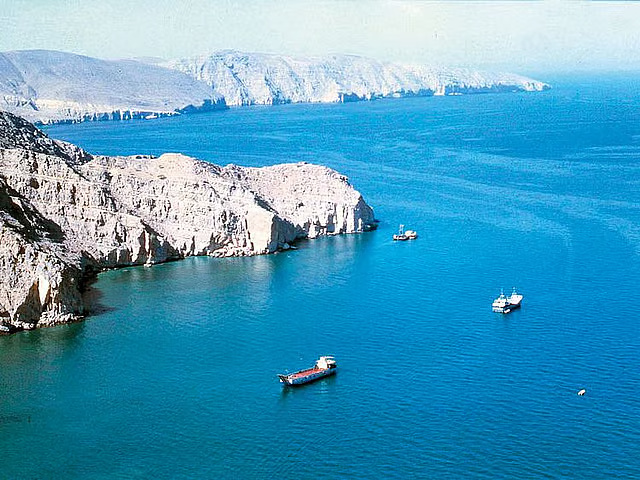
Saudi Arabia, Turkey and Pakistan have signed a mutual defence pact, while the US Navy is enforcing a blockade of Iranian ports. Iran and Oman are also nearing a shipping agreement for the Strait of Hormuz, as the Houthis face blame for an attack on Najran. Meanwhile, most UAE flights are operating as scheduled amid the summer travel rush, although some Gulf routes remain affected. Here’s your morning rundown.
Gulf security developments
Saudi Arabia, Turkey and Pakistan sign mutual defence pact
Saudi Arabia, Turkey and Pakistan have signed the Mecca Joint Defence Agreement, under which an armed attack on one member will be treated as an attack on all three.
The agreement was signed by Crown Prince Mohammed bin Salman, President Recep Tayyip Erdoğan and Prime Minister Shehbaz Sharif. Saudi Arabia said the pact is not a military alliance or sectarian bloc, does not target any country and is unrelated to nuclear ambitions or an arms race.
Turkey said the agreement does not conflict with its NATO commitments, describing it as an additional mechanism aimed at strengthening regional security.
US Navy enforces Iran blockade
US forces have redirected 51 commercial vessels, disabled two and boarded two others as part of a blockade targeting Iranian ports and coastal waters, according to US Central Command on Friday.
Iran says it does not want war
President Masoud Pezeshkian said Tehran does not seek war or territorial expansion but will not give in to “coercion”. He added that tensions could ease if pressure and threats against Iran are brought to an end.
Foreign Minister Seyed Abbas Araghchi praised Iran’s armed forces and called for greater unity and self-reliance among Muslim countries.
Iran and Oman near Hormuz shipping deal
Iran and Oman have reportedly reached a preliminary framework for regulating shipping through the Strait of Hormuz, with the agreement awaiting final approval.
Houthi attack on Najran condemned
Saudi Arabia blamed the Houthis for an attack in Najran that injured at least 11 civilians, while Yemeni forces said they had intercepted several drones. The Arab Parliament condemned the attack as a violation of international law and reaffirmed its solidarity with the Kingdom.
ADNOC vessels targeted
ADNOC said three of its vessels were attacked in the Strait of Hormuz this week, leaving one crew member dead and 20 others injured. The company said 15 of its vessels have been targeted by missiles and drones since the conflict began.
ADNOC said it is taking all necessary measures to protect its people and operations, while stressing that freedom of navigation must be respected.
Flights: What travellers should know
The summer travel rush continues, with most UAE flights operating as scheduled. However, some Gulf routes remain affected by operational adjustments and temporary airspace restrictions.
Key points for travellers
- Air Arabia: Selected flights from Sharjah and Abu Dhabi to Kuwait, Bahrain and Abha continue to face cancellations and delays.
- Emirates and Etihad: Both airlines are operating across their wider networks, but passengers travelling on Gulf routes should check their flight status before heading to the airport.
- flydubai: Services are operating normally, with no major schedule changes reported.
- Regional recovery: Qatar Airways is resuming flights to Bahrain, Kuwait and Erbil from August 8, while Jazeera Airways has restarted services to Kuwait.
- International carriers: Several airlines, including British Airways, Lufthansa, Singapore Airlines and KLM, continue to suspend Dubai services, with return dates ranging from late August to October. Air Canada has postponed its Dubai resumption until mid-January 2027.
Before you fly: Arrive at the airport at least three hours before departure, check your flight status before leaving home and use online check-in where available. Allow extra time for traffic, check-in, security and immigration as passenger volumes remain high.

