

Flight Disruption Data Highlights Widespread Travel Chaos Following Riyadh’s King Khalid International Airport Closure.
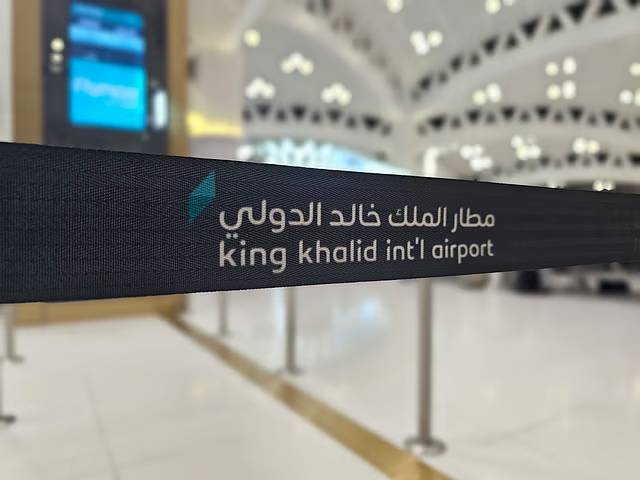
Dubai: Riyadh’s King Khalid International Airport restarted flight operations on Sunday, October 25, following a two-week suspension triggered by attacks targeting the Saudi capital. However, aviation tracking data indicated that a significant majority of scheduled departures continued to face cancellations despite the airport’s reopening.
The prolonged disruption comes amid ongoing security concerns across Saudi Arabia, as the Kingdom faces continued threats from missiles and drones. Yemen’s Houthi movement has claimed responsibility for attacks targeting airports and other strategically important infrastructure, adding further uncertainty to air travel operations.
Riyadh Airport Resumes Limited Flight Operations
Riyadh’s King Khalid International Airport began gradually restoring flight services on Sunday, with its official website displaying a number of scheduled domestic and international flights, including services arriving from Dubai, Paris and Cairo.
As part of revised terminal arrangements announced on Saturday, airport authorities introduced the following operational changes:
- Terminal 1: Designated for domestic flights operated by Saudi Arabia’s national airlines.
- Terminal 2: Allocated to international services operated by Saudi national carriers.
Airport officials advised travellers holding confirmed reservations to contact their respective airlines before heading to the airport to verify departure times, flight availability and any potential schedule changes.
According to flight-tracking platform Flightradar24, a limited number of aircraft had successfully departed following the reopening, while the majority of scheduled services continued to show cancellations.
Saudi aviation authorities had not immediately released comprehensive information regarding the scale of resumed operations or when regular flight schedules would be fully restored.
Saudi Arabia Flight Disruptions: Major Statistics
Saudi Arabia’s aviation sector experienced widespread disruption between October 8 and October 25, with more than 7,800 departing flights either cancelled or classified as “no-fly,” according to figures from aviation analytics company Cirium.
During the 18-day period, a total of 17,299 departures had been scheduled from airports across the Kingdom.
Of these, 7,802 flights were recorded as cancelled or no-fly, accounting for approximately 45.1 per cent of all scheduled departures.
Riyadh’s King Khalid International Airport experienced the most severe disruption among the country’s major aviation hubs, with nearly 86 per cent of its scheduled departures affected.
The figures highlight the significant impact of the prolonged airport closure and continuing security concerns on Saudi Arabia’s air transport network, affecting domestic connectivity and international travel.
Saudi Arabia Flight Disruptions: Key Figures
Aviation data from Cirium highlights the scale of flight cancellations and operational restrictions affecting Saudi Arabia between October 8 and 25.
- 7,802 flights: Departures cancelled or classified as no-fly across Saudi airports.
- 45.1 per cent: Proportion of scheduled departures affected nationwide.
- 85.96 per cent: Percentage of scheduled flights disrupted at Riyadh’s King Khalid International Airport.
- October 12: The highest daily disruption rate, reaching 60.21 per cent.
- October 25: Disruptions climbed to 44.23 per cent, compared with 16.51 per cent on October 24.
Which Saudi Airports Experienced the Greatest Disruption?
Cirium’s aviation statistics reveal considerable differences in the extent of flight disruptions across Saudi Arabia’s major airports during the October 8–25 period.
Riyadh: King Khalid International Airport
Riyadh experienced the most extensive disruption, with 4,071 of its 4,736 scheduled departures either cancelled or designated as no-fly.
This represented 85.96 per cent of planned departures, making the capital’s airport the most severely affected major aviation hub.
Jeddah: King Abdulaziz International Airport
Jeddah recorded 1,402 affected departures from a total of 6,380 scheduled flights.
The disruption rate stood at 21.97 per cent, considerably lower than Riyadh’s, although the number of affected flights remained substantial.
Dammam: King Fahd International Airport
At Dammam’s King Fahd International Airport, 823 of 1,956 scheduled departures were affected.
This translated into a disruption rate of 42.08 per cent, highlighting the operational challenges facing the eastern aviation hub.
Other Saudi Airports
Several regional airports also reported significant disruptions during the same period.
- Taif: 109 of 190 scheduled departures affected, representing 57.37 per cent.
- Abha: 297 of 636 flights affected, equivalent to approximately 46.7 per cent.
- Medina: 286 of 1,592 departures affected, accounting for 17.96 per cent.
How Flight Disruptions Changed Day by Day
The proportion of flights cancelled or classified as no-fly varied considerably throughout the reporting period, reflecting changing operational conditions across Saudi Arabia.
- October 8: 385 of 1,194 scheduled departures affected, a disruption rate of 32.24 per cent.
- October 11: 620 of 1,096 flights affected, bringing the rate to 56.57 per cent.
- October 12: Disruptions reached their highest recorded daily level, with 631 of 1,048 departures affected, or 60.21 per cent.
- October 15: 701 of 1,178 departures affected, representing 59.51 per cent.
- October 18–21: Daily disruption rates remained above 50 per cent.
- October 22: 354 of 868 flights affected, reducing the rate to 40.78 per cent.
- October 24: The disruption rate declined sharply to 16.51 per cent, with 105 of 636 departures affected.
- October 25: The rate increased again to 44.23 per cent, with 448 of 1,013 scheduled departures affected.
Although aviation operations showed signs of improvement on October 24, the following day brought another increase in disruptions, coinciding with the limited reopening of Riyadh’s King Khalid International Airport.
Explosions Reported Amid Continuing Security Threats
Security concerns persisted across Saudi Arabia as explosions were reported in Riyadh early Sunday following warnings of a possible aerial attack.
The Saudi-led coalition announced that its air defence systems had intercepted a ballistic missile and two drones directed towards the capital.
A separate cruise missile reportedly targeting Khamis Mushait was also intercepted.
Yemen’s Houthi movement claimed responsibility for attacks against Saudi airports and strategically important infrastructure.
Saudi Civil Defence authorities reported that two people sustained injuries and property was damaged by falling debris.
Additional incidents involving falling debris were reported in the Mecca and Medina regions on Saturday. However, the Houthis denied carrying out attacks against the two cities.
Amid the heightened security situation, the United States ordered non-essential government personnel and their family members to leave Saudi Arabia.
The US Embassy in Riyadh warned of the possibility of further attacks, temporary airspace restrictions and additional disruptions to commercial flights.
American citizens were advised to exercise heightened caution and verify their flight arrangements directly with airlines before travelling.
International Airlines Extend Saudi Arabia Flight Suspensions
Several major international carriers have prolonged flight suspensions or revised their operating schedules in response to the continuing disruptions.
The following dates reflect the reported airline announcements and remain subject to change.
UAE Airlines
- Etihad Airways: Services connecting Abu Dhabi with Riyadh and Dammam have been cancelled through November 5.
- Emirates: Flights to Riyadh, Dammam and Jeddah were suspended through October 25, according to the reported schedule.
- flydubai: Services to Riyadh, Dammam and Abha remain suspended until October 29.
- Air Arabia: Flights from Sharjah to Riyadh, Abha, Dammam and Taif have been cancelled, with no confirmed date for resumption.
Indian Airlines
- Air India and Air India Express: Flights connecting India with Riyadh and Dammam remain suspended until November 7, while Jeddah services are suspended until October 31.
- IndiGo: Operations to and from Riyadh, Jeddah, Dammam and Medina have been cancelled through October 31.
- Akasa Air: Jeddah flights are suspended until November 10, while Riyadh services remain suspended until November 30.
Passengers affected by these cancellations may be eligible for alternative travel arrangements or refunds, depending on the policies and conditions of their respective airlines.
Other International Carriers
- Oman Air and SalamAir: Riyadh services remain suspended or cancelled through October 31. SalamAir has also halted Dammam operations until the same date.
- Pakistan International Airlines: Riyadh flights have been suspended since October 9, with no confirmed restart date.
- Philippine Airlines: Riyadh services operating as PR654 and PR655 remain suspended until November 29.
- Lufthansa Group: Riyadh operations are suspended through November 18, while Dammam services remain halted until November 30.
- KLM: Flight cancellations affecting Riyadh and Dammam have been extended through October 31.
- Scoot: Services between Singapore and Jeddah remain cancelled until December 2.
- British Airways: The airline has scheduled a limited return to Riyadh operations from November 3, initially offering one daily flight.
- Eurowings: Jeddah flights are scheduled to restart on November 12.
- Delta Air Lines: The planned introduction of the Atlanta–Riyadh route has been postponed until March 2027.
Malaysia Airlines had previously announced that services to Jeddah and Medina would resume on October 18.
Meanwhile, Air France’s earlier announced suspension of Riyadh flights was scheduled to continue through October 24.
Passengers planning to travel with either airline should confirm the latest operational status directly with the carrier.
What Should Passengers Travelling to Saudi Arabia Know?
Cirium’s figures cover scheduled departures from Saudi Arabian airports between October 8 and 25, including flights classified as cancelled or no-fly.
However, the data does not establish that every affected flight was disrupted by the same cause.
With aviation schedules remaining subject to operational and security-related changes, passengers should take additional precautions before travelling.
- Check flight status: Confirm departure and arrival details directly through the airline’s official website or mobile application.
- Contact the airline before travelling: Passengers with confirmed reservations should verify whether their flight is operating as scheduled.
- Monitor airport announcements: Follow official airport communication channels for updates on terminal arrangements, access restrictions and reopening schedules.
- Review refund and rebooking options: Travellers whose flights have been cancelled should check their eligibility for refunds, travel credits or alternative flights.
- Allow flexibility in travel plans: Passengers should prepare for possible last-minute schedule changes, delays or further cancellations.
- Follow official travel advisories: Monitor updates issued by relevant aviation authorities, airlines and diplomatic missions.
As Saudi Arabia works towards restoring regular aviation services, travellers are advised to remain alert to official announcements and avoid relying on outdated flight schedules.
The gradual reopening of Riyadh’s international airport represents an important step towards restoring connectivity, although the latest disruption figures indicate that a return to normal operations may take additional time.
- Verify flight information: Passengers should check their flight’s latest status directly with their airline before travelling to the airport.
- Confirm departure arrangements: Travellers, especially those flying through Riyadh, should double-check departure times, terminal assignments and any revised airport procedures.
- Stay informed about schedule changes: Regularly review airline messages, official notifications and travel updates for possible cancellations, delays or rescheduled services.
- Explore alternative travel arrangements: Passengers affected by flight disruptions should contact their airlines to understand available rebooking options, refunds or alternative routes.
Although Riyadh’s King Khalid International Airport has resumed limited operations, ongoing security concerns, widespread flight cancellations and extended service suspensions by several airlines continue to create uncertainty for travellers.
Passengers planning journeys to or from Saudi Arabia are therefore advised to remain flexible, follow official aviation updates and prepare for potential delays or further disruptions until normal flight operations are fully restored.

