

Preparing Haleem is a labor of love that can take up to 12 hours, with chefs tending to ‘bhattis’ (brick-and-mud ovens) across Hyderabad throughout Ramadan.
Around the bustling area of Charminar, large gatherings form as roads are closed to vehicles during Ramadan. The illuminated Charminar dominates the night skyline, but the surrounding streets are equally vibrant. The air is filled with the mouthwatering aroma of food, with Hyderabadi Haleem stealing the spotlight.
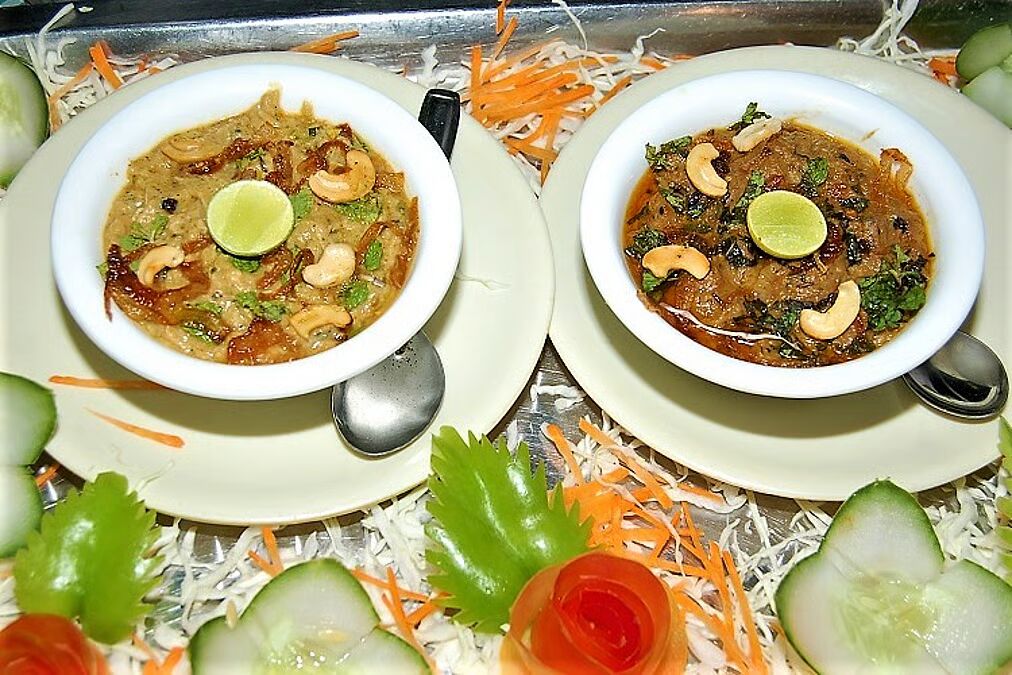
Haleem, a dish that takes nearly 12 hours to prepare, remains a Ramadan favorite in 2026. Long queues form outside popular restaurants, while many visitors gather at roadside stalls, savoring the dish under the night sky.
The rich flavor of Haleem comes from a blend of numerous ingredients, including almonds, basmati rice, black pepper, cardamom, cinnamon, cloves, cumin, lentils, garlic, green chillies, ghee, onions, wheat, and, of course, tender mutton.
The process of preparing Haleem can take up to 12 hours. Across Hyderabad during Ramadan, chefs can be seen working over ‘bhattis’ (brick-and-mud ovens), stirring the savory dish in massive vessels set atop traditional ovens.
As the sun sets during Ramadan, Hyderabad undergoes a dramatic transformation, and the iconic Charminar becomes an experience in itself. Photo: The Deccan Archive
Originally an Arabic dish, Haleem has evolved over the past few centuries in India. The addition of local spices, dry fruits, and other regional ingredients has elevated the dish—particularly in Hyderabad—into a culinary legend.
During the holy month, Haleem is everywhere in the city: from humble roadside eateries to upscale restaurants and even five-star hotels. Preparation begins early in the morning, as cooks start crafting this highly sought-after delicacy for those breaking their fast. By the afternoon, employees are busy packaging Haleem, ready for distribution across the city.
In 2010, Hyderabadi Haleem became the first meat product in India to receive Geographical Indication (GI) status from the India GI Registry. Eminent chef and TV host Sanjeev Kapoor, in his book Royal Hyderabadi Cooking, described Haleem preparation as an art form.
Moving around Hyderabad
As the sun sets during Ramadan, Hyderabad transforms dramatically. Temperatures dip, and walking around the iconic Charminar becomes a unique experience. While the monument is a favorite spot throughout the year, it truly comes alive during Ramadan.
Other neighborhoods also sparkle with energy, as shops remain open well past midnight, selling a variety of goods. Laad (or Choodi) Bazaar, a historic market near Charminar established in the 1590s, is famous for its lacquer bangles, pearls, bridal wear, and attar (perfumes). Visitors also flock to several historic mosques, many within walking distance of the bustling bazaars, creating a vibrant, festive atmosphere across the city.
Mohammed Sibghatullah Khan, just 25, has spent the past five years exploring Hyderabad, the capital of Telangana, during Ramadan nights.
“We do a lot of walking tours during Ramadan, taking our guests to interesting places for nearly three hours until early morning,” he told Khaleej Times.
An architect, researcher, and writer, Khan studies the history, architecture, and urban heritage of Hyderabad and the broader Deccan region. “My research engages with how cities evolve over time, the pressures of modern development, and the preservation—or often erasure—of historic urban landscapes,” he explained.
Khan is also the founder of The Deccan Archive, a public history initiative that documents, interprets, and shares the cultural and architectural legacy of the Deccan.
Guests on his nighttime walking tours include Indians from across the country, NRIs from the Gulf, and international visitors. He has been invited to present and collaborate with academic and cultural institutions both in India and abroad, with research interests spanning Islamic art and architecture, urban history, and public engagement with heritage.
Beyond Charminar, areas like Old City, Tolichowki, Mallepally, and Nampally attract large crowds. Tolichowki retains its old-world charm, offering a mix of traditional ethnic wear and modern apparel. In Mallepally, shoppers browse for bangles, burqas, cosmetics, clothes, and footwear, adding to the vibrant Ramadan atmosphere across the city.

